
HR Strategy
Why Task Management Tools Fail in Indian SMEs: A Guide
Why most task management tools fail in Indian SMEs and learn how to choose the right HRMS-integrated solution to boost team productivity today.

MD Moinuddin
HR Content & Research, Human Maximizer · 10 min read · · Updated

In Punjab’s manufacturing hubs, particularly among Ludhiana’s bicycle component exporters, a common administrative pattern plays out every quarter. A mid-sized manufacturer purchases high-end Western task management software to streamline production schedules and coordinate office staff. Within six weeks, the shiny boards lie abandoned, and the supervisors revert to shouting instructions over noisy workshop floors while coordination shifts back to chaotic WhatsApp groups.
The breakdown does not happen because the supervisors lack discipline. It happens because standalone tracking tools operate in isolation from the actual work-status realities of the shop floor. In our team's research when designing Human Maximizer, what tends to happen is that software adoption fails because workers see task updates as a separate administrative chore rather than a natural extension of their daily attendance and work logs.
When software runs separate from the daily attendance roll-call, keeping it updated becomes the first task that busy employees ignore.
The Disconnect Between Action and Administration
Finding the right task management software for SMEs in India is often treated as a simple feature-matching exercise. Buyers look for boards, checklists, and calendar views, assuming their team will use them diligently. However, small and medium enterprises in India operate under high operational pressure where employees wear multiple hats. A production coordinator in Ludhiana might handle procurement, dispatch, and quality checks all in a single afternoon.
This operational reality explains why small and medium enterprises dominate the task management software market in terms of overall digital adoption interest, yet suffer from high software abandonment rates. Western point solutions are designed for highly specialized, desk-bound roles where "updating the ticket" is considered part of the job. In a lean Indian SME, updating a standalone tool is viewed as double work.
Furthermore, software implementation struggles in regional business clusters often boil down to organizational and cultural misalignments, as identified in Indian industry surveys examining technology rollouts. When a tool is completely disconnected from the daily HR registry, employees have no systemic incentive to keep it updated. If checking in, requesting leave, and logging daily work happen in three different applications, the operational overhead kills the process before it can take root.
The Three Core Gaps of Standalone Task Tools
To understand why these implementations fail within 90 days, we must look at the structural gaps that standalone tools fail to address.
1. The WhatsApp Paradox
Indian business communication runs on WhatsApp. It is fast, familiar, and requires zero training. When a manager deploys a standalone project management tool, they are competing with WhatsApp's convenience. If the task tool does not offer a simpler way to acknowledge and update work, employees will default to sending a quick chat message. The manager then spends their evening copying updates from WhatsApp back into the software, defeating the purpose of buying task automation software in the first place.
2. Isolation from Attendance and Leave Realities
Imagine assigning an urgent dispatch review to a logistics manager, only to realize they are on approved casual leave. A standalone task tool has no concept of an employee's leave status. It continues to assign work, send automated reminders, and eventually flag the task as overdue. This creates false alarms for management and unnecessary pressure for employees.
A true workflow management system must understand who is present, who is on leave, and who is currently clocked in before tasks are assigned.
3. The Dollar-Pricing Penalty
Most global employee productivity tools India-based companies evaluate are priced in US dollars on a per-user, monthly basis. For a growing SME with fluctuating headcounts, contractual workers, or seasonal trainees, this pricing model is highly restrictive. It forces companies to ration licenses, giving access only to senior managers while keeping the ground-level execution teams entirely in the dark.
Why Integrated HRMS Workflows Succeed
To build a reliable workflow, task tracking must be anchored to the source of truth for employee data: the HRMS. When task management is built directly into your core HR stack, the administrative friction disappears.
When a supervisor logs in to check their team's daily attendance, they should see active tasks directly alongside the roster. When an employee clocks in for the day via their Mobile App, their daily task queue should load automatically. This integration ensures that task status matches operational reality.
Our experience has shown that this integrated approach is the only way to sustain long-term adoption. Unified HCM platforms produce fewer payroll errors than point-solution stacks: consolidating operational data into a single platform removes the manual hand-offs where downstream errors and administrative gaps begin. When attendance, leave, and tasks share a single database, managers gain absolute clarity on team capacity without chasing people for updates.
Want a system that handles task alignment and HR workflows automatically? Let's talk.
Measuring Systemic Task Drift
Rather than relying on complex scoring models, we recommend monitoring a clean set of operational signals to evaluate team execution health. We call this diagnostic approach tracking Systemic Task Drift.
By evaluating four specific data points, managers can spot bottlenecks before they delay deliveries:
- Acknowledgement Lag: This measures the responsiveness of your team. You can calculate this by taking the total hours elapsed from assignment to acknowledgement and dividing it by the total number of tasks. If this lag stretches from hours into days, it indicates communication gaps or task overload.
- Runaway "Not Started" Tasks: A rising count of unstarted tasks signals assignment overload. The team is likely paralyzed by a cluttered queue and needs prioritization.
- Overdue Task Clusters: Looking at a delay calendar to see if overdue tasks are clustered around specific days or departments. This helps identify structural bottlenecks, such as raw material delays or machine maintenance issues.
- Estimated vs. Actual Hours: Comparing budgeted hours against actual logged time. Consistent under-estimation indicates a planning failure, while over-estimation suggests padded timelines.
Product Demonstration: The Operational Difference
The following scenario is a composite drawn from patterns we repeatedly see across Indian engineering and manufacturing SMEs — not a single named client. It compares the manual, disconnected approach against an integrated system.
The Scenario: Managing a Custom Order Dispatch
A machinery parts exporter in Ludhiana must dispatch a custom order of gearboxes by Friday afternoon. The process requires design approval, production testing, quality sign-off, and logistics coordination.
| Operational Phase | The Disconnected Approach (Standalone Tool + WhatsApp) | The Integrated Approach (Human Maximizer HRMS) |
|---|---|---|
| Task Assignment | The manager assigns the quality check to the QA Lead on a standalone project tool. The QA Lead is on site-visit and does not open the app. | The manager assigns the task via Human Maximizer. The system checks the Attendance Management roster and alerts the manager that the QA Lead is out of office. |
| Execution & Status Tracking | The QA Lead completes the test but forgets to update the standalone board. The manager calls three times to confirm if the gearboxes are ready. | The QA Lead logs the test completion via the Mobile App. The status updates instantly on the manager’s main dashboard. |
| Resource Management | The packaging assistant goes on emergency leave. The task remains assigned to them in the point tool, stalling the dispatch. | The assistant requests leave through Leave Management. The system immediately flags the pending dispatch task, allowing the manager to reassign it in one click. |
| Performance Audit | At month-end, the manager tries to reconstruct who delayed the shipment by scrolling through weeks of WhatsApp history. | The Productivity Lens dashboard provides a clear, timestamped audit trail of task completion rates, which feeds directly into Employee Performance Management. |
When Task Tracking Has Limits
While structured tracking is vital, an automated task system is not a cure-all. We believe in being honest about where technology stops and human management must step in:
- Creative and Unstructured Brainstorming: Unstructured R&D sessions or open-ended strategic planning do not fit neat checklist templates. Use informal channels like Team Chats for raw collaboration before formalizing decisions into concrete tasks.
- Context-Free Performance Evaluation: A system can show that a task was completed late, but it cannot explain why. A late delivery might be due to a power outage or a delayed vendor shipment rather than employee negligence. Managers must conduct regular, face-to-face check-ins to understand the human context behind the data.
- Legal and Compliance Disputes: Using task logs as the sole evidence in formal labor disputes requires careful handling. Always consult a qualified labor law attorney or compliance expert to ensure your documentation meets standards under the Code on Wages, 2019 or relevant state-level Shops and Establishments Acts.
Frequently Asked Questions
Why do employees resist task management software for SMEs in India?
Most employees resist these tools because they view them as double work. If they have to log attendance in one system, request leave in another, and update their work status in a third, the administrative overhead becomes too high, leading them to default back to WhatsApp.
Can we use task tracking data directly for performance appraisals?
Yes, but it should not be the sole metric. Task completion rates and lifecycle histories provide objective data on execution, but managers must combine this metadata with qualitative assessments of work quality and teamwork.
Is it better to buy a separate task manager or use an HRMS-integrated tool?
For Indian SMEs, an integrated HRMS tool is almost always better. It ensures that task assignments automatically respect leave schedules, geo-fenced attendance, and resource availability, which eliminates manual coordination errors.
The Operational Reality of Task Ownership
When the Ludhiana bicycle component exporter finally retired their disconnected point tools, it was not because they found a more complex project board. It was because they realized their supervisors did not have the time to live in two different software applications. By anchoring task tracking to daily attendance and leave, the company made status updates a natural part of the workday.
If your task management software requires constant manual updates just to reflect who is actually at work today, you are not running an automated workflow—you are running an administrative bookkeeping project. At Human Maximizer, we build operational tools that respect the practical realities of Indian SME workplaces.
Ready to stop chasing updates over WhatsApp? Book a quick call.
About the Author & Reviewers
MD Moinuddin — HR Content & Research, Human Maximizer
MD Moinuddin works on content and research for Human Maximizer at Razor Infotech, turning HR-tech and Indian compliance research into practical, plain-English guidance for growing companies.
Connect on LinkedIn
Reviewed & approved by Sameer Hameed — Founder & Chairman, Razor Infotech
Sameer Hameed is the Founder & Chairman of Razor Infotech, where he is guiding the creation of Human Maximizer. An entrepreneur across technology, real estate, mining and travel, he builds organisations on clarity, trust and responsible growth — on the belief that businesses grow only when the people behind them grow.
Connect on LinkedIn
Reviewed & approved by Nishant Tandon — Co-founder & Lead Partner, Razor Infotech
Nishant Tandon is Co-founder and Lead Partner at Razor Infotech, with over a decade in IT, customer support and business operations, helping SMEs achieve cost efficiency, stronger customer experience and scalable, sustainable growth.
Connect on LinkedIn
Human Maximizer is built by Razor Infotech in New Delhi, India (founded 2019). About Human Maximizer.
Keep reading
HR Strategy
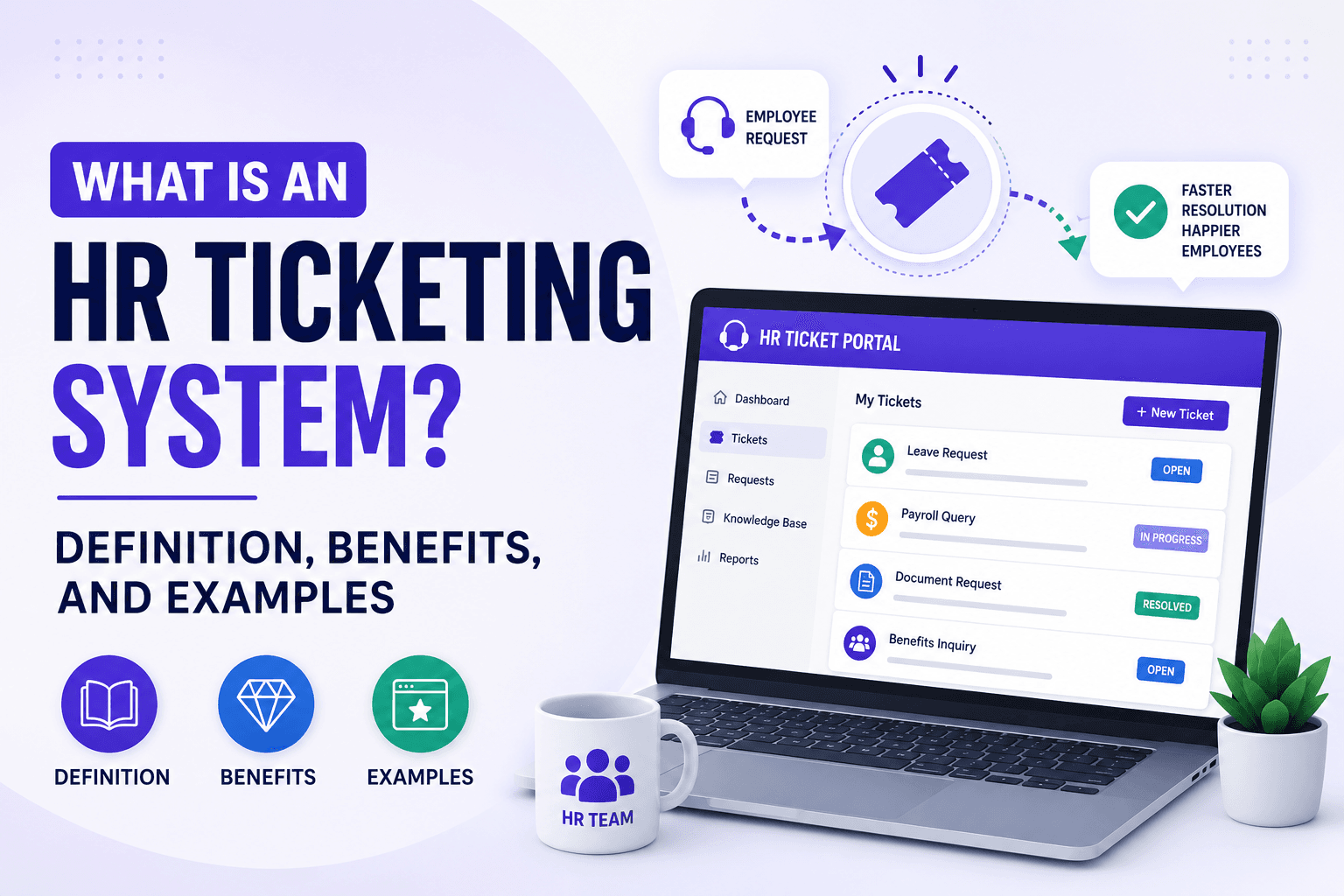
What Is an HR Ticketing System? Definition, Benefits, and Examples
Tired of losing track of employee requests? An HR ticketing system brings order to HR workflows. Discover its definition, top benefits, and examples to see why teams are making the switch.
5 min read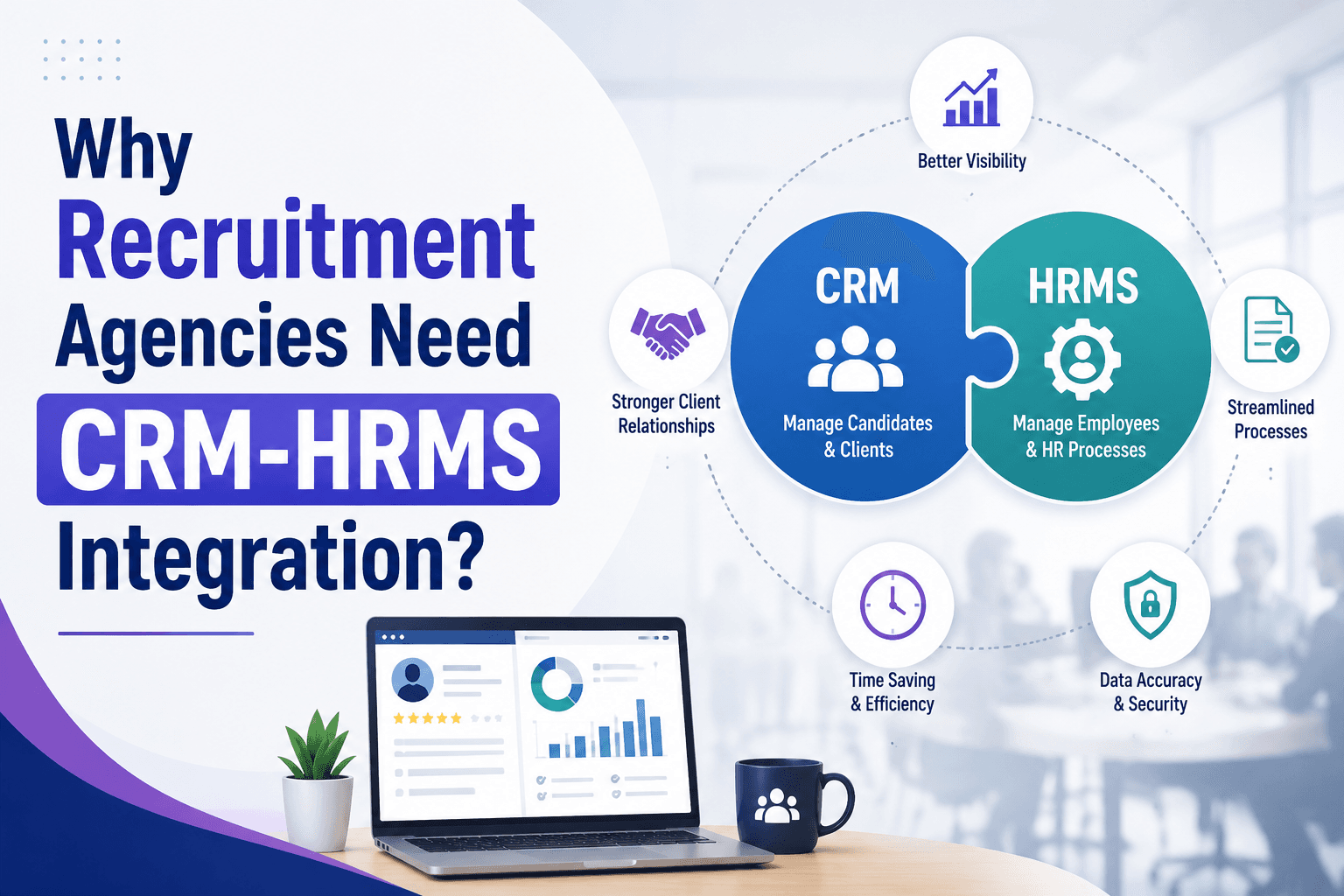
HR Strategy
Why Recruitment Agencies Need CRM-HRMS Integration?
Recruiters lose hours re-entering candidate data from CRM to HRMS. Here's why recruitment agencies need CRM-HRMS integration, and what it costs to skip it.
5 min read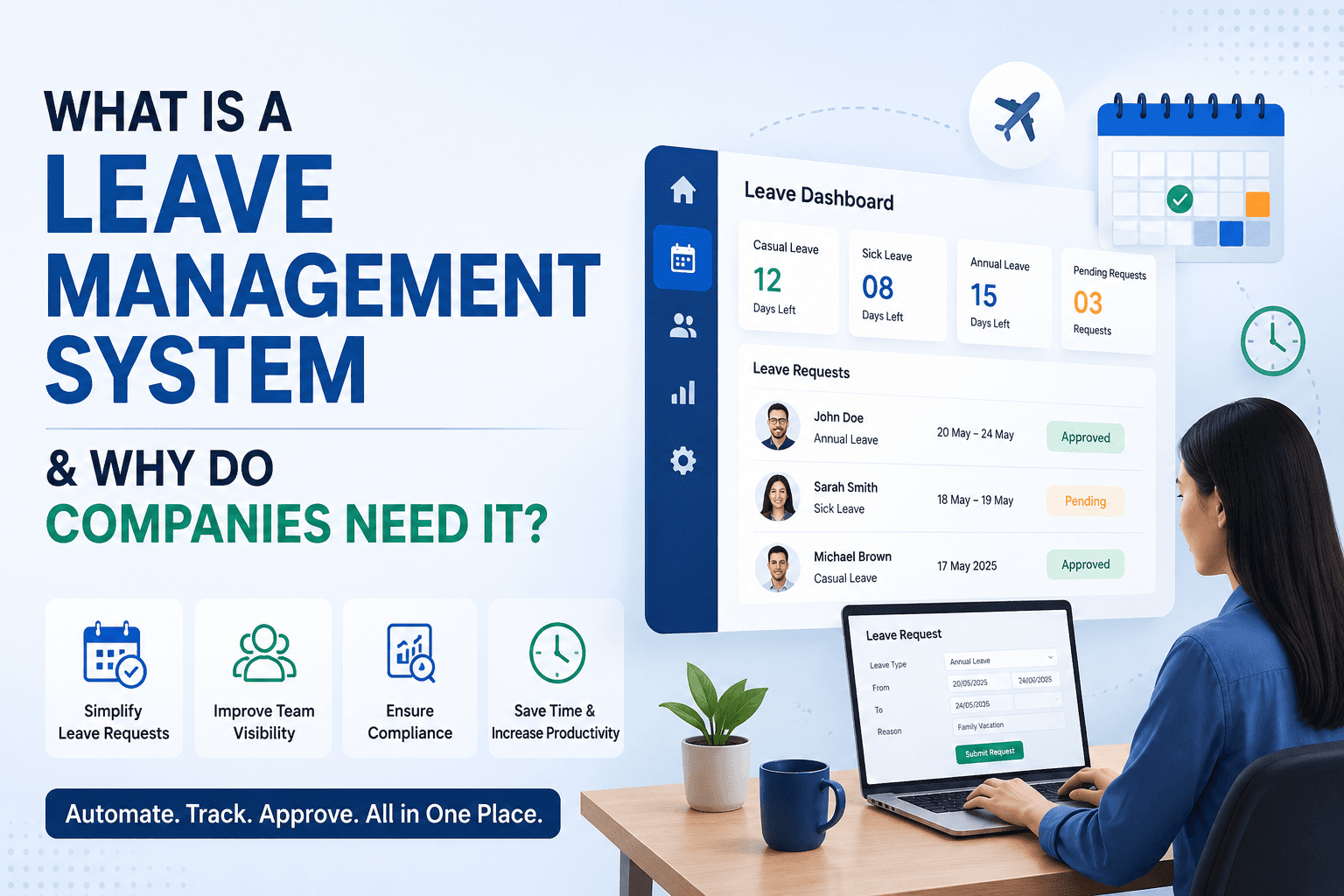
HR Strategy
What Is a Leave Management System & Why Do Companies Need It?
Still tracking leave in emails and spreadsheets? See how a leave management system helps Indian companies apply, approve, and track leave, with payroll integration and full compliance.
5 min read