
HR Strategy
What Is a Leave Management System & Why Do Companies Need It?
Still tracking leave in emails and spreadsheets? See how a leave management system helps Indian companies apply, approve, and track leave, with payroll integration and full compliance.

Richa Thakur
Content Writer · 5 min read · · Updated
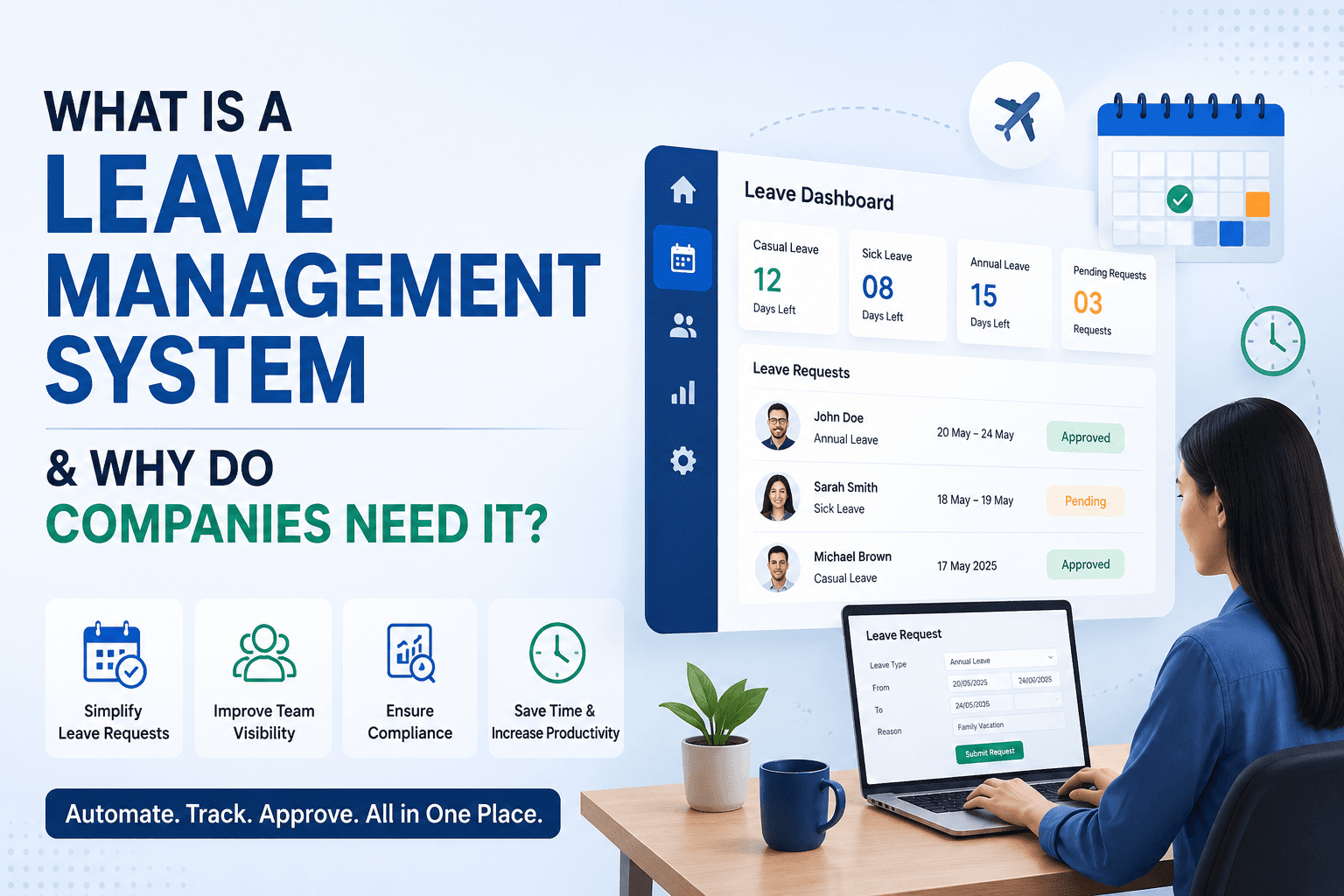
It’s already the third week of the month, and an employee calls an HR manager to inquire about leave balances. The HR opens the scattered spreadsheet consisting of color-coded cells and finds the leave balances of a specific employee.
Due to increased government regulations, the modern workforce model, traditional methods, including emails, chats, and calls, only expose organisations to compliance risks and payroll errors.
Beyond handling and approving leave, HR managers now juggle salary calculation, leave encashment, final settlement, and payroll, where accuracy is critical.
This comprehensive guide will highlight every important aspect of the leave management system, how it is playing a crucial role in the organisation in administrative tasks, types of leaves, what the right steps are to choose leave management software, and the common mistakes that organisations usually make while selecting it.
According to DDI's Global Leadership Forecast, nearly 60% of leaders report feeling "used up" at the end of the workday, a recognised early indicator of burnout.
What is the Leave Management System?
A leave management system is a digital software that automates the employees' leave cycle throughout a specific period. It includes the management of time-off requests, approvals, and tracking.
The leave management system replaces the manual methods, including paper documents, spreadsheets, and attendance registers, with a modern tool.
Leave management system benefits the organisations by:
- For Employees: They can view their leave balances and submit leave requests easily.
- For Managers: Managers can view their team’s availability and approve or reject leave requests based on upcoming projects and events.
- For HR Managers: Automatically calculates leave accruals, generates reports, and feeds accurate data into payroll systems to ensure compliance.
Why is the Leave Management System Essential for Organisations in 2026?
Leave management is the core foundation of organisational workflow. It helps companies to track and manage employees' leave balances and time off. This overall improves the payroll, personal employee leave cycle, and engages employees within an organisation.
Manages Compliance
Labour laws vary by country, state, and location-based rules. If the company fails to comply with these rules and regulations, they need to pay a hefty fee to cover the legal issues associated with leave rules.
The leave management system manages all the guidelines that an organisation needs to follow to protect the rights of an employee. In India, entitlements differ by establishment type and state, the Factories Act, and each state's Shops & Establishments Act (Maharashtra, Karnataka, and Delhi all differ). A good system applies the correct rule by location automatically.
Reduces Miscommunication
Conventional methods often create conflict among managers, HR leaders, and employees. Seeing the real-time leave balances, pending leaves, approvals, and requests all in a single place reduces the arguments related to leave management.
Faster Turnaround
It eliminates the frustration of waiting for the physical paperwork, or waiting for an official email or text messages for leave approvals and rejections. The software sends a notification to managers and HR for further action as per the team’s availability and ongoing projects.
Generates Report
Organisations relying upon manual methods for understanding the leave patterns and gaps often fail. Leave management software provides leave analytics and absenteeism records. HR and managers can use this data to strategise their workforce and identify patterns in advance.
What are the Key Features to Look for in Leave Management Systems?
Online leave management systems offer numerous benefits to both organisations and employees. Before choosing software, prioritise the features that reduce the administrative and manual work.
Even after choosing the software, if you still need to handle the leave data manually or spend hours gathering data, then it is nothing but useless software. Here are the key features that organisations should look for in a leave management software:
Employee and Manager Self-Service Portals
- Allow employees to apply for leave (sick, vacation, casual) and view their leave balances anytime.
- The system should instantly route requests to the right manager and alert them to take action.
- Display data in the calendar view templates to review overlapping leaves before approving requests.
Custom Leave Policies
- The system should be capable of configuring leave rules according to type (sick, casual, or parental) and adjusting policies accordingly based on the location, state, and country.
- Software should automatically calculate and manage leave records, including used and pending leave balances with a history.
Integration with Other Systems
- To avoid data duplication, the system must be capable of integrating with HRIS, HRMS, and payroll systems.
- For day-to-day operations, look for a system that syncs with the communication platforms like Google Meet, Slack, or Microsoft Teams.
Mobile Accessibility
- It should be navigable to a mobile interface for both employees and managers.
- Enables employees to check leave balances, apply for leave, or approve instantly from their mobile phones or tablets.
Analytics and Reporting
- HR leaders and managers access the essential data, including leave usage reports, absenteeism rates, department wise data.
- It should help HR leaders to plan a successful organisational workforce by identifying the early leave gaps.
Eliminating Compliance Risks
- The system must keep unalterable leave records of each day to store the historical logs.
- The leave rules should be in accordance with the labor laws to avoid any legal risk and penalties in the future.
(See how Human Maximizer covers all six features. Book a 15-minute demo)
What are the Different Types of Leave Offered to Employees?
The leaves can be categorised into different types based on labor laws. These policies help the employees to balance work life, health needs, and personal life to become productive in their roles and responsibilities.
Statutory or Legally Mandated Leave
These leaves are generally pre-defined by the labour laws based on specific geographical locations:
- Earned Leave: Paid time off accumulated over time. 1 leave for working every 20 days under the Factories Act. It can be used for vacation or extended personal breaks.
- Sick Leave: Paid time off given to employees to recover from medical issues and illness.
- Maternity Leave: Legally protected paid time off for pregnant staff to complete their pregnancy journey, often up to 26 weeks under the Maternity Benefit (Amendment) Act, 2017, based on the jurisdiction.
Standard Company Leave Policies
These types of leaves are not mandatory for employees legally, but organisations offer them to their employees:
- Casual Leave: Short-term leave used for urgent personal matters.
- Paternity Leave: It can be either paid or unpaid leave provided to fathers for adoption or to support their spouse in the birthing journey.
- Bereavement Leave: Leave provided to employees in case of the immediate death of a family member or a relative.
- Comp-off: Granted when an employee works overtime on public holidays and weekends.
How to Choose the Best Leave Management System for Your Organisation?
While choosing the best leave management software for your organisation, you need to focus on certain aspects such as company size and leave policies. Depending entirely on the pricing factor often creates obstacles in the future.
Let’s understand the right steps to choose the best automated leave management software in India:
Define the Organisational Requirements
- Decide whether your company is running on a large scale or operating on a small scale.
- Count the employee headcount and handle the leave policies accordingly.
- For sales and construction site workers, the leave policies should differ from those in the on-site model.
Look for Software Features and Capabilities
- Choose the system that provides an employee self-service portal for viewing personal records, leave balances, and applying directly for leave (sick, paid, or casual).
- It should automatically handle the repetitive administrative tasks that support automation with the help of artificial intelligence.
- Check if the tool integrates with the existing attendance and payroll systems and pulls data directly to remove errors.
- The software should provide a clear and real-time view of employee leave patterns and absenteeism rates.
Plan your Budget
- The pricing criteria should be transparent and per-user pricing.
- Ensure that the vendor provides onboarding assistance, implementation assistance, and responsive customer support.
Monitor and Test
- To check the software working procedure and capabilities, request a free trial and plans.
- Test the interface from both a standard employee and manager dashboard for a smooth experience.
Common Mistakes While Choosing the Leave Management Software
When the organisational workflow increases, the need for employee leave management significantly grows. In such cases, companies choose a tool based on features and cost rather than focusing on workflow management. This is one of the main issues that creates a hurdle in the future for managing employee leave records.
Understand the common mistakes listed below to have an overview:
-
Software Integration: If the software fails to sync with the third-party platforms, then issues like manual data entry and data duplication often lead to manual errors.
-
Ignoring Compliance: Exposure to labor law violations and overlooking compliance can cause you to pay hefty legal penalties.
-
Unsupported Mobile Accessibility: Failing to provide mobile-based support can lead to frustrated employees and a poor experience for remote and field workers.
-
Avoiding scalability and customisation: Buying a rigid tool that only supports a limited company size and requirements. When the company expands, the software will be unable to support the workflow.
-
Overcomplicating the user interface: Choosing overloaded, complex enterprise-level software that requires proper training. It can reduce the adoption rates, which causes the return of employees with emails over software.
Final Thoughts
After reviewing the essential details of the leave management system, we can conclude that the software is not a necessity anymore; it is considered to be a core foundation of the organisation. It manages attendance, payroll, and workforce planning, and engages employees. A leave management system replaces that uncertainty with accuracy for every applied leave, including sick, casual, and approved, all at a centralised place.
Today, the software must integrate with different available platforms and tools within an organisation for a smooth process. It should bring the analytics, reporting, automation, compliance updates, and mobile accessibility, data syncing all at a centralised platform. The main aim is not about tracking leave balances; it’s about transforming your strategy for a required business outcome.
If you’re looking for software that can manage your entire leave headaches for an employee? Choose Human Maximizer for applying, approving, and tracking leave balances effortlessly.
We offer numerous features to smooth core HR tasks, generate department-wise leave summaries, and get balance reports with complete visibility.
With Human Maximizer, you can apply for leave directly from your mobile phone in minutes, track leave balance with history logs, all from a centralised tap. For more details, you can contact our team of professionals and schedule a demo today.
Frequently Asked Questions
Why do companies need a leave management system?
Companies need a leave management system to help HR leaders in reducing administrative tasks, eliminating manual errors, and ensure compliance with local labor laws. It helps organisations to create better project planning, payroll data management with transparent employee self-service portals.
How does the leave management software work?
Leave management software automates the time-off requests. Instead of using traditional methods such as email, chats, or calls, the software replaces administrative and repetitive tasks with modern tools. The software automatically updates leave balances, regulates the company policies with labor laws, and provides full visibility of employees' leave cycle journey.
What are the benefits of leave management software?
Leave management software benefits organisations in several ways, such as automating leave requests, tracking leave balance, generating attendance reports, improving team productivity, planning with data-driven insights, transparency, and empowerment.
Which is the best leave management software in India?
The leading leave management software in India is Keka, GreytHR, Zoho People, and Human Maximizer. However, before considering any software for your business, you need to define your company size, business requirements, and employee headcount.
Is leave management software worth it for small businesses?
Yes. Leave management software is worth it for small businesses. It automates leave tracking, approves or rejects leave requests submitted by employees, reduces manual work, and provides a complete view of all leave records to all staff, including HR leaders, managers, and employees.
How to track employee leave balance in India?
Organisations can track an employee's leave balance in India by implementing a digital HRMS tool to handle administrative tasks and reduce manual errors. It automatically accrues leaves, processes leave requests, and maintains compliance risk.
How an HR Leave Management System Integrates with Payroll
An HR leave management system functions as the primary data source for accurate payroll processing. In the Indian context, where salary components like Basic, HRA, and professional tax are calculated based on actual working days, manual tracking often leads to significant discrepancies. When an employee takes unpaid leave or exceeds their allotted casual leave, the system automatically flags these absences. This data flows directly into the payroll module, ensuring that deductions for Loss of Pay (LOP) are applied precisely before the salary is disbursed. By eliminating the need for HR to manually reconcile attendance registers against payroll sheets, the system prevents common errors such as overpayment or incorrect tax calculations. Furthermore, it handles complex scenarios like leave encashment during full and final settlements, ensuring that the final payout aligns with the company’s leave policy and statutory requirements. This integration creates a seamless audit trail, which is essential for maintaining compliance with the Shops and Establishments Act and other regional labour regulations. By centralizing leave data, HR teams can ensure that every leave request, approval, and carry-forward balance is accounted for in the monthly payroll cycle without human intervention.
Frequently Asked Questions
Does an HR leave management system automatically adjust salary for unpaid leaves?
Yes, a modern HR leave management system tracks unpaid absences and automatically syncs this data with your payroll module. This ensures that Loss of Pay (LOP) deductions are calculated accurately and reflected in the final salary payout without manual intervention.
About the Author & Reviewer
Nishant Tandon — Co-founder & Lead Partner, Razor Infotech
Nishant Tandon is Co-founder and Lead Partner at Razor Infotech, with over a decade in IT, customer support and business operations, helping SMEs achieve cost efficiency, stronger customer experience and scalable, sustainable growth.
Connect on LinkedIn
Reviewed & approved by Sameer Hameed — Founder & Chairman, Razor Infotech
Sameer Hameed is the Founder & Chairman of Razor Infotech, where he is guiding the creation of Human Maximizer. An entrepreneur across technology, real estate, mining and travel, he builds organisations on clarity, trust and responsible growth — on the belief that businesses grow only when the people behind them grow.
Connect on LinkedIn
Human Maximizer is built by Razor Infotech in New Delhi, India (founded 2019). About Human Maximizer.
Keep reading

HR Strategy
How to Create a Leave Policy for a Startup in India: A Guide
How to build a compliant leave policy for your Indian startup. Discover essential leave types, legal requirements, and best practices for HR teams.
18 min read
Compliance
Design an Effective HR Leave System
How to build a compliant HR leave management system that automates statutory tracking, reduces payroll errors, and simplifies leave policy enforcement.
12 min read
HR Strategy
Productivity Tracking Tools: Why Most Fail and What to Use Instead
Most productivity tracking tools measure the wrong things entirely. Discover the real reasons they fail, what HR-forward companies use instead, and a practical checklist to build a system that actually improves performance for remote, hybrid, and in-office teams.
5 min read