
HR Strategy
Why Recruitment Agencies Need CRM-HRMS Integration?
Recruiters lose hours re-entering candidate data from CRM to HRMS. Here's why recruitment agencies need CRM-HRMS integration, and what it costs to skip it.

Richa Thakur
Content Writer · 5 min read · · Updated
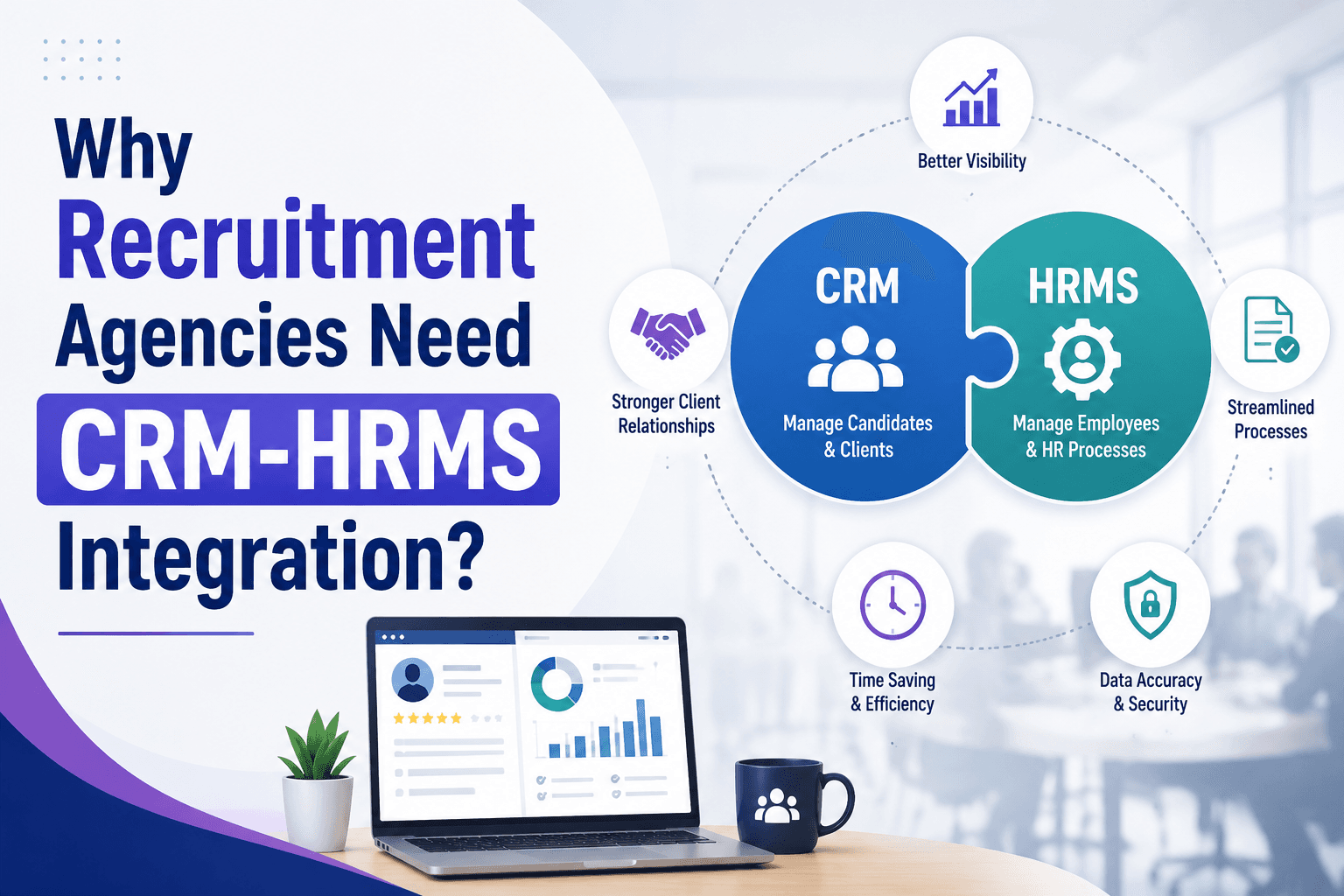
It’s 7 P.M on Friday, and Rohan, who runs a 12-member recruitment agency in Pune, has closed his biggest placement of the month. But instead of celebration or recognition, he is opening a spreadsheet.
His company CRM has every detail, including PAN, bank details, personal details, documents, and salary details. But the problem is manual data entry. He has to enter every detail again into the HRMS software. The onboarding process gets extended due to these administrative tasks, which can lead to losing a talented candidate. His agency has followed the same process repeatedly.
This is exactly why a recruitment agency needs CRM-HRMS integration, to replace manual re-entry errors with an automated, accurate workflow. This comprehensive guide explains what CRM and HRMS are, how the integration benefits organisations, the role HRMS plays in the recruitment process, and the most common questions agencies ask.
As per the SmartRecruiters Survey of 533 HR professionals in 2024, 45% of business leaders spend more than half their working hours on administrative talent acquisition tasks that can be automated.
In India, the shift is already underway. As per NASSCOM data, over 70,000 Indian businesses had adopted Applicant Tracking Systems by 2023, reducing their time-to-hire by nearly 30% on average. With new labour codes now bringing contract and gig workers formally under PF and gratuity, the handoff from recruitment to payroll matters more than ever.
What is CRM?
CRM, or customer relationship management, is the system a business uses to track and manage every interaction with its customers and leads, from first contact to closed deal.
Core Features of CRM
Stores contact details, communication histories, and tracks potential customers through the sales pipeline.
Automates repetitive tasks such as sending follow-ups, assigning support tickets, or updating lead status.
Provide actionable insights into sales performance, customer behavior, and marketing effectiveness.
Allows marketing, sales, and customer service teams to share real-time data, so everyone is on the same page.
What is HRMS?
HRMS (Human Resource Management System) is a digital software to handle core HR operations. It automates the HR operations, including payroll, employee data, business administration, recruitment, and performance tracking.
Key Features of HRMS
Stores all employee information in one secure place.
Calculate salaries, manage tax deductions, and process payments
Track employee work hours, leaves, and absences.
Provides an employee self-service portal to access payslips, apply for leave, and manage tax documents.
Manages employee goals, appraisals, skill development, and performance in the overall onboarding process.
Difference Between CRM and HRMS
The core fundamental lies in who uses the system for their business requirements to drive sales and revenue. If we talk about CRM, it manages an external relationship with the buyers and the customers to drive sales and revenue. Whereas, HRMS usually manages internal relationships with the employees and HR for organisational workforce administration and payroll management.
Let’s understand the core difference between CRM and HRMS through the table mentioned below:
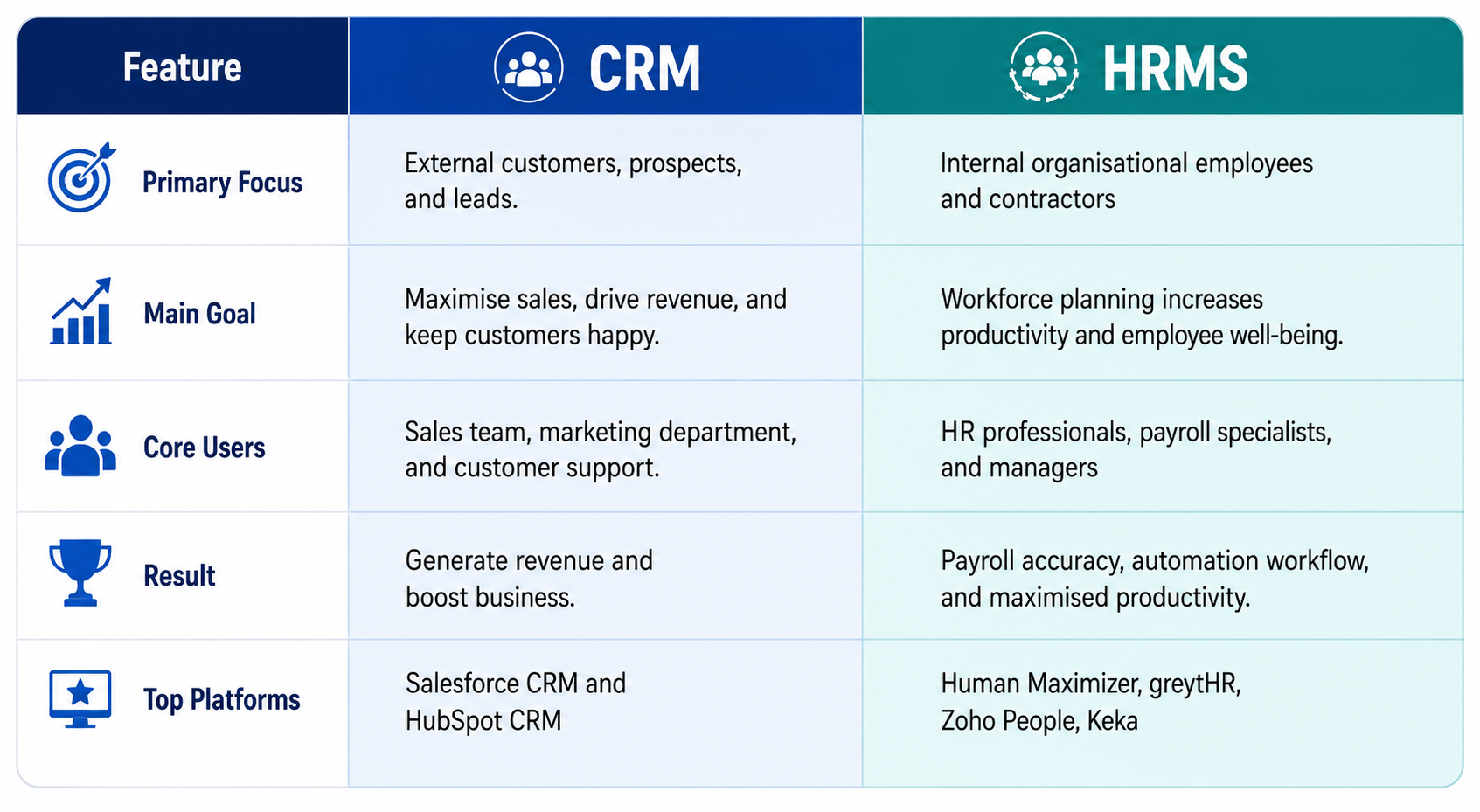
A few modern platforms, like Human Maximizer, bring both sides together, so recruitment and HR data live on one system instead of two.
What are the Benefits of Integrated CRM and HRMS?
An integration of CRM and HRMS benefits your business in several ways. Primarily, it aligns your company's sensitive data with customer operations. It boosts operational workflow and workforce planning by eliminating data silos, automating the sales commission workflow, and matching talent availability with customer brands.
A quick note here: Integration usually means connecting two separate tools together through an API, which usually works, but brings its own maintenance cost every time one vendor updates its system.
Top benefits of integrated CRM and HRMS are:
When CRM data flows into the HRMS, recruiter commissions and bonuses calculate automatically against closed placements, no more reconciling a sales sheet with a payroll sheet by hand, where one wrong figure throws off a recruiter's payout.
Leaders can identify high performers and bridge the communication gap through HRMS talent data that directly flows from CRM.
New employees are provisioned automatically, so onboarding starts the moment a candidate is marked placed.
Support team members to gain insights into employees' bandwidth and staff availability. It enables them to route client tickets more efficiently and provide satisfactory customer service.
By sharing one database, agencies stop paying twice, in licence fees for two tools and in the hours spent keeping both in sync, while removing the duplicate-entry errors that creep in every time data is typed twice.
Role of HRMS Automation in the Recruitment Process
HRMS acts as a digital bridge between attracting talent and seamlessly transitioning into the company’s payroll and operational systems. It centralises employee data, screens CVs and resumes, and attracts top talented candidates. Here are the points that show the role of HRMS automation in the recruitment process:
Applicant Tracking: It allows job recruiters to post jobs, screen resumes, track applicant progress in a unified portal.
Automated Task: Automates manual tasks, time-processing tasks, such as sending interview notifications to both managers and the hiring team. It updates the application status of an employee and sends feedback.
Seamless Onboarding: The moment a candidate accepts the offer, their details move straight into onboarding; the system generates the contract, collects PF and tax forms, and creates the employee profile. The candidate gets their joining email the same day, not three days later when someone finally finds time to re-enter the data.
Data-Driven Insights: It provides reporting and analytics to evaluate employees' performance and their core skills. Organisations can measure various productivity metrics such as time-to-hire and cost-per-hiring to forecast staffing needs and improve hiring strategies.
Compliance: The centralised system automatically records candidate interaction and assessment data. It ensures that the employee data is in accordance with labor laws and simplifies internal audits.
Final Thoughts
Remember Rohan, frustrated at typing the same data from CRM to HRMS? With CRM integration with HRMS, the name, PAN, salary, documents, and joining date flow straight into onboarding and payroll. He doesn’t need to open a spreadsheet or manually enter sensitive data.
The truth most agencies miss is this: they don’t really have an integration problem; they have a two-system problem they have learned to live with.
Adding more software across an organisation isn’t a solution for recruiters. They need a system that can remove the communication gap between customers and buyers, along with employees and administrative leaders.
If your team is still relying on manual methods such as copying data from one platform to another, then it causes data errors and recruitment costs.
If you’re ready to modernise your recruitment process, attract top-talent candidates, and reduce the risk, Human Maximizer’s recruitment management module keeps recruiters, managers and interviewers aligned at every stage.
From job postings to application status to candidate pipeline, everything stays on one platform with full visibility. You can filter, shortlist, share feedback, and make decisions together in real time.
Schedule a demo with Human Maximizer today and explore our core features to check whether it aligns with your business requirements.
Frequently Asked Questions
How does CRM-HRMS integration help staffing agencies?
CRM-HRMS integration helps staffing agencies by eliminating data silos, allowing staffing agencies to instantly connect with business development, recruitment, and HR operations.
This seamless flow of real data ensures faster candidate placements and streamlines payroll. It improves the overall client and talent experience by automating the entire lifecycle from lead generation to onboarding.
Can a CRM and HRMS work together for recruitment?
Yes, CRM and HRMS can work together to streamline recruitment. While a CRM focuses on external interactions and talent pipelines, HRMS handles post-hire employee administration. By integrating both, you can create a complete hiring and talent pipeline.
Which software combines recruitment CRM and HRMS?
Human Maximizer, Zoho Recruit, and Zimyo are among the platforms that bring recruitment, CRM, ATS, payroll, leave, and attendance onto one system. Human Maximizer is built for Indian SMEs and agencies, combining recruitment and HRMS on a single platform so placed candidates flow straight into onboarding and payroll, without juggling multiple tools.
Is CRM-HRMS integration worth it for small recruitment agencies?
Yes, CRM-HRMS integration is worth it for small recruitment agencies because it removes duplicate data entry, manual tracking, and connects recruitment, HR, and payroll in one flow.
For startups and agencies, which are handling multiple clients and talent pools, an integrated CRM-HRMS system enhances the overall experience.
Keep reading
HR Strategy
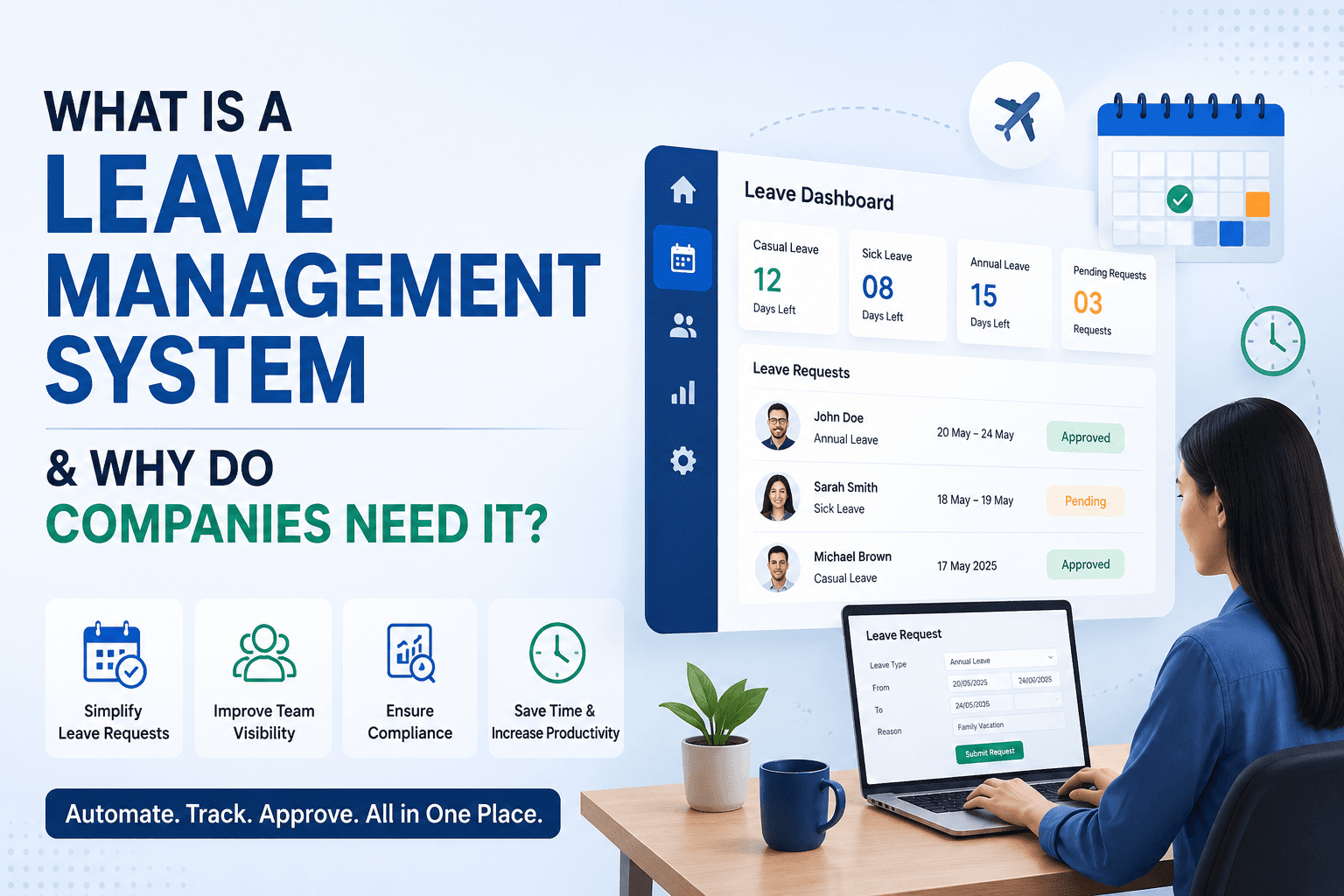
What Is a Leave Management System & Why Do Companies Need It?
Still tracking leave in emails and spreadsheets? See how a leave management system helps Indian companies apply, approve, and track leave, with payroll integration and full compliance.
5 min read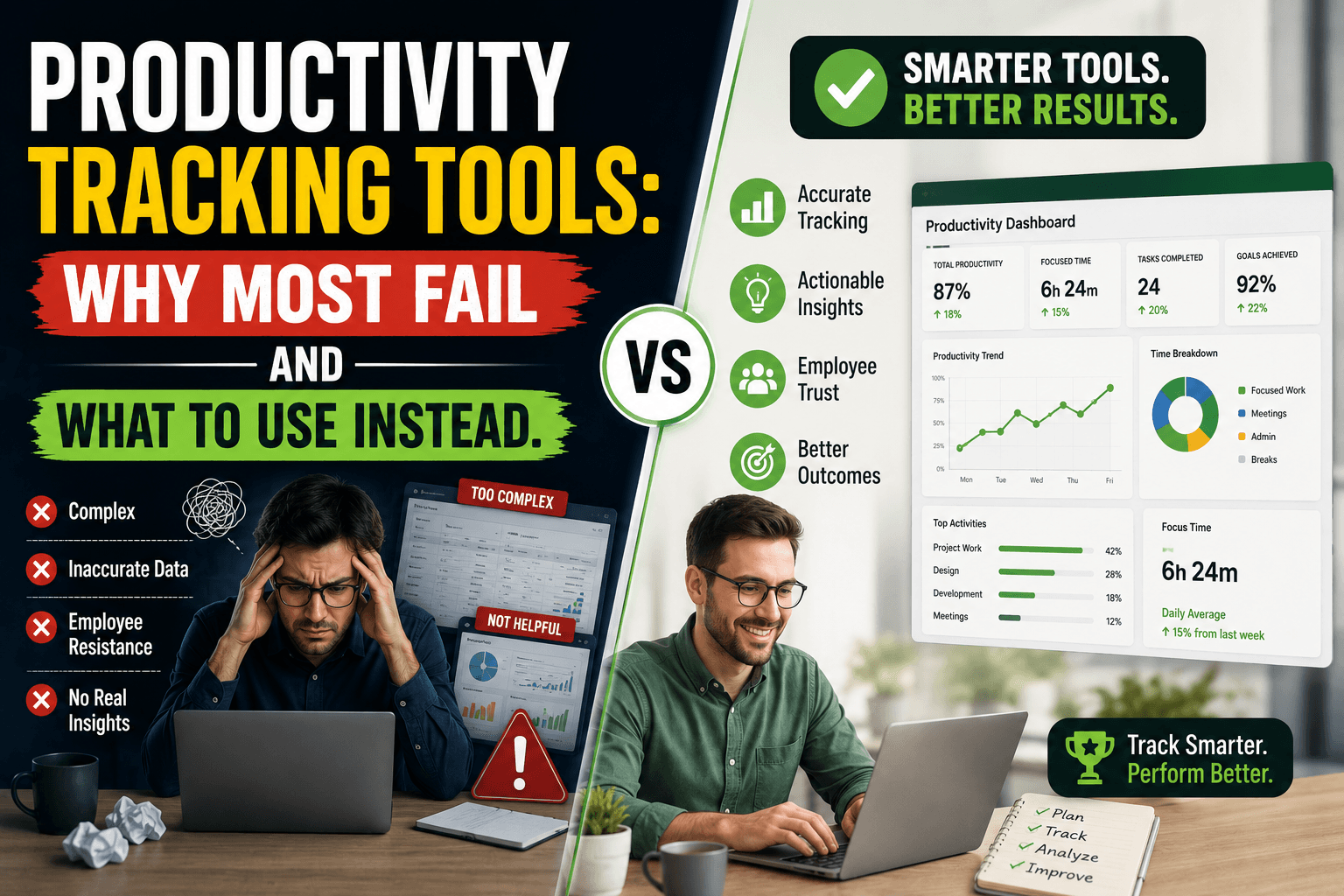
HR Strategy
Productivity Tracking Tools: Why Most Fail and What to Use Instead
Most productivity tracking tools measure the wrong things entirely. Discover the real reasons they fail, what HR-forward companies use instead, and a practical checklist to build a system that actually improves performance for remote, hybrid, and in-office teams.
5 min read
HR Strategy
Task Management vs Project Management: The Costly Confusion
Confusing task management with project management quietly drains budgets, delays delivery, and burns out teams. Learn the difference and fix it.
5 min read