
HR Strategy
What Is Employee Lifecycle Management? Stages Explained for Indian HR
Master end-to-end HR lifecycle management with our guide. Get actionable workflows for onboarding, compliance, and offboarding tailored for Indian firms.

Richa Thakur
Content Writer · 5 min read · · Updated
Priya, an HR manager in a fintech company with 200 employees based in Bengaluru, opens her inbox and sees a resignation letter from an ambitious product analyst. He joined the company 8 months ago. The exit process reflects the same story as other employees leaving the company. The laptop arrived a week late, and his EPF registration took 3 weeks. Nobody has discussed his growth path even once since the day of joining the organisation.
This situation occurs when companies manage HR tasks rather than managing the employee lifecycle. Therefore, employee lifecycle management helps in engaging employees by managing their journey from the employees receiving an offer letter to the day of retirement.
In this guide, we break down everything that matters about employee lifecycle management for Indian companies:
What is the actual definition of employee lifecycle management?
Different stages of the employee lifecycle
Why is employee lifecycle management necessary in organisations?
What are the steps to measure employee lifecycle experience?
Common challenges in handling the employee lifecycle
How an employee lifecycle management system fits in
Deloitte's Campus Workforce Trends 2024 study, drawing on data from over 190 organisations and 500 campuses, found that 21% of top-tier campus hires leave within their first year. The wider picture is no more comforting. Deloitte India's Talent Outlook 2026 reports that overall attrition edged up to 17.6% in 2025, from 17.4% the year before. That is nearly one in five employees walking out the door annually. Most of those exits trace back to broken moments earlier in the journey, not the final one.
What is Employee Lifecycle Management?
Employee lifecycle management is the HR strategy used to oversee and optimise the employee journey from joining to retiring from an organisation. ELM aims to improve productivity, boost job satisfaction, and improve employee retention by providing the right support at every phase of the employee experience.
Why is Employee Lifecycle Management Important?
The employee lifecycle management process includes overseeing an employee's journey within an organisation. It involves several steps, such as attracting an individual, onboarding to development, retention, and offboarding.
Managed well, it lowers the cost of churn before churn happens. Replacing a salaried employee in India typically costs between half and twice their annual salary, once you add up hiring, notice-period overlap, and the months a new hire takes to reach full productivity. Let’s understand why companies manage the employee lifecycle:
Clear growth pathways and regular feedback keep your best people from becoming a competitor's next hire, cutting repeat recruitment and retraining spend.
Structured onboarding and defined 30/60/90-day expectations move new hires to productivity faster, so you stop paying full salary for partial output.
A strong exit experience turns former employees into referrers, feeding the attraction stage at near-zero acquisition cost.
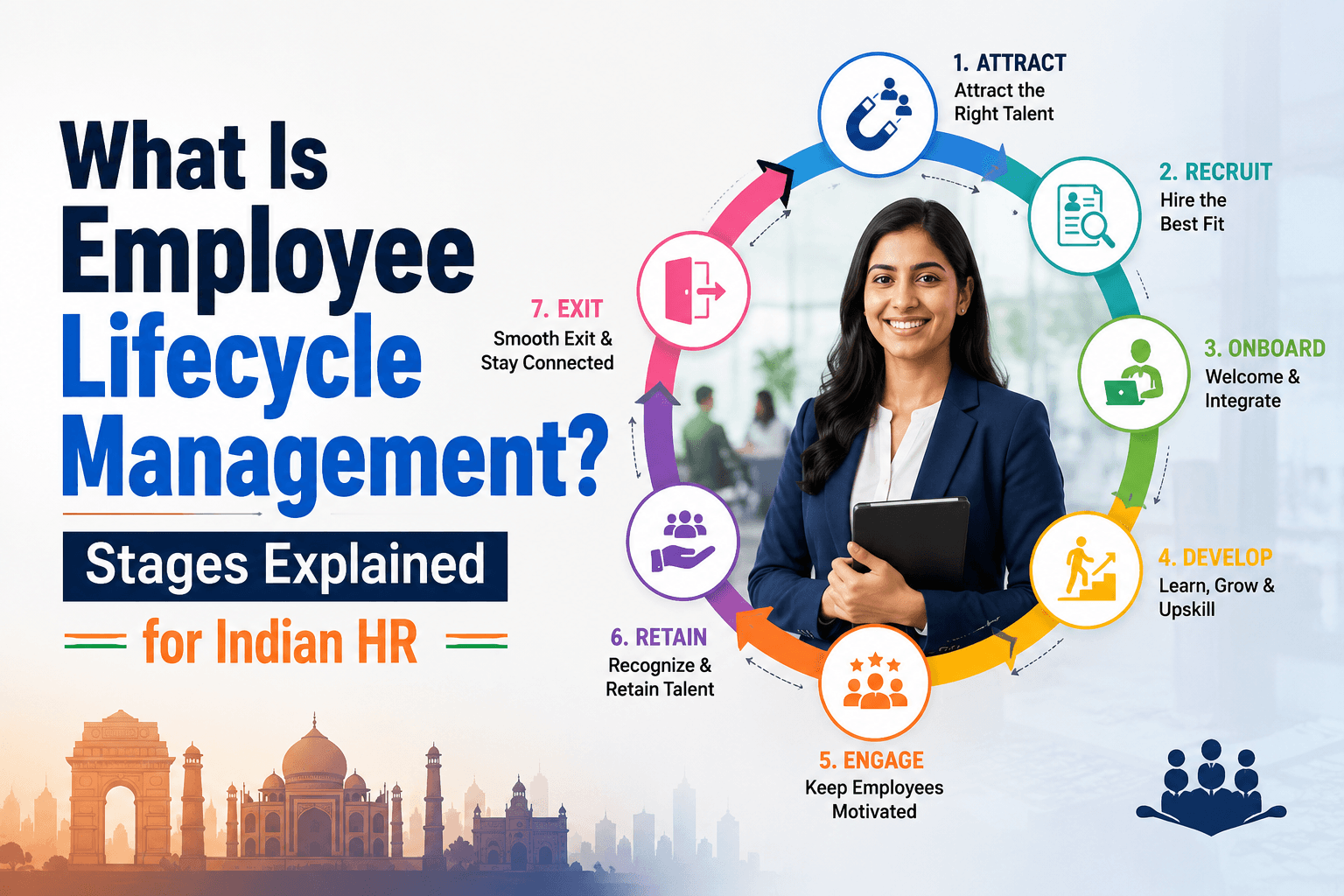
What are the 7 Stages of the Employee Life Cycle?
Employee lifecycle management is the complete journey that HR professionals strategise within an organisation. It involves several phases from the beginning to the end of an employee's career. From onboarding them to retiring, HR manages every phase for successful workforce planning.
Every employee moves through the same sequence of stages, whether or not HR is actively managing it. The difference is that a managed lifecycle catches the gaps between stages before they cost you the person. Here are the seven stages of the employee life cycle.
Attracting: Building the employer brand and showcasing the company’s positive culture to draw potential candidates even before they apply for the job role.
Recruiting: The process of screening, interviewing, and evaluating the employee's skills for the required job roles and responsibilities.
Onboarding: Welcoming new employees into the company, equipping them with the tools they need, and walking them through the company's vision, ways of working, and policies. In India, this is also the compliance window. EPF and ESI registration, UAN generation, and POSH policy acknowledgement should all close within the first week.
Development: Facilitating the training sessions, professional growth opportunities, and clear pathways to enhance their existing skills.
Retention: Keep top performers motivated and engaged with rewards and recognition programs, well-being initiatives to promote positive work-life balance. Salary revisions here must also keep pace with statutory changes like PF wage ceilings.
Offboarding: Managing the administrative and human side of an employee's departure, whether resignation, retirement, or layoff, including knowledge transfer to the people staying behind. For Indian companies, this stage carries hard deadlines. Gratuity calculations and the full and final settlement must close within statutory timelines, and ex-employee data must be handled as per the DPDP Act 2023.
Advocacy: Turning former employees into happy leavers and brand ambassadors who can recommend the company to others and speak highly of their experience.
How to Measure Employee Life Cycle Experience?
Measuring the employee life cycle experience requires both quantitative signals, like attrition rates, eNPS, and time to fill, and qualitative ones, like exit interview themes and pulse survey comments. This can be done by conducting surveys, continuous feedback, and evaluating analytics.
Measure by Lifecycle Stage
Attraction: Track time to fill, cost per hire, and Candidate Net Promoter Score. A high drop-off rate in your application portal is an early signal that the candidate experience is frustrating people before they even join.
Onboarding: Assess 30, 60, and 90-day retention, training completion, and new-hire satisfaction.
Development: Measure promotion rates, internal mobility, and learning participation.
Retention: Track voluntary turnover and eNPS by department, not just company-wide.
Offboarding and Advocacy: Capture exit-interview themes and whether leavers would recommend you.
Utilise Key Measurement Tools
Gather feedback from peers and cross-functional colleagues, not just top-down reviews, for a fuller picture.
Use a monthly pulse check on workload and manager support, the two pressures most likely to push someone toward the door.
Trigger short automated surveys at key milestones, end of onboarding, post-training, after a promotion, and at exit, so you measure each moment while it's fresh.
Run a recurring eNPS question asking how likely employees are to recommend the company as a place to work, scored out of 10.
Analyse Patterns and Take Actions
Combine the survey results with the HRMS (Human Resource Management System) at a centralised dashboard to spot systematic issues.
Pull survey results into your HRMS dashboard alongside attrition and tenure data, so patterns surface in one place instead of across spreadsheets.
Most HRMS platforms surface these lifecycle metrics on a single dashboard, which is what makes employee lifecycle management in an HRMS practical rather than aspirational
What Is an Employee Lifecycle Management System?
An employee lifecycle management system is the software that turns the seven stages above from a diagram into a working process. Instead of onboarding living in a spreadsheet, payroll in another, and exit clearances in email threads, an employee lifecycle management system connects them so each stage triggers the next automatically.
For an Indian company that means one platform where an accepted offer letter opens onboarding tasks — EPF and ESI registration, UAN generation, POSH acknowledgement; attendance flows into payroll; and a resignation kicks off the full-and-final settlement and DPDP-compliant data handling on a fixed timeline — nobody relying on memory.
What a good employee lifecycle management system does at each stage:
Attract & recruit: an applicant tracking system that handles resume volume without dropping good candidates in a slow funnel.
Onboard: day-one hardware, access, and statutory registrations closed inside the first week, not requested afterwards.
Develop & retain: growth conversations, learning, and eNPS pulses tracked in one place instead of scattered forms.
Offboard: gratuity, FnF, and knowledge transfer run on workflows with hard statutory deadlines, not reminder emails.
The test is simple: if your lifecycle map shows more gaps than owners, that is the point where companies move from spreadsheets to an employee lifecycle management system. An HRMS built for Indian companies, like Human Maximizer, is that system — it connects offer letter to final settlement so the journey runs on workflows instead of luck.
Employee Life Cycle Management: Real-Life Examples of Companies
TASL: Moving Beyond Spreadsheets
About the Company:
Tata Advanced Systems Limited, established in 2006, is a premier aerospace and defense subsidiary of the Tata Group.
The Problem:
TASL was recruiting and onboarding through manual methods such as spreadsheets over the years.
In a case study published by TCS, the company describes how spreadsheet-driven onboarding created overheads serious enough to limit its ability to scale HR across business lines.
The Result:
Consolidating recruiting, records, and attendance onto one cloud platform removed the spreadsheet bottleneck that had been capping how fast HR could scale across business lines. If a Tata group company has to outgrow spreadsheets to scale, a 200-person startup will hit that wall far sooner.
Kotak Life: Fixing Retention Through Everyday HR Experience
About the Company:
Kotak Mahindra Life Insurance is one of India's largest private life insurers, with over 16,000 employees scattered across branches, regional offices, and a large distributed sales force.
The Problem:
For a distributed workforce like this, HR was full of friction. A field employee in a sales branch had the same needs as someone at headquarters, leave approvals, payroll queries, policy information, but far less access to HR.
Every unanswered query and delayed approval quietly told employees the organisation was not built around them. Aon's turnover survey consistently places life insurance among India's highest attrition sectors. In an industry where people already leave fast, that friction compounds.
The Result:
A digital HR transformation, bringing HR into employees' smartphones. Leave, attendance, payroll, and approvals moved to mobile self service, so a branch employee in a tier 3 town gets the same HR experience as a manager in Mumbai.
According to the case study published by Darwinbox, Kotak Life achieved roughly 90 percent employee satisfaction post-transformation, with a fully integrated hire-to-retire lifecycle enabled in three months and a centralised source of HR data and reporting.
Common Challenges in Handling Employee Life Cycle
Handling the employee life cycle requires subsequent action from onboarding to development, to retention, and beyond. Some of the common challenges include aligning hiring with organisational goals, maintaining a consistent onboarding process, and promoting continuous career growth, reducing burnout, and capturing clean data when people leave. Here are the common challenges in handling the employee work-life journey.
Prolonged Time to Hire: A lengthy and extended recruitment process often results in losing high-quality candidates to competitors.
Inconsistent Experiences: Failing to provide accurate and uniform details about the company's vision, culture, and role expectations can reduce new hire confidence.
Operational Delays: Slow setups, like delays in providing IT equipment and software access, directly reduce the productivity of a new hire.
Skill Gaps and Stagnation: Inefficiency in providing relevant training sessions and guidance for skill development can increase the turnover rate.
Personalised Requirements: Employees have distinctive and professional requirements. Imposing a single approach for everyone often leads to turnover.
Compliance Risk: Final payroll, gratuity, and sensitive employee data all carry legal deadlines and DPDP obligations. One missed FnF timeline or mishandled record, can turn a routine exit into a penalty or a soured reference.
Best HR Practices for Employee Lifecycle Management
Strong lifecycle programs are rarely built on one big initiative. They come from a handful of disciplines applied consistently across every stage, from hire to retirement.
Start at the front. Standardise your selection process so screening is fast and fair, and use an applicant tracking system to handle resume volume without losing good candidates to a slow funnel. Keep your employer branding honest rather than aspirational. Real employee testimonials and a clear view of the actual culture attract people who will stay, while a polished fiction attracts people who leave the moment reality sets in.
Get the practical things done before day one. Paperwork, hardware, and system access should be ready when the new hire walks in, not requested afterwards, because a laptop that arrives a week late is the first thing a new employee tells their friends about. Set explicit 30, 60, and 90-day expectations so people know what good looks like early, and they reach productivity with confidence instead of guesswork.
Then keep the momentum going. Replace the once-a-year review with regular one-on-one growth conversations, since annual cycles let problems compound for months before anyone names them. Back those conversations with continuous learning that is genuinely accessible, through both online and offline formats, and recognise contributions through peer and manager channels rather than waiting for an annual ceremony.
Finally, listen on a cadence and exit cleanly. Short, regular pulse surveys catch sentiment shifts while you can still act on them. And treat offboarding as a real process, not an afterthought: make sure departing employees pass on their knowledge, documentation, and account access, so an exit becomes a handover rather than a hole.
Final Thoughts
The product analyst was never lost in the exit interview. He was lost in week one when his laptop was late, and EPF registration was saved in someone’s pending folder. By the time he resigned, the company was just finding out what he had known for months.
Attrition is not an event. It is a verdict on every stage that came before it. This week, map your own lifecycle on a single page. List the seven stages, write down who owns each one, and mark every handoff that depends on someone remembering to send an email. Those unmarked handoffs are where your next surprise resignation is already forming.
When the map shows more gaps than owners, that is the moment companies shift from spreadsheets to employee life cycle management software. An HRMS built for Indian companies, like Human Maximizer, connects the stages, from offer letter and EPF registration to full and final settlement, so the journey runs on workflows instead of memory. Either way, start with the map. The companies that retain people are not the ones with the biggest HR budgets. They are the ones where nobody's first week, growth conversation, or final settlement depends on luck.
Frequently Asked Questions
What is the difference between employee lifecycle and employee experience?
The employee lifecycle is the structural journey, the stages every employee passes through from attraction to exit. Employee experience is how the employee feels at each of those stages. The lifecycle is the map; the experience is the weather.
Which stage of the employee lifecycle is most important?
Onboarding is the most critical stage of the employee lifecycle. It bridges the gap between the hiring promise and workplace reality, and sets the tone for every stage that follows.
What is the role of HR in employee lifecycle management?
HR designs the lifecycle system rather than executing every task. It assigns owners to each stage, guards compliance touchpoints from EPF registration to FnF settlement, and uses lifecycle data like 90-day attrition to fix problems upstream before they become resignations.
How does HRMS help in employee lifecycle management?
An HRMS connects the stages that otherwise live in separate tools. The offer letter triggers onboarding tasks, attendance feeds payroll, and exit clearances run on workflows instead of email reminders. It also gives HR a single dashboard for lifecycle metrics like early attrition and time to productivity.
How do you improve the employee lifecycle?
Start by mapping all seven stages and naming an owner for each. Then fix the handoffs, the points where one stage ends and nobody clearly owns the next step. Most lifecycle failures, from delayed laptops to late FnF settlements, happen at handoffs, not within stages.
What is an employee lifecycle management system?
An employee lifecycle management system is HR software that manages every stage of the employee journey — attraction, recruiting, onboarding, development, retention, offboarding, and advocacy — from one platform. For Indian companies it also automates compliance steps like EPF/ESI registration and full-and-final settlement, so nothing depends on someone remembering to act.
Is an HRMS the same as an employee lifecycle management system?
Largely yes. A modern HRMS is an employee lifecycle management system — it connects hiring, onboarding, attendance, payroll, and offboarding into one workflow, with a single dashboard for lifecycle metrics like 90-day attrition and time to productivity.
Related reading
Keep reading
HR Strategy
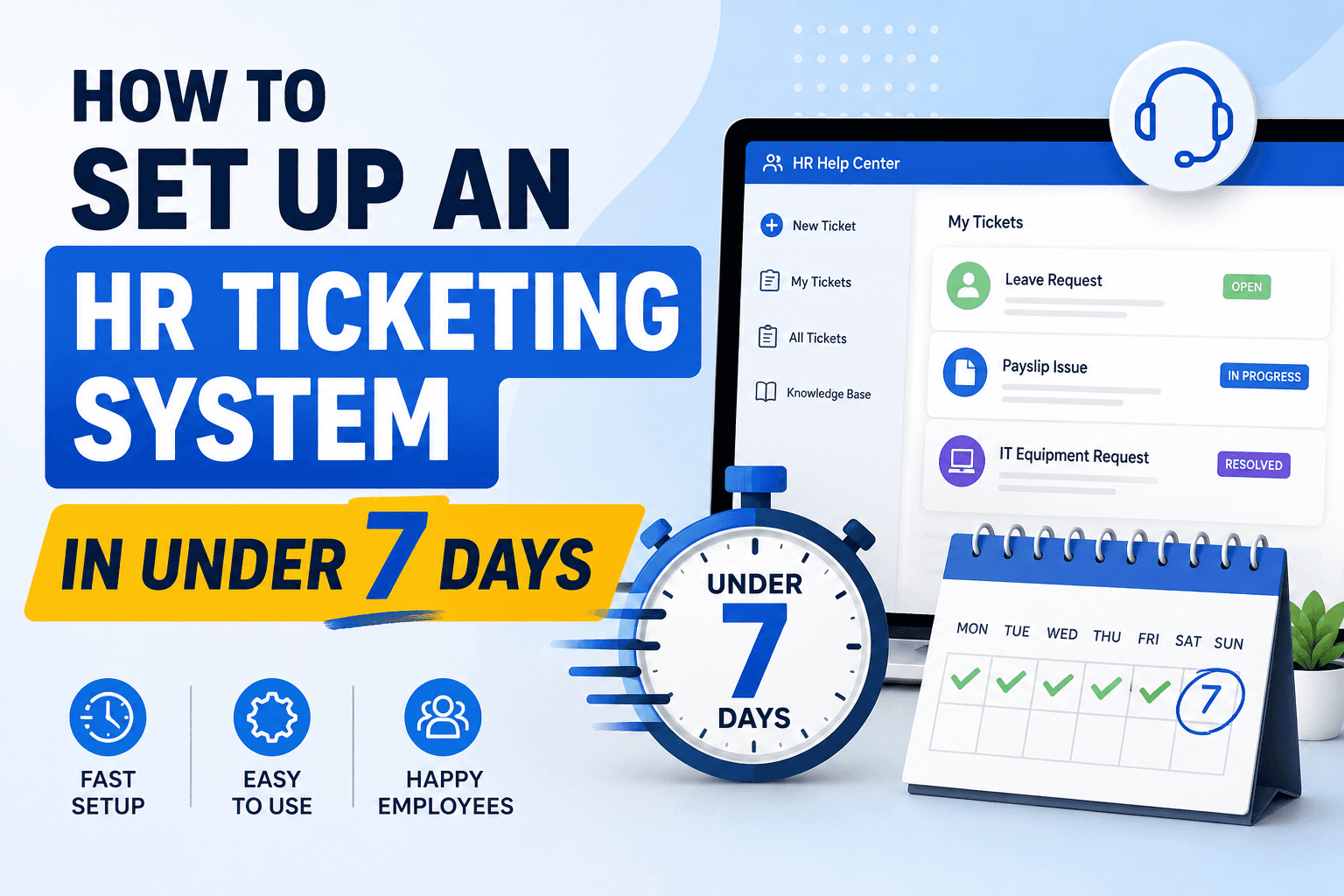
How to Set Up an HR Ticketing System in Under 7 Days
Tired of scattered HR requests? Here's the day-by-day playbook to launch an HR ticketing system in 7 days, built for Indian SMEs and growing startups.
5 min read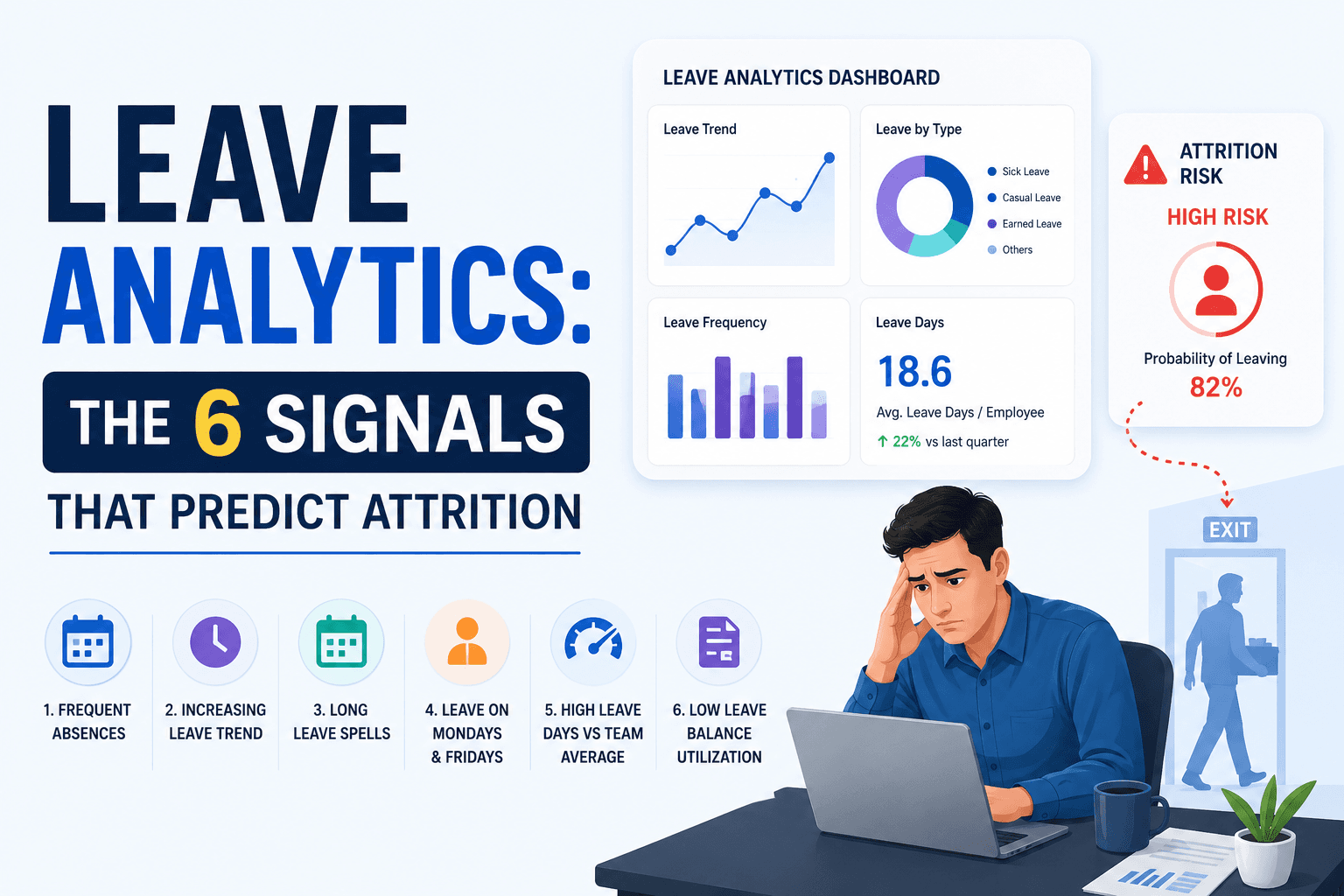
HR Strategy
Leave Analytics: The 6 Signals That Predict Attrition
Leave patterns predict attrition 60 to 90 days before a resignation. Here are the 6 signals every Indian HR team should track using leave analytics in 2026.
5 min read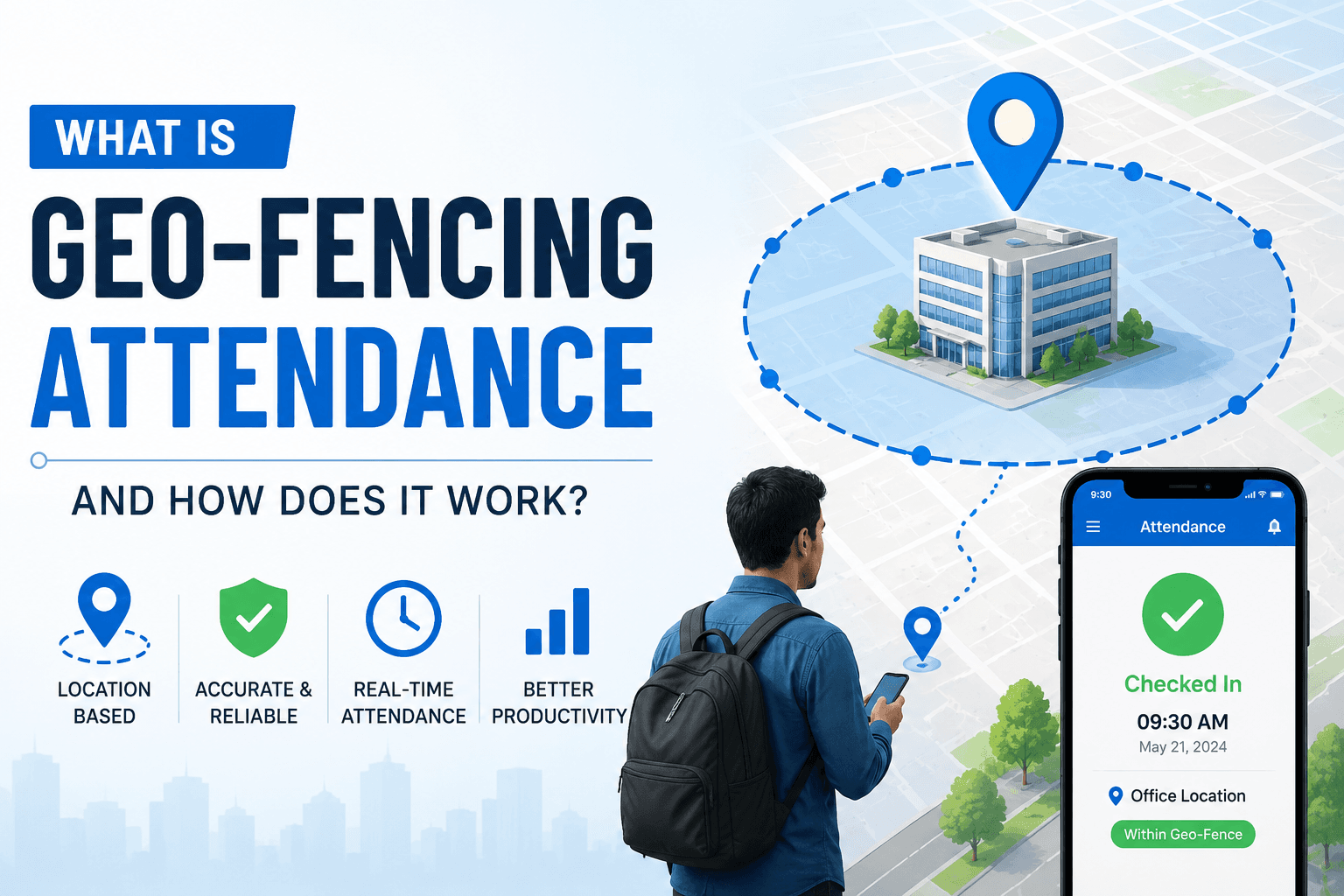
HR Strategy
What Is Geofencing Attendance? How It Works for Indian Teams
How geofencing attendance marks staff present inside a set location, what it can and cannot record, and where Indian privacy law draws the line.
5 min read