
Employee Engagement
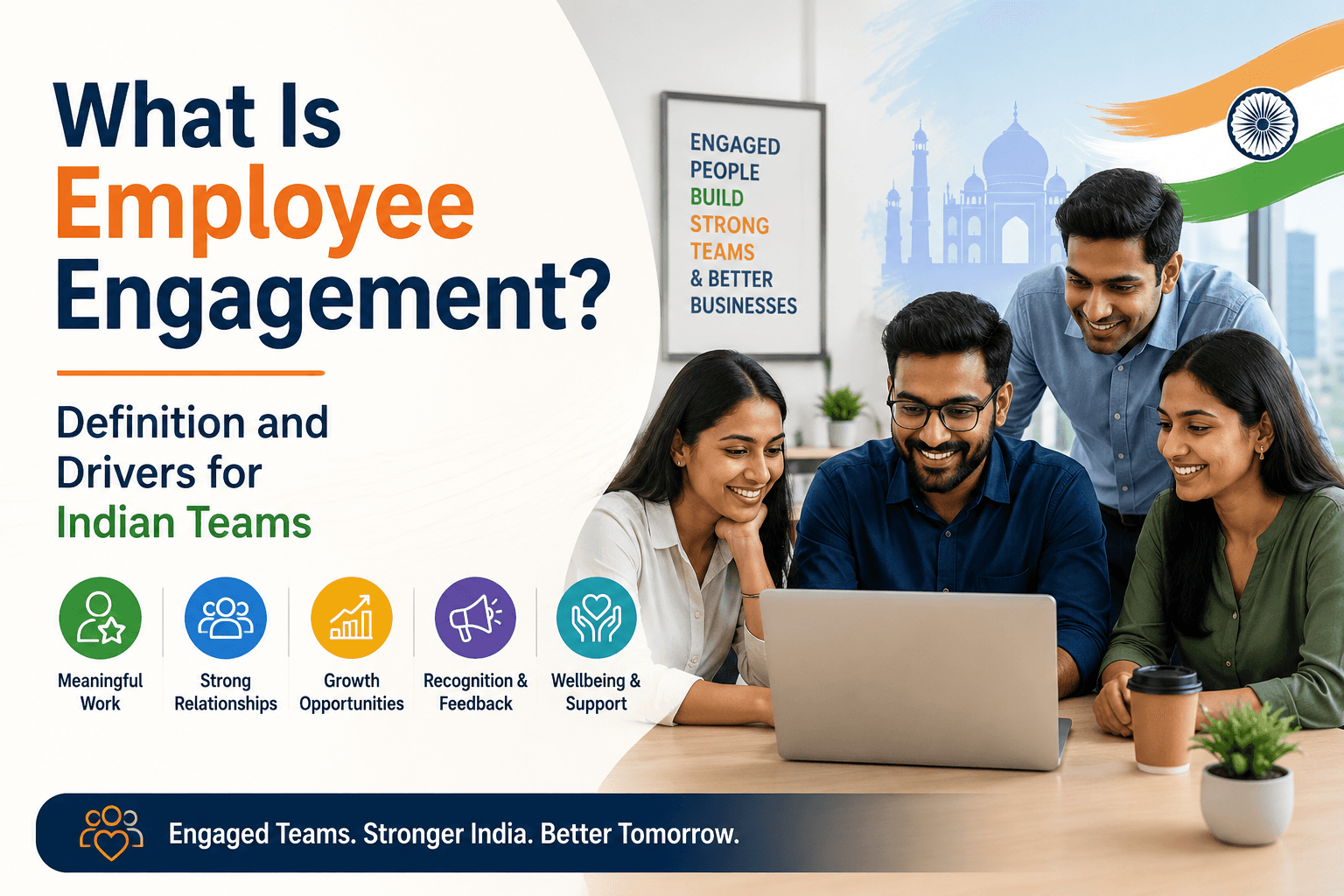
What Is Employee Engagement? Definition and Drivers for Indian Teams
India's employee engagement rate hit a four-year low in 2025. This guide explains what engagement actually means, why satisfaction is not the same thing, and the five cultural drivers that move the needle in Indian companies.

Richa Thakur
Content Writer · 5 min read · · Updated
Ramesh is an ambitious employee who attends every meeting take participation in workplace activities. He never complains about his deadline and work pressure. But three months later, he resigns from his current workplace.
Disengaged employees don’t quit immediately. They quit every single day before finally leaving the organisation. Most Indian HR managers confuse employee engagement with employee happiness. Free snacks, get together and parties are quite effective for team participation, but it doesn’t build an engaged workforce. An employee can laugh at the public office and still be sending out CVs and applying to other organisations. Real engagement goes beyond it.
Ramesh's manager only discovered the real reason in the exit interview. By then, the team had already absorbed six weeks of knowledge transfer and a full replacement cycle cost. This guide exists to help HR leaders spot the signals before that conversation ever happens.
The real question for HR leaders is not whether engagement matters. It is why standard engagement efforts fail, and what actually works inside Indian organisations.
This guide will cover all the crucial aspects of:
What is the definition of employee engagement and its types?
How is it beneficial for the organisational workforce?
What are the steps to measure employee engagement?
Core difference between employee engagement and satisfaction
Key factors to drive employee engagement in Indian organisations
What is Employee Engagement?
Employee engagement is the mental and emotional connection that employees feel at their work, towards their organisation and team members. It evaluates how committed they are to their organisation and their contribution to business operations for boosting the business.
What Does an Engaged Employee Look Like?
An engaged employee brings full dedication and shows potential in their work. They go beyond their capabilities and learn skills over time to contribute to their ongoing projects and tasks. They mostly care about their company's success and solve problems to enhance their company's brand.
What are Disengaged Employees?
Disengaged employees are the workers who lack emotional connection, motivation, and commitment to their existing job role or organisation. They are the workers who quietly resign and often complain about their assigned tasks, deadlines, and company policies. They not only criticise their seniors and bosses but also drag down the morale of their peers.
What is the Importance of Employee Engagement?
Employee engagement is important for organisations because it helps in increasing operational success. It allows employees to contribute more in their organisation, produce more, and become more collaborative. Employee engagement overall drives business profit and reduces costly turnover.
According to Gallup State of the Global Workplace 2025, only 23% of Indian employees were engaged at work in the previous year, 2025. India’s engagement rate fell to its lowest level in four years, which is just above the global average of 20%.
Here are the primary reasons that show the importance of employee engagement for the organisations:
Employees who feel connected to their workplace and teams are likely to make more contributions towards their projects. This significantly increases the work efficiency, quality of work, and output.
Reduces the employee turnover rate by engaging them and saving recruitment and training costs.
Drives customer loyalty and service by showing a positive attitude towards customer interactions.
When employees are engaged and collaborative, they are less likely to experience early burnout and absenteeism rates.
Actively engaged employees feel psychologically happy. They are able to share innovative ideas and execution planning to drive success.
What are the Multiple Types of Employee Engagement?
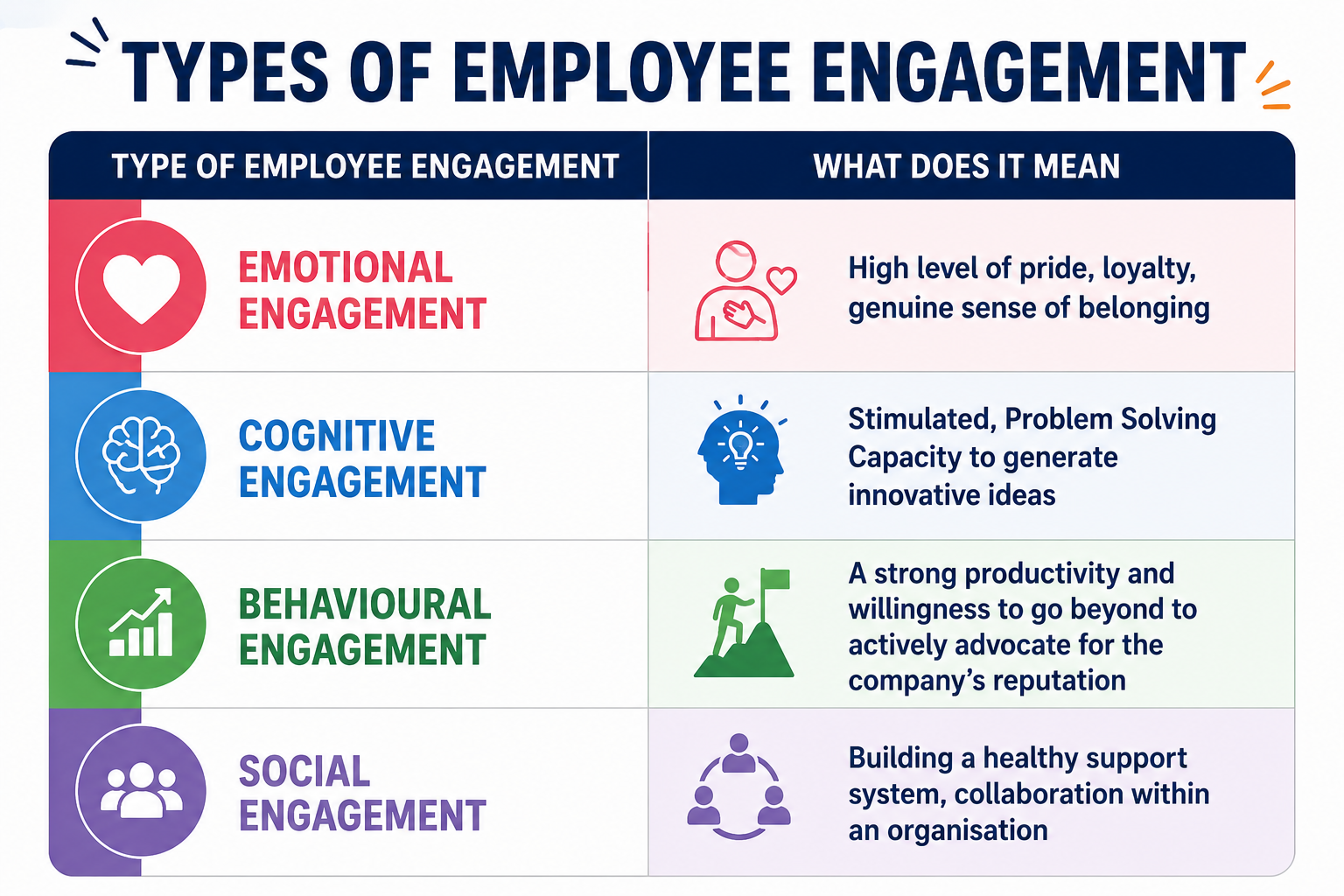
Employee engagement can be categorised into four broad categories. By understanding these psychological and behavioural factors, HR leaders can identify where the main problem lies in employee engagement and how to fix it. Let’s understand its types in detail:
Emotional Engagement: Centres on how an employee feels towards their work, colleagues, and organisation.
Cognitive Engagement: Measures how much mental energy, focus, and critical thinking an employee utilises in their daily tasks.
Behavioural Engagement: Visible actions and practical thought processes of an employee.
Social Engagement: Focus on employees' strengths and interpersonal connections at work.
Here is a table representing the categories of employee engagement and their actual meaning:
How do you Measure Employee Engagement?
To measure employee engagement at the current workplace, you need to focus on both quantitative and qualitative approaches. You can’t improve an issue that is not measurable; therefore, balance the approach of surveys and behavioural patterns.
The most accurate methods combine pulse and annual surveys to drive workers' engagement and behavioural patterns, such as absenteeism rate and turnover, to validate the findings.
Employee Engagement Surveys
Pulse rate surveys are several 5-10 questions sent to employees for quick follow-up and to improve workplace culture and change management quickly.
Annual surveys are pre-defined with 30+ questions about the employees that analyse the engagement, leadership, and alignment of employees.
A powerful employee net promoter score asks questions like “how much you’ll score an our company on a scale of 10”?
Includes a mix of statements from employees about the work-life culture and salary bar. It includes open-ended questions to understand the reason behind the ratings.
Behavioural Patterns
Voluntary turnover rates track how many employees likely seem to leave the workplace. High turnover rates show disengaged employees.
An immediate change in the absenteeism rate of employees showing signs of burnout or poor working conditions.
Measure the learning and development participation rates. Building new skills and intellectual growth shows a faster adoption rate and engagement.
Face-to-Face Conversations
Proactive one-on-one conversations to understand what keeps employees engaged at work rather than waiting for exit interviews.
Informal ongoing meetings between managers and direct reports to facilitate an individual’s feedback.
Host small advisory groups and meetings to discuss specific themes that emerged from broad survey results.
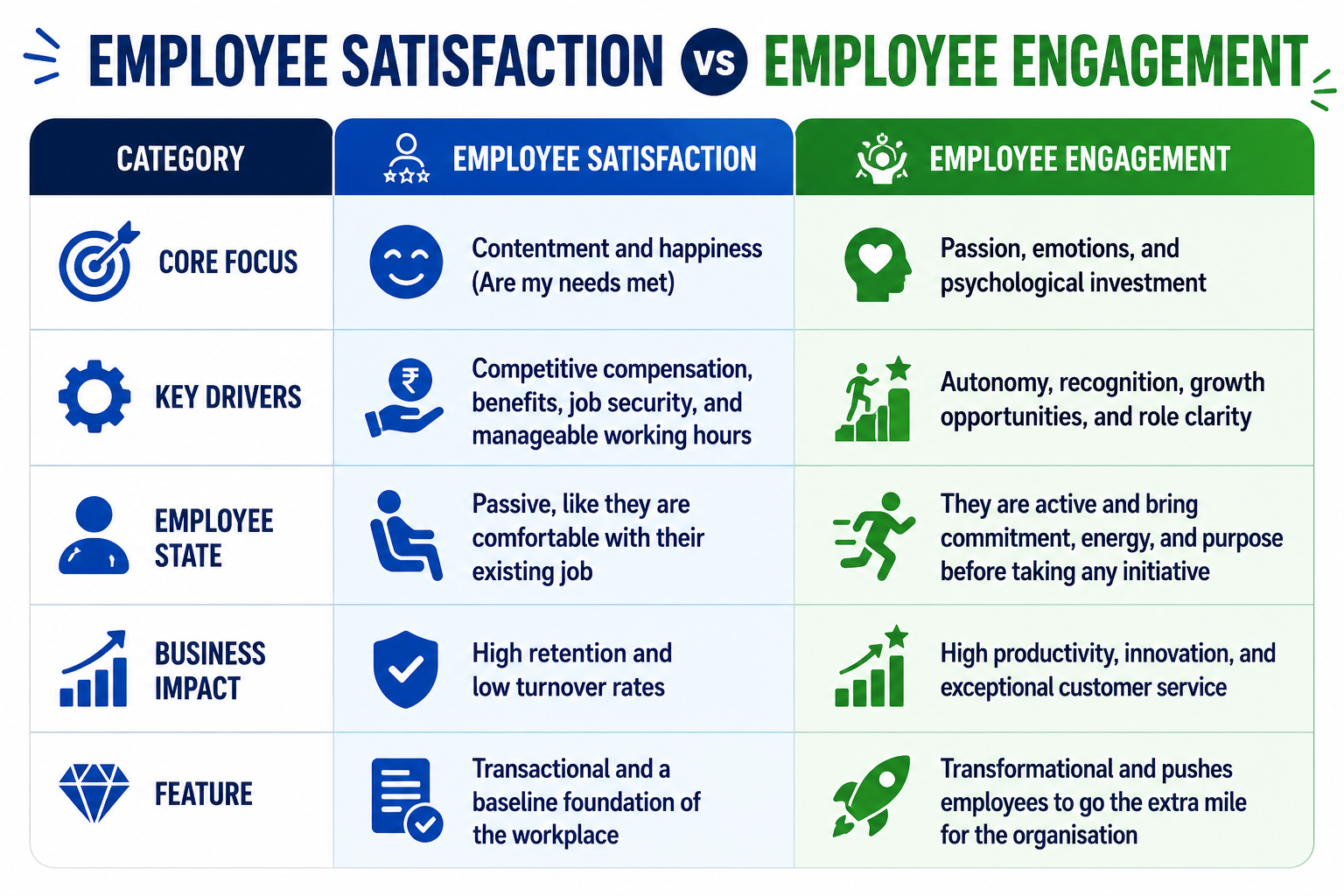
What is the Difference Between Employee Engagement and Satisfaction?
Employee satisfaction is like a metric, whereas, employee engagement is the mindset. An employee can feel happy and satisfied, but at the same time, they can seek out different opportunities. But an engaged employee will contribute their best to innovate business operations. Let’s skim the table given below to differentiate between the two:
Key Drivers of Employee Engagement in Indian Organisations
Employee engagement in Indian organisations is driven by the combination of deep-rooted cultural values and commitment towards work. The key causes include organisational trust, career growth, and inclusive and family-oriented work cultures.
Here are the major factors that help in improving employee engagement in organisations:
By promoting transparency and fairness in company policies, procedures, and leader integrity. This transparency builds a strong psychological contract.
Immediate managers are the biggest reason for employee engagement. Managers who act as coaches and set clear expectations are most likely to drive engagement.
Facilitating continuous learning and development, building new skills, and clearing internal mobility paths leads to employee commitment to staying and growing within an organisation.
Reflecting Indian cultural values, an organisation extends care to employees' families, such as sponsored trips and medical benefits to promote a strong sense of community.
Offering holistic wellness programs, including physical and mental, to prevent burnout and keep the workforce energised.
Final Thoughts
By only measuring results and efficiency, organisations miss the most critical aspect, which is human emotions.
Employee engagement doesn’t start after joining an organisation. It actually starts from the day when you start attracting the right candidate for your organisation. HR leaders should start with the right recruitment process and strategic workforce planning to drive employee engagement.
When organisations eliminate the manual HR tasks, they have access to prioritise other tasks such as aligning, engaging, and rewarding employees. By combining technology with human practices, HR leaders can streamline hiring, conduct interviews, and provide feedback all from a centralised platform.
Are you still managing employee engagement across the scattered tools and through surveys? Build a culture of recognition and engagement, and bring the team together for instant action and communication.
Human Maximizer resolved inefficiencies and communication gaps with its unique module, Synergy, and Team Chats. Employees can feel appreciated and valued at their workplace. These tools open a feedback loop in both directions, where employees share and managers act upon cultural improvements.
For active team participation, get live polls with instant results. Get an interactive and immediate feedback system to enable employees to gain quick insights on various topics. Human Maximizer’s Synergy model provides a centralised social platform within an organisation to bring communication, policy, updates and team collaboration. Schedule a demo today and discover the core features.
Frequently Asked Questions
How does poor employee engagement affect Indian companies?
Poor engagement triggers higher attrition, lower daily output, and slower innovation cycles. A stressful work environment both causes and compounds disengagement. When employees receive no meaningful feedback, recognition, or flexibility, they disengage quietly before eventually leaving.
What are the examples of employee engagement activities in India?
Employee engagement in India combines both mental and physical well-being conditions of an employee. It includes traditional team building with cultural celebrations and wellness programs customized to the local workforce.
Popular employee engagement activities include hybrid festival celebrations, team parties, dinners and gatherings in restaurants, cafes, upskilling sprints, and structured employee recognition programs.
Can HRMS software improve employee engagement?
Yes, HRMS software improves employee engagement by replacing manual administrative processes with automated workflows. This frees HR leaders to focus on recognition, feedback, and building a stronger workplace culture.
What are the four pillars of employee engagement?
The four-pillar framework, defined by David MacLeod and Nita Clarke in their landmark UK Government report on engagement, covers strategic narrative, engaging managers, employee voice, and organisational integrity. Within an HRMS context, these map practically to communication tools, recognition workflows, growth tracking, and well-being programmes.
What are the different types of employee engagement?
Emotional, behavioral, cognitive, and social engagement are the main categories of employee engagement. Emotional engagement refers to how an employee feels at work. Behavioral engagement reflects the actions towards managers and other teammates. Cognitive engagement defines the intellectual and problem-solving skills of an employee, and social engagement shapes the team strength and connections within an organisation.
Keep reading
Employee Engagement
How to Build an Employee Recognition Program That Actually Drives Performance?
Struggling with employee engagement? Learn how to design a rewards and recognition program that strengthens culture, motivation, and measurable performance.
5 min read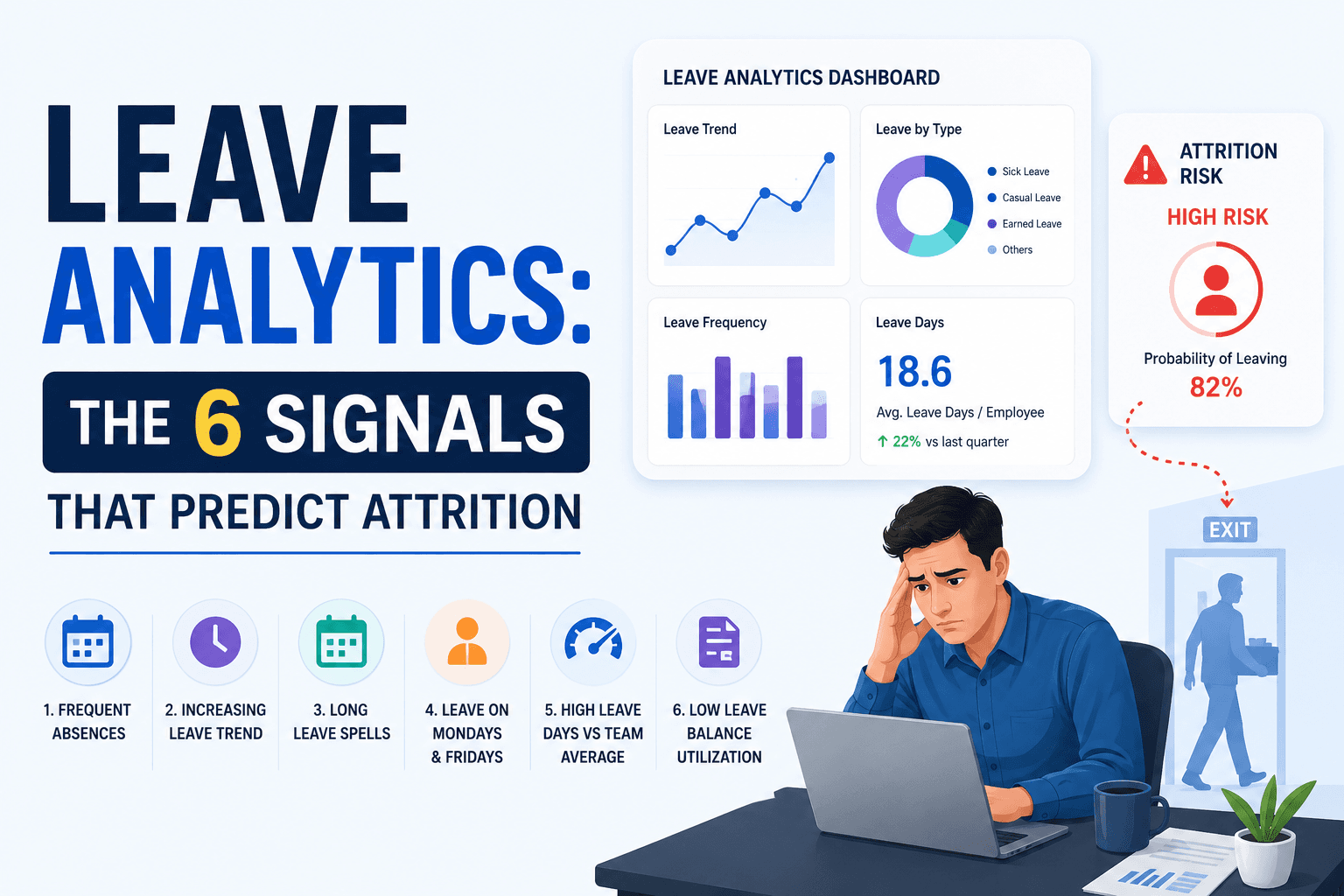
HR Strategy
Leave Analytics: The 6 Signals That Predict Attrition
Leave patterns predict attrition 60 to 90 days before a resignation. Here are the 6 signals every Indian HR team should track using leave analytics in 2026.
5 min read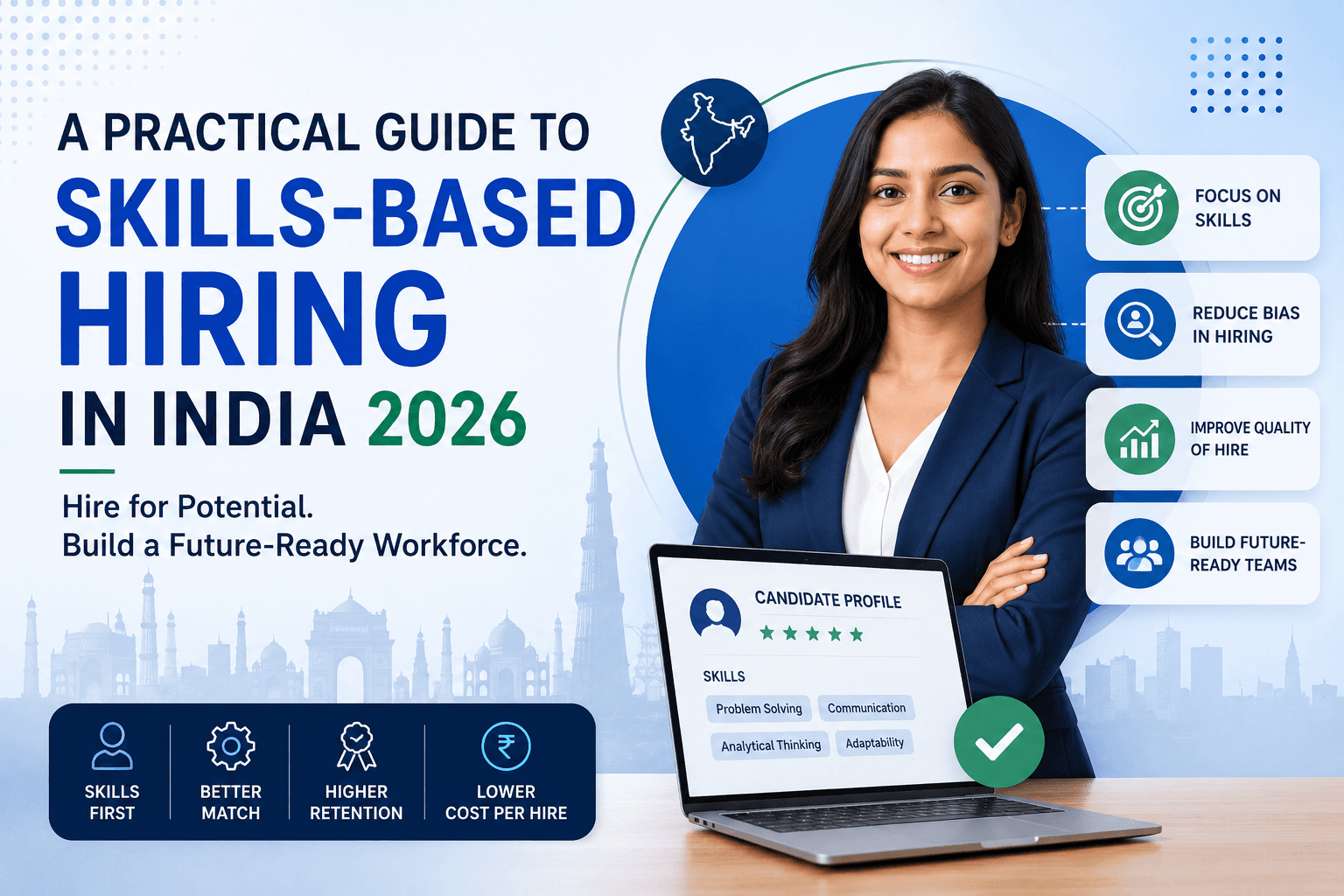
Employee Engagement
A Practical Guide to Skills-Based Hiring in India 2026
How to hire on demonstrated skill instead of degree and pedigree — scorecards, structured tasks, and interview changes that hold up in India.
5 min read