
HR Strategy
Unbiased Performance Appraisal Software for Indian Startups
Eliminate algorithmic bias. Learn how unbiased performance appraisal software protects DEI and ensures fair employee evaluations in Indian startups.

MD Moinuddin
HR Content & Research, Human Maximizer · 13 min read · · Updated

It is appraisal season at a Jaipur-based SaaS unicorn. Kavitha, a senior backend engineer, spent her last quarter mentoring junior developers and restructuring a chaotic database schema while quietly resolving cross-departmental bottlenecks before they delayed deployment. Yet, her performance score on the automated appraisal dashboard is flagged as "low-impact." Meanwhile, her colleague Rohan, who spent the quarter loudly self-promoting on public Slack channels and claiming solo credit for group deliverables, receives a top-tier rating.
Rather than a failure of individual observation, this represents a systematic failure of automated performance tracking. When organizations surrender their evaluation processes to rigid metrics, they reward the loudest voices over the most valuable contributors.
When our team at Human Maximizer spoke with HR leaders, managing directors and founders across Indian companies to map real workflows, we discovered a recurring tension: software that promises objective data often ends up codifying subjective human prejudices. Most performance systems reward noise. They measure self-promotion and visible updates, alongside isolated metrics. They miss quiet collaboration. This is a critical flaw.
The 'Algorithm Trap': How HRMS Tech Inherits Western Bias
Traditional performance management systems are often built on Western workplace assumptions. These models prioritize individualistic achievement and explicit self-promotion. When software built on these assumptions is deployed in Indian organizations, it creates a silent crisis. The technology attempts to convert human behavior into clean data points, but the translation is flawed.
This translation failure is where algorithmic bias in HR begins. If the software is programmed to equate performance with highly visible, individualistic actions, it systematically disadvantages employees who work collaboratively. Unconscious bias does not disappear when written into software; instead, it simply becomes harder to spot.
When managers train performance algorithms or set the parameters for automated evaluation, those personal prejudices are written directly into the code. The resulting HRMS bias in performance management is merely bias with a digital veneer rather than an objective truth.
Cognitive Shortcuts in the Code: From Recency Bias to Halo Effects
Automated appraisal engines rely on historical data to generate scores. However, the way this data is collected and weighted often mirrors classic human cognitive shortcuts.
The first major shortcut is recency bias. An automated performance appraisal system often overweights activity from the final two weeks of an evaluation cycle because that data is the most complete or recent in the database. A developer who works tirelessly for two months but experiences a slow week just before appraisals looks unproductive to a rigid algorithm.
The second shortcut is the halo effect. If an employee scores exceptionally high on a single, easily quantifiable metric, such as the number of tickets closed, the algorithm may allow this single data point to artificially inflate their ratings in qualitative areas, such as teamwork or leadership.
These automated shortcuts have real consequences. As analysts at Deloitte point out, bias can adversely affect the fairness and integrity of performance management approaches and impact overall business and talent outcomes. When algorithms rely on superficial data to make sweeping judgments, they compromise the integrity of the entire appraisal system.
The Cultural Mismatch: Why Indian 'Collectivism' Gets Punished by AI
Indian business culture is deeply relational. Teams often operate on collectivist principles, where helping a colleague or preserving group harmony is valued as highly as individual output. Employees in Indian startups frequently hesitate to claim sole credit for a project, preferring to present achievements as a team effort.
Many performance systems cannot comprehend this cultural nuance. If an algorithm is trained to track individual task ownership, it misinterprets collaborative behavior as a lack of initiative. An engineer who quietly helps teammates solve their bugs will see their own task velocity score drop. The system records the delay but misses the collective acceleration.
This cultural mismatch makes unbiased performance reviews almost impossible to achieve with off-the-shelf, individual-focused software. When we try to force Indian workplace dynamics into rigid, Western-designed metrics, the quiet, collaborative employees who form the backbone of the company are the ones who pay the price.
The Cost of a Bad Score: Turnover and the DEI Drain
When automated systems consistently miscalculate employee value, the damage extends far beyond a single bad appraisal. The most immediate consequence is the departure of top talent. High performers who feel unseen by automated tools do not argue with the dashboard. They quietly resign.
This turnover directly damages efforts to build DEI in Indian startups. Diverse teams often bring varied communication styles and collaboration patterns. When an HRMS uses a single, rigid standard of "visible performance," it disproportionately penalizes those who do not fit the dominant corporate archetype.
The business cost of this exclusion is severe. According to global studies on workplace diversity by organizations like McKinsey, enterprises that fail to build inclusive cultures experience significantly higher attrition and lower problem-solving efficiency. When biased performance reviews drive out diverse contributors, startups lose the exact creative friction that drives growth. The organization becomes an echo chamber of self-promoters, while the deep thinkers and problem solvers take their expertise elsewhere.
Want a system that handles performance evaluation without biased algorithms? Let's talk.
The Human Maximizer Scorecard: Auditing Your HRMS for Bias
To prevent technology from codifying bias, startups must actively evaluate their systems. Instead of relying on generic checklists, we recommend running your current platform through the Human Maximizer Scorecard. This structured evaluation tool uses specific, calculable inputs to audit performance systems for bias risks.
The Scorecard Metrics
-
Visibility Bias Ratio (VBR) $$\text{VBR} = \frac{\text{Self-Reported Achievements}}{\text{Peer-Verified Contributions}}$$ A score significantly above 1.0 indicates that the system over-rewards self-promotion and misses quiet, collaborative impact.
-
Recency Weighting Factor (RWF) $$\text{RWF} = \frac{\text{Appraisal Score Variance (Final 30 Days)}}{\text{Appraisal Score Variance (First 150 Days)}}$$ An RWF greater than 1.5 suggests that the system disproportionately weights recent activity, ignoring consistent long-term performance.
-
Collaboration Discount Rate (CDR) $$\text{CDR} = \frac{\text{Time Spent on Cross-Functional Support}}{\text{System-Recorded Individual Output}}$$ If the CDR is high but individual performance scores drop, the system is actively penalizing employees for helping others.
The Audit Matrix
| Metric Name | Formula / Input | Risk Threshold | Remediation Action |
|---|---|---|---|
| Visibility Bias Ratio (VBR) | Self-Reported Achievements / Peer-Verified Contributions | VBR > 1.2 | Integrate peer-review modules to validate self-reported claims. |
| Recency Weighting Factor (RWF) | Score Variance (Final 30 Days) / Score Variance (First 150 Days) | RWF > 1.5 | Implement continuous feedback loops with equal quarterly weighting. |
| Collaboration Discount Rate (CDR) | Cross-Functional Support Hours / Individual Output Score | CDR > 1.0 (with low score) | Adjust the scoring engine to credit cross-team assistance. |
By applying this scorecard, HR leaders can identify where their performance management software India is failing to capture true value.
Beyond the Dashboard: Balancing Objective Metrics with 360-Degree Human Context
Eliminating bias means using the right data rather than abandoning metrics altogether. To build a fair evaluation process, startups must balance quantitative metrics with rich, multi-perspective human context.
This balance is why we designed the Productivity Lens. Instead of tracking keystrokes or screenshots, our module tracks team output through task completion rates and milestone progression using aggregated metadata. It shows where work is stuck, not whether employees are sitting at their desks. This approach respects employee privacy while giving leadership clear visibility into operational bottlenecks.
To prevent communication gaps from distorting performance data, we also built Synergy. This cross-team goal alignment module syncs OKRs between managers and direct reports automatically. It keeps team goals visible and aligned without status-check meetings, ensuring that everyone knows exactly what success looks like.
By pairing objective metadata with clear goal alignment, organizations can make fairer, more accurate evaluations through Employee Performance Management.
Building a Culture of 'Algorithmic Literacy' for HR Managers
Technology is only as effective as the people who use it. Even the most balanced software will fail if managers treat the dashboard as an absolute truth. HR leaders must actively build "algorithmic literacy" across their management teams.
Managers must understand that software is a supporting tool, not a final judge. When a dashboard flags an employee as a low performer, it should be treated as an invitation to investigate, not a final verdict.
In Indian enterprises, manager-related issues such as a reluctance to differentiate rating outcomes remain a major pain point. Often, managers hide behind the "automated score" to avoid difficult conversations or to justify subjective decisions. Training managers to critically analyze performance data, question automated assumptions, and integrate qualitative observations is the most effective way to mitigate this issue.
How Human Maximizer Changes the Employee Journey: A Case Study
To understand how balanced technology changes the appraisal experience, let us look at how Kavitha’s journey at her Jaipur-based SaaS startup changed after they implemented Human Maximizer. This illustrative scenario represents a composite of patterns we observe during system transitions.
The Old Way: Hidden Contributions
Under the startup's previous, activity-heavy system, Kavitha's deep work was invisible. Because she spent her mornings quietly refactoring database queries and mentoring juniors, her public message count was low. The old system flagged her as "inactive." During appraisals, her manager relied on these flawed metrics, leading to an unfair rating that ignored her critical contributions to system stability.
The Human Maximizer Way: Verified Impact
When the startup transitioned to Human Maximizer, the evaluation process became transparent and balanced:
- Milestone Tracking: The Productivity Lens recorded that the database optimization project met its milestone ahead of schedule, validating Kavitha's technical contribution without invading her privacy.
- Goal Alignment: Through Synergy, her collaborative goals and mentoring milestones were linked directly to her department's key objectives, making her support work visible to leadership.
- Skill Mapping: During the appraisal review, her manager used the Know Your Employee (KYE) tool to map her verified database skills against upcoming project requirements, ensuring her technical growth was recognized.
Manager's Note: The Human Intervention
During the mid-year review, the automated dashboard initially flagged a slight dip in Kavitha's individual ticket closure rate. However, instead of accepting this at face value, her manager, Amit, opened the Productivity Lens and noticed that while her individual ticket count was lower, the overall team velocity for the database migration project had increased significantly. Amit cross-referenced this with the Know Your Employee (KYE) skill map and realized Kavitha had been pair-programming with two junior developers to resolve a complex schema bottleneck. Amit manually adjusted her qualitative rating to "Outstanding Mentor" and noted:
"Kavitha's direct intervention unblocked the entire team. A purely quantitative ticket count would have penalized her for doing the most valuable work of the quarter."
When Automated Performance Tracking Has Limits
While modern software can significantly reduce appraisal friction, automation is not a universal solution. Startups must recognize the limits of technology in performance evaluation.
1. Complex Problem Solving
Software cannot measure the value of an employee who spends three days staring at a whiteboard before writing a single line of code that saves the company millions in server costs. Creative breakthrough is a non-linear process that defies automated tracking.
2. High-Stress Crisis Management
When a critical system fails, the individual who coordinates the response team, calms client anxieties, and keeps the team focused is performing essential leadership. This work is highly relational and cannot be captured by automated task metrics. Human evaluation must always step in where algorithms reach their limits.
Frequently Asked Questions
How does automated HRMS software introduce algorithmic bias?
Automated HRMS software introduces bias when its underlying algorithms are programmed to measure superficial activity metrics, such as message volume or hours logged, rather than actual business outcomes. This setup naturally favors employees with individualistic, self-promoting work styles while penalizing collaborative, quiet contributors.
What are the common types of bias in performance management?
The most common biases include recency bias, where managers overemphasize an employee's most recent work, and the halo effect, where a single outstanding skill blinds evaluators to overall performance gaps. Unconscious affinity bias also leads managers to rate employees with similar backgrounds or communication styles more favorably.
How can Indian startups ensure DEI in automated appraisals?
Startups can protect diversity by auditing their performance platforms to ensure they measure objective outcomes rather than proxy activity data. Incorporating peer feedback, aligning collaborative goals, and training managers to look beyond dashboard metrics are essential steps to ensure fair evaluations.
What is the financial impact of biased performance reviews?
Biased reviews lead to high turnover among quiet, high-performing employees who feel unrecognized by automated tools. Replacing experienced professionals is costly, and the resulting loss of diverse perspectives can lower an organization's overall innovation and problem-solving capability.
Restoring Fairness to the Appraisal Process
The engineer in Jaipur was not unproductive during her quiet mornings. She was performing the deep, collaborative work that keeps the company running. When organizations rely on superficial dashboards, they reward noise and drive out their most valuable talent.
The goal of modern performance tracking is not to stop measuring. It is to stop measuring the wrong things with unearned confidence. By balancing clean outcome data with real human context, startups can build an appraisal process that respects actual contribution.
At Human Maximizer, we build systems that respect the quiet contributors as much as the loudest voices. If you are ready to move past superficial metrics and build a fair, balanced performance process, our Apex tier offers complete performance and alignment tools for just ₹112 per user/month. Explore our pricing plans or start today with our free Launchpad trial.
About the Author & Reviewers
MD Moinuddin — HR Content & Research, Human Maximizer
MD Moinuddin works on content and research for Human Maximizer at Razor Infotech, turning HR-tech and Indian compliance research into practical, plain-English guidance for growing companies.
Connect on LinkedIn
Reviewed & approved by Sameer Hameed — Founder & Chairman, Razor Infotech
Sameer Hameed is the Founder & Chairman of Razor Infotech, where he is guiding the creation of Human Maximizer. An entrepreneur across technology, real estate, mining and travel, he builds organisations on clarity, trust and responsible growth — on the belief that businesses grow only when the people behind them grow.
Connect on LinkedIn
Reviewed & approved by Nishant Tandon — Co-founder & Lead Partner, Razor Infotech
Nishant Tandon is Co-founder and Lead Partner at Razor Infotech, with over a decade in IT, customer support and business operations, helping SMEs achieve cost efficiency, stronger customer experience and scalable, sustainable growth.
Connect on LinkedIn
Human Maximizer is built by Razor Infotech in New Delhi, India (founded 2019). About Human Maximizer.
To see how onboarding, attendance, payroll and the rest work together in one platform, explore Human Maximizer.
Keep reading

HR Strategy
Appraisal Software India: Beyond Annual Reviews
How to select the best appraisal software India has to offer. Streamline your performance review cycles and align employee goals with business growth.
13 min read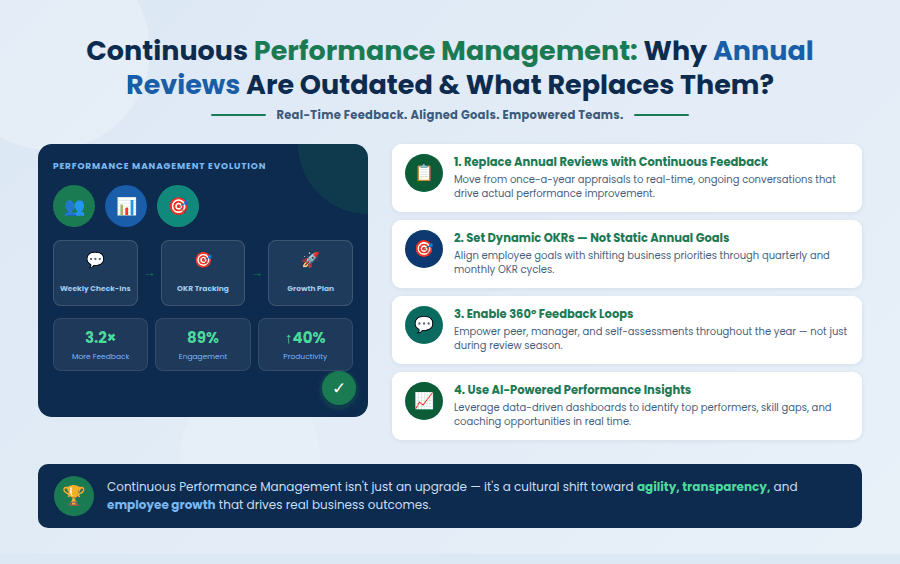
Employee Engagement
Continuous Performance Management: Why Annual Reviews Are Outdated & What Replaces Them?
Why the yearly appraisal fails Indian teams, what continuous performance management replaces it with, and how to run the shift without adding meetings.
5 min read
HR Strategy
Smooth HRMS Migration Process: Indian HR Playbook
Execute an HRMS migration process. Learn how to transition your Indian workforce, secure data, and maintain productivity during the switch.
9 min read