
Compliance
The HR Tax: Calculating the Real-World Cost of Disconnected Data in Your Payroll Cycle
Disconnected HR data quietly inflates every payroll cycle. How to work out your real payroll processing cost and the compliance risk inside it.

MD Moinuddin
HR Content & Research, Human Maximizer · 14 min read · · Updated

In the manufacturing corridors of Thane, a specific pattern plays out every month-end. A mid-sized precision engineering firm deploys a standalone biometric scanner alongside a legacy desktop payroll system to track factory floor shifts. The HR team works late into the night to reconcile the records, only to discover that manual adjustments for late-night overtime never synced, leaving forty technicians underpaid. The issue is not the calculation engine itself, but the invisible, compounding drain of moving data between disconnected systems.
The calculations are correct. The inputs are wrong. That is the core of the problem.
At Human Maximizer, we call this the "HR Tax"—the unbilled hours and financial leakage that occur when employee data resides in isolated silos. We define the "HR Tax" as the cumulative, unbilled financial and operational drain caused by manual data reconciliation between disconnected systems. When attendance logs and leave balances do not communicate with the core payroll engine, the actual payroll processing cost rises far beyond the software subscription fee.
The Hidden Leak: What Drives Your True Payroll Processing Cost?
Calculating the true payroll processing cost requires looking beyond the invoice of your software vendor. The real expense is hidden in the hours spent by HR generalists and finance managers cleaning data before the payroll batch can run.
According to recent industry research, when talent systems do not talk to each other, the financial consequences are immediate. Studies indicate that disconnected talent data: a 3% cost to payroll quietly drains operational budgets. This loss occurs because HR teams must manually verify attendance logs, track down missing leave applications, and correct erroneous tax declarations before executing a payroll run.
Every manual touchpoint introduces a failure rate. When an HR manager exports a CSV file from a standalone time-tracker, edits it in a spreadsheet to account for manual regularizations, and uploads it to a separate payroll tool, they are performing clerical work that should not exist. The cost of manual payroll is measured in these lost hours. For a mid-market business, relying on disconnected systems for time and payroll means that separate databases and HR tech providers drastically increase the chance for manual work, leading directly to transaction errors.
Across India's mid-market enterprises, operational audits show that the cumulative cost per payroll transaction rises dramatically when HR teams must manually intervene to correct data mismatches. Each manual correction—verifying an attendance log or adjusting a loss-of-pay entry—adds direct labor costs and administrative overhead. Without deep payroll data integration, even the most advanced calculation engine remains a siloed tool. To capture the full range of payroll automation benefits, organizations must look at how data flows before the calculation engine even runs.
The Payroll Friction Index
We map these operational failures using the Payroll Friction Index, a diagnostic tool to evaluate how deeply data silos impact your monthly operations.
| Friction Level | Diagnostic Indicators | Operational Impact | Score Range |
|---|---|---|---|
| Low Friction | Unified HRMS; automated attendance-to-payroll sync; zero manual CSV uploads. | Payroll closes in hours rather than days; compliance filings are automated and error-free. | 1–3 points |
| Moderate Friction | Standalone payroll software with manual CSV imports; basic employee self-service. | HR spends 2–3 days reconciling attendance exceptions; occasional compliance corrections. | 4–7 points |
| High Friction | Paper rosters, spreadsheets, and disconnected legacy systems; no integration. | Payroll takes 5+ days; high error rates; frequent statutory penalties and employee disputes. | 8–10 points |
To calculate your score, assign 1 point for each manual spreadsheet used during payroll, 2 points for every disconnected system that requires manual data transfer, and 3 points if employees must manually submit paper forms for leave or reimbursement. A score above 5 indicates that your organization is paying a heavy HR Tax.
This friction manifests in three primary leaks:
- The Attendance-to-Payroll Gap: Biometric logs remain trapped in standalone hardware or localized databases. HR generalists must manually compile late check-ins and unpaid leave into a master sheet.
- The Registry Mismatch: New joiner records in the onboarding tool do not sync with the tax registry. This creates errors in PAN or UAN allocations, which are only detected when the government portals reject the monthly challan.
- The Settlement Delay: During an employee exit, calculating the full and final settlement requires pulling records from asset logs and leave ledgers. When these systems do not talk to each other, the settlement window stretches from days to weeks.
What we run into most often is that managers approve exceptions outside the system first, then HR has to reconcile them later. A supervisor might verbally approve a late check-in on the factory floor, but if that approval does not flow into the system, the payroll engine automatically registers a half-day loss-of-pay (LOP). The employee sees a deduction, raises a dispute, and HR spends the next three days chasing paper trails to correct a problem that should have been caught before the payroll run. Deploying unified HRMS software in India helps prevent these manual disconnects.
The Regulatory Impact: Compliance Risks in Indian Payroll
Under the Code on Wages, 2019, maintaining accurate, auditable wage registers is a statutory requirement. When attendance records are divorced from the payroll system, proving compliance during a labour inspection becomes a manual rescue mission. If an auditor demands the wage register for the past twelve months, the HR team must manually reconstruct the records day by day.
State-specific labor laws add another layer of complexity. For instance, under various state Shops and Establishments Acts, overtime calculation rules, weekly off-day requirements, and spread-over hours vary significantly between Maharashtra and Karnataka. A one-size-fits-all payroll tool often fails to capture these nuances, forcing HR to run manual calculations on spreadsheets. A unified system handles these state-specific rules automatically, ensuring that overtime rates align with local statutes.
| Compliance Area | Manual Compliance (Siloed Systems) | Automated Compliance (Unified HRMS) |
|---|---|---|
| Overtime Calculations | HR manually calculates overtime based on local Shops & Establishments Acts, leading to errors. | System automatically applies state-specific overtime rules based on geo-fenced attendance logs. |
| Statutory Contributions | Manual calculation of EPF and ESIC; high risk of filing delays. | Automated calculation and direct generation of ECR files for direct portal uploads. |
| Audit Trails | No centralized log of who approved exceptions or when changes were made to salary structures. | Complete, immutable audit trail of all attendance locks and leave approvals. |
The financial penalty is only one part of the problem. The larger drain is the loss of HR operational efficiency. When HR professionals spend their weeks resolving portal mismatches and manually filing corrections on the EPF portal, they cannot focus on retention or performance. For a 50-person team, outsourced payroll services can cost anywhere from $400-$800 per month all-in, and while this offloads calculations, it does not fix the underlying data quality issue if your internal records remain disconnected. This is why maintaining strict payroll compliance in India requires real-time data synchronization.
Compliance Checklist: Indian Statutory Forms Affected by Data Silos
- Form 16: Inaccurate attendance and LOP data lead to incorrect tax computations, forcing manual corrections before issuing annual salary certificates.
- Form 24Q: Disconnected investment declarations result in incorrect quarterly TDS filings, leading to penalties under the Income Tax Department guidelines.
- Form 12BB: When employees submit investment proofs via email or paper, HR must manually verify and input each declaration, increasing the risk of data entry errors.
- EPF Electronic Challan-cum-Return (ECR): Mismatches between attendance days and wages paid cause portal rejections on the EPF portal.
- ESIC Monthly Contribution Return: Incorrect calculation of gross wages for employees earning below the statutory threshold leads to non-compliance on the ESIC portal.
Want a system that handles disconnected payroll data automatically? Let's talk.
Payroll Friction Audit Checklist
To help your team quantify the impact of disconnected systems, we have developed a simple audit checklist. Use this to calculate the monthly hours lost to manual payroll administration:
- [ ] Attendance Reconciliation: Hours spent exporting biometric logs, cross-checking manual regularizations, and resolving shift mismatches. (Target: < 1 hour. Actual: ____ hours)
- [ ] Leave Balance Verification: Hours spent chasing managers for pending leave approvals and manually adjusting LOP days. (Target: 0 hours. Actual: ____ hours)
- [ ] Query Resolution: Hours spent answering employee questions about incorrect deductions, missing overtime, or tax slips. (Target: < 2 hours. Actual: ____ hours)
- [ ] Challan Generation: Hours spent formatting CSV files for EPF and ESIC portal uploads. (Target: < 1 hour. Actual: ____ hours)
Multiply the total hours by the hourly rate of your HR team to find the hidden administrative cost of your current setup.
Exception Handling in Action: How Unified Systems Prevent Silent Mismatches
To understand the difference between disconnected tools and a unified platform, consider how an exception—such as a last-minute shift change or a retroactive leave approval—is handled.
The Manual Way (Disconnected Tools)
- On the 28th of the month, a manager verbally approves a shift swap for an operator.
- The biometric system registers the operator as "Absent" on their original shift because the roster database was not updated.
- The HR manager exports the attendance CSV on the 30th and runs the payroll batch. The operator is marked with a 1-day LOP deduction.
- On the 5th of the next month, the operator receives a reduced paycheck and files a grievance.
- HR spends two hours verifying the verbal approval and manual logs. They must now issue a manual adjustment voucher in the next month's cycle.
The Unified Way (Human Maximizer)
- The manager approves the shift swap directly on the mobile app.
- The Roster Management engine updates the expected shift pattern for the operator, syncing with Attendance Management.
- When the HR admin initiates the monthly payroll run, the system executes an automated Pre-Check.
- If any anomalies exist—such as a missing punch or a pending leave regularization—the system flags them in a "Pending Resolution" dashboard before the batch is processed.
- The admin nudges the manager with one click, the exception is resolved, and the Payroll batch runs with verified, stable numbers. No manual adjustments, no late-night payroll corrections.
When Payroll Automation Has Limits
While automation solves the vast majority of transactional friction, there are specific scenarios where automated systems cannot replace human judgment or manual intervention:
- Retroactive Prior-Year Adjustments: When payroll corrections are required for a closed financial year where tax filings (Form 16) are already completed, automated systems cannot unilaterally alter historical tax records. HR must manually recalculate the tax differential and process these adjustments as a one-time special allowance in the current active quarter.
- Discretionary Overtime Approvals: Automated systems can track hours worked, but they cannot evaluate the quality or necessity of that work. The department head must manually review and approve the discretionary payout inside the system before payroll locking.
- Workforce Restructuring and Salary Redesign: When a company restructures its entire salary template (for instance, changing the basic salary ratio from 40% to 50% of CTC to comply with new statutory wage definitions), the system cannot determine the optimal tax-saving structure for employees. HR must consult a qualified Chartered Accountant or labour law expert to verify the legal implications before updating the structural templates in the system.
Why Integrated Platforms Deliver Lasting HRMS Cost Savings
When talent data is isolated, organizations suffer from poor resource allocation. By unifying employee files and attendance records, companies can eliminate this waste. Deploying an integrated platform allows businesses to realize substantial HRMS cost savings by eliminating redundant software licenses and manual data reconciliation cycles.
At Human Maximizer, we built our unified architecture precisely to address these friction points. Razor Infotech launched the platform in New Delhi in 2019 after speaking with HR leaders, managing directors and founders across Indian companies to map real-world workflows.
Our product suites allow businesses to manage their entire lifecycle—from Employee Self Onboarding and attendance tracking to Resignation & F&F—within a single, unified database.
We believe that transparent pricing is fundamental to building trust with growing businesses. Instead of complex enterprise negotiations, our packages are structured to scale predictably with your headcount. From our free Launchpad trial to our Ignite and Apex plans (priced between ₹49 and ₹112 per user per month, billed yearly), we ensure that businesses only pay for what they use. You can explore our plans in detail on our pricing page.
Frequently Asked Questions
How does disconnected data affect my monthly tax filings?
Disconnected systems require HR to manually copy-paste or upload CSV files of employee deductions into government portals. Any spelling mismatch, missing PAN, or incorrect UAN registration causes portal rejection, leading to late filing penalties and compliance risks under Indian tax laws.
Can I integrate my existing biometric machines with a unified HRMS?
Yes. A unified system like Human Maximizer connects directly with standard biometric devices via API, translating raw punch logs into verified work days with status and hours automatically, eliminating manual file exports.
What is the primary cause of payroll processing delays in mid-sized Indian companies?
The primary cause is the manual reconciliation of attendance exceptions and leave regularizations. When these data points reside in separate tools, HR must spend days chasing managers for approvals before payroll can close.
The True Cost of Delay
Return to that Thane engineering firm. The technicians do not have to wait for manual adjustments anymore. Overtime hours are synced automatically from the biometric scanners directly to the payroll ledger on the go. The forty technicians receive their accurate salaries on the first of every month, without a single late-night firefighting session for the HR team. The payroll processing cost dropped, and the friction disappeared entirely.
The question for growing businesses is no longer whether your payroll system can calculate numbers correctly. The question is how much time and money you are losing on the manual pipelines that feed those calculations.
Ready to stop manual payroll friction? Book a quick call.
About the Author & Reviewers
MD Moinuddin — HR Content & Research, Human Maximizer
MD Moinuddin works on content and research for Human Maximizer at Razor Infotech, turning HR-tech and Indian compliance research into practical, plain-English guidance for growing companies.
Connect on LinkedIn
Reviewed & approved by Sameer Hameed — Founder & Chairman, Razor Infotech
Sameer Hameed is the Founder & Chairman of Razor Infotech, where he is guiding the creation of Human Maximizer. An entrepreneur across technology, real estate, mining and travel, he builds organisations on clarity, trust and responsible growth — on the belief that businesses grow only when the people behind them grow.
Connect on LinkedIn
Reviewed & approved by Nishant Tandon — Co-founder & Lead Partner, Razor Infotech
Nishant Tandon is Co-founder and Lead Partner at Razor Infotech, with over a decade in IT, customer support and business operations, helping SMEs achieve cost efficiency, stronger customer experience and scalable, sustainable growth.
Connect on LinkedIn
Human Maximizer is built by Razor Infotech in New Delhi, India (founded 2019). About Human Maximizer.
Keep reading
Payroll
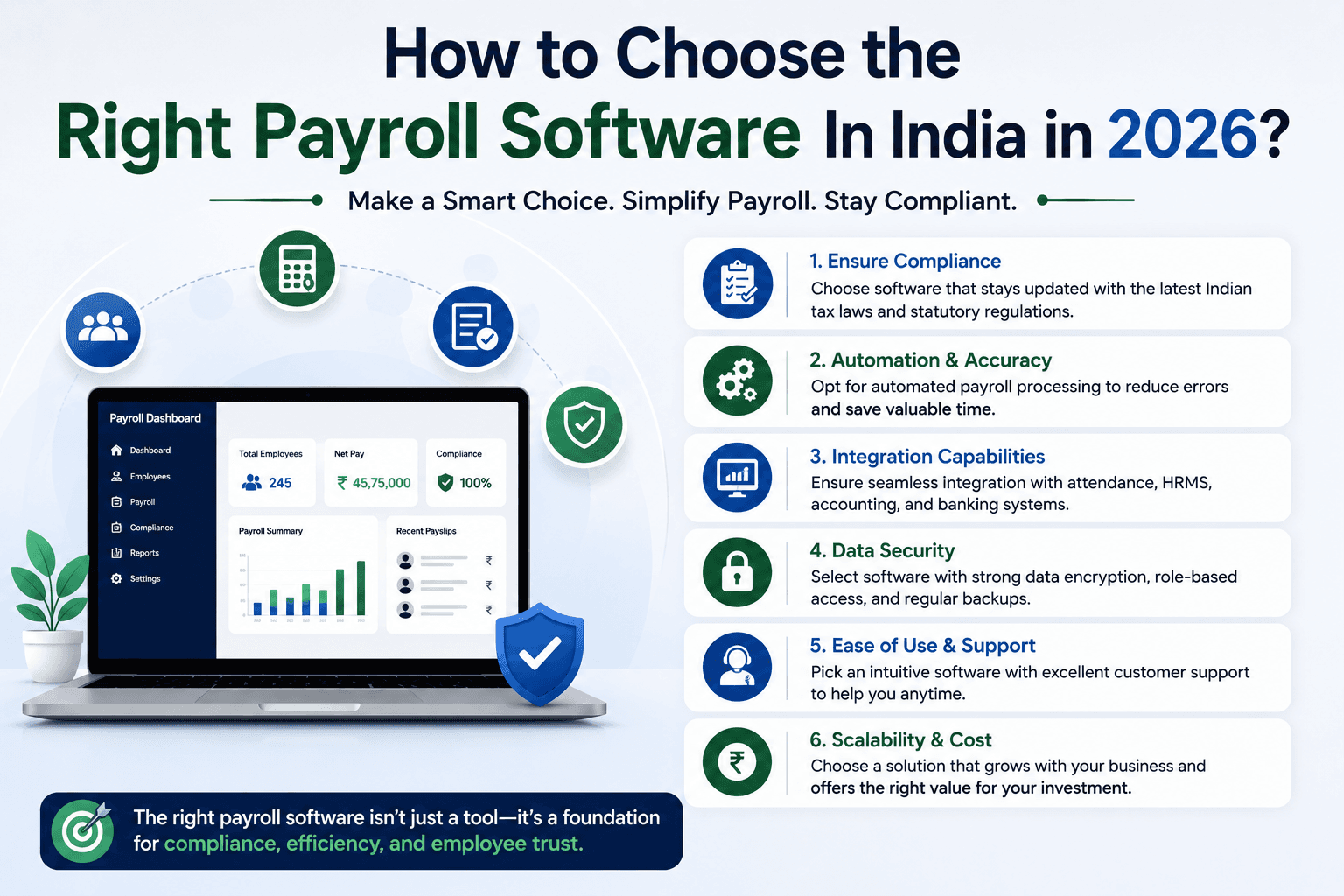
How to Choose the Right Payroll Software In India in 2026?
Facing issues in salary calculation? Choose the right automated payroll software. Learn the 7 questions to ask before buying in 2026, including hidden compliance costs and implementation timelines.
5 min read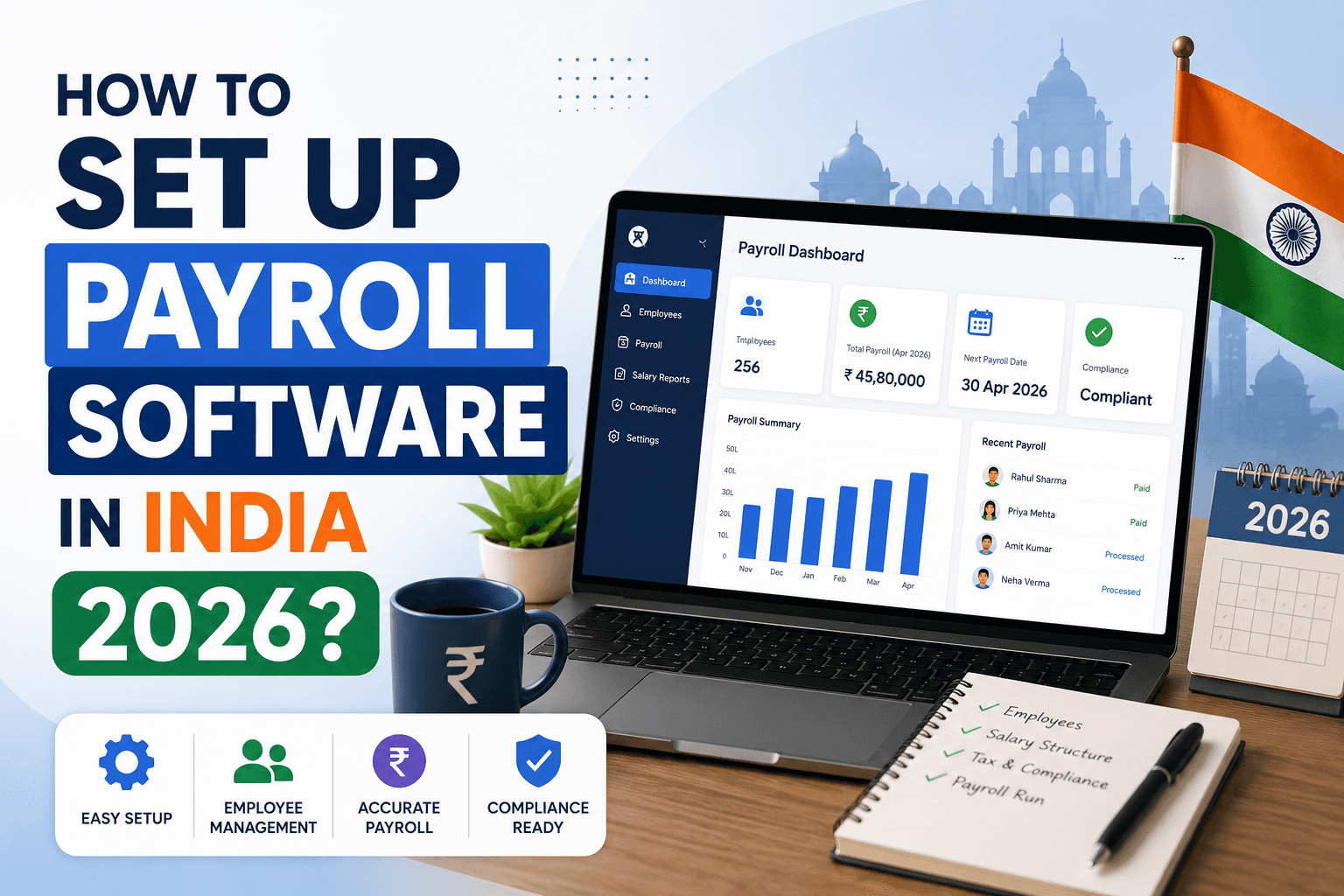
Payroll
How to Set Up Payroll Software in India 2026?
Switching to a new payroll system? Understand the step-by-step process to set up payroll software. Schedule a demo with Human Maximizer to streamline pay, tax rules and benefits.
5 min read
Compliance
India's New Labour Codes 2026: What Every HR Leader Must Know
India's Labour Codes 2026 have changed payroll, CTC, PF, gratuity, and exit rules for every employer. Get the complete HR compliance guide and checklist to stay ahead of the new labour laws.
5 min read