
Payroll
How to Set Up Payroll Software in India 2026?
Switching to a new payroll system? Understand the step-by-step process to set up payroll software. Schedule a demo with Human Maximizer to streamline pay, tax rules and benefits.

Richa Thakur
Content Writer · 5 min read · · Updated
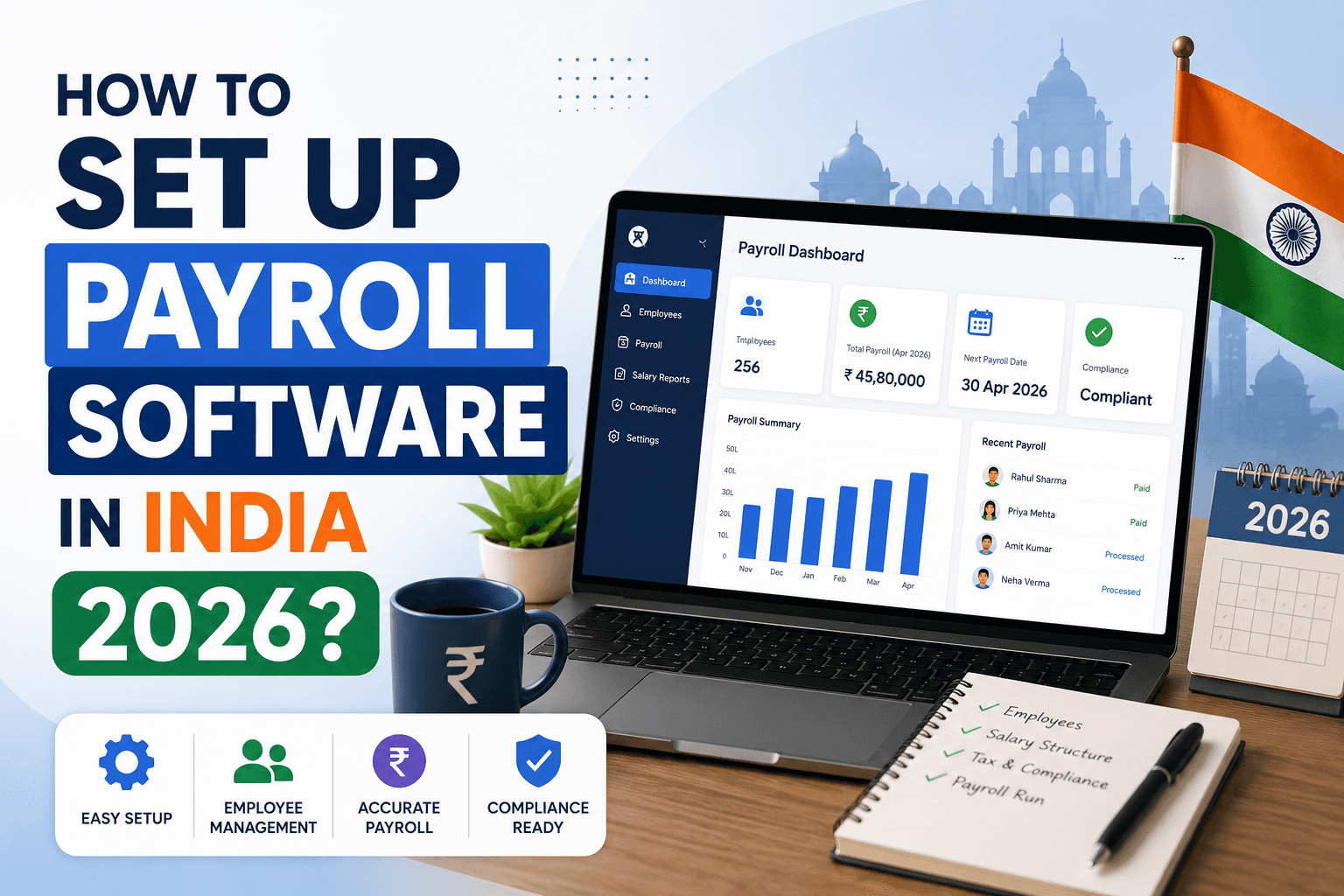
Starting payroll for the first time can feel complicated due to legal and compliance requirements. One wrong move can create hurdles for the complete organisation and lead to employee dissatisfaction, damaging the company’s reputation.
For businesses, implementing payroll software is not only about paying employees accurately and on time, but also about ensuring compliance with labour laws and protecting employee rights. Disputes related to wage calculations, leave balances, and overtime can lead to employee dissatisfaction and high attrition if not addressed properly.
But the good news? With the advancement of payroll software, you can automate payroll procedures beyond basic payroll outsourcing. Let’s break down the complete steps of setting up payroll software in your organisation for a hassle-free experience.
This guide covers everything you need to know about setting up payroll software from start to finish. It highlights the complete process and goes beyond the basic functions and benefits, so that you can successfully implement payroll software in your organisation.
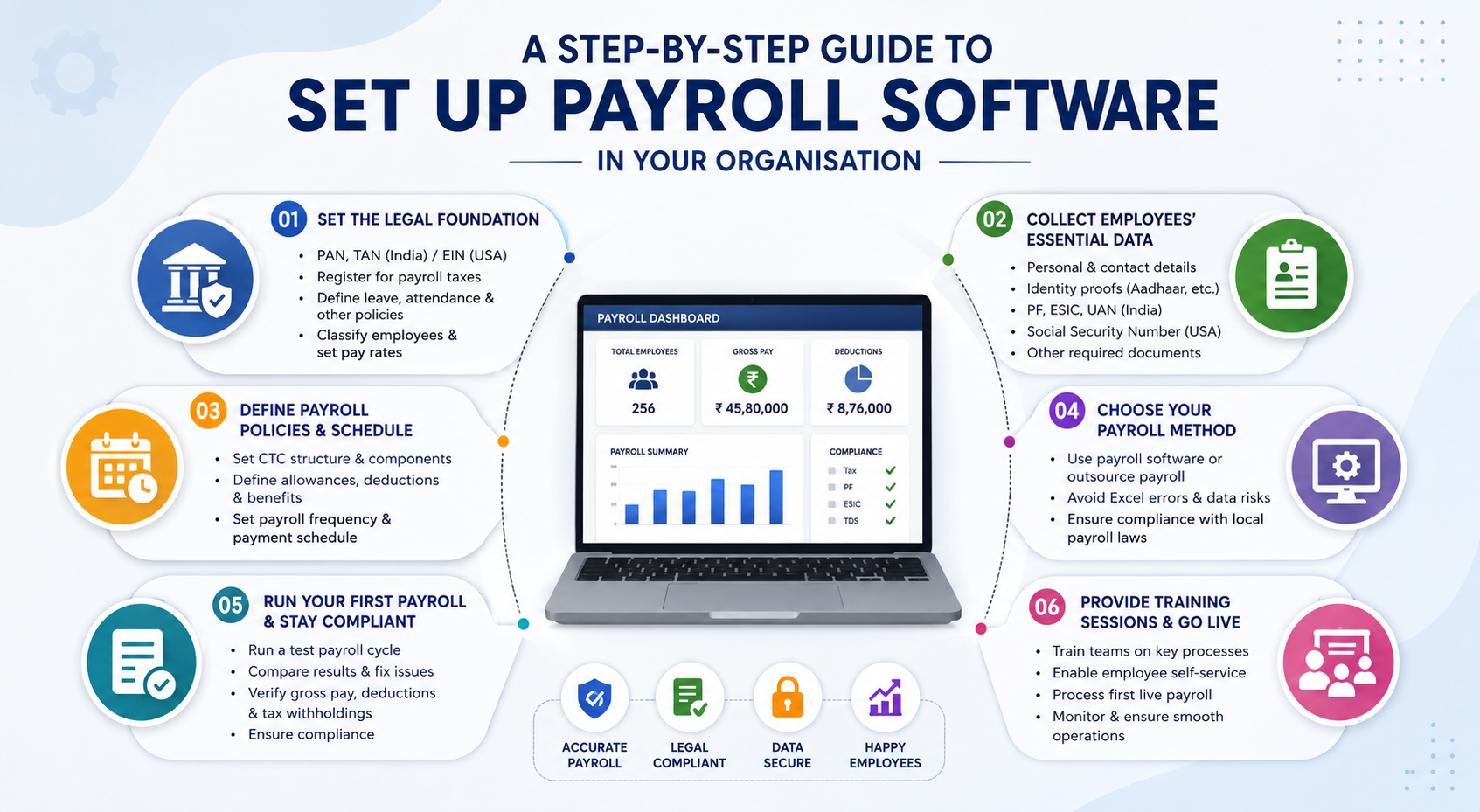
A Step-By-Step Guide to Set Up Payroll Software in Your Organisation
Payroll management involves several important components, including compensation, wages, taxes, and statutory compliance. But do you understand their significance for your organisation? What do I need to run payroll?
Sometimes, it takes days or weeks to completely set up the payroll software. If you’re an HR leader or business owner struggling to understand the correct payroll setup process, we are here to guide you with the right steps while collaborating with the payroll team.
1. Set the Legal Foundation
Before setting up the payroll process in HR for your organisation, keep the crucial details. For a business operating from the USA, you’ll need a nine-digit number to receive an EIN (Employer Identification Number) for payroll tax registration and file tax returns.
If your business is operating from India, PAN and TAN numbers are essential for payroll registration and compliance. Determine the organisation’s payroll leave and attendance policies based on the law governing a geographical region.
Classify employees based on their type and finalise the pay rate for each category of employees.
2. Collect Employees' Essential Data
For proper setup, you’ll need to gather all the important employees’ details, such as their contact details and identity proofs like an Aadhar card.
However, employee documentation requirements may vary across geographical regions. In India, employees are required to submit PF and ESIC details. Whereas in developed countries like the USA, the company needs a Social Security number to properly set up the payroll system.
Here is the list of required documents:
Employee’s full name
Aadhaar card number
Current residential address
UAN number for PF
Permanent address
Declaration from 12B
3. Define Payroll Policies & Schedule
For setting up a payroll system, you need to establish structured, compliant, and consistent payroll policies to compensate employees. This process requires defining clear, documented policies and setting up a predictable schedule to avoid legal penalties.
While setting up the payroll management software, defining the Cost to Company (CTC) structure is an important step. Determine the CTC components, or whether you’ll include health insurance, food coupons?
4. Choose Your Payroll Method
Managing payroll becomes more efficient and cost-effective when businesses adopt payroll software or outsource payroll to third-party providers.
Relying on outdated Excel sheets increases the chances of payroll errors and loss of data security. Due to stiff competition, choosing payroll software is confusing. Always adopt the option that aligns with your business needs and regional payroll laws.
For many businesses, hiring an accountant to manage payroll software can be expensive. Therefore, it is advised to use payroll software for managing salaries, tax deductions and staying updated with legal compliance.
5. Run Your First Payroll & Stay Compliant
Before migrating your data to a new system, at least run the payroll cycle once along with the old process. During this phase, you can identify configuration errors, missed data, or integration issues.
Compare the results to confirm the gross pay, deductions and tax withholdings before finalising employee paychecks.
6. Provide Training Sessions & Go Live
Ensure that anyone using the system understands how to run the payroll system, what the key functionalities are, and integration with the existing attendance and leave management systems.
Organisations should provide training on the following processes:
How to enter new hires into the system?
What is the process of customising and adjusting features?
How to download payroll reports?
How to troubleshoot common payroll issues?
How can an individual update personal and bank details?
How to generate a payslip and access tax forms?
Once the training session ends, process your first live payroll and monitor results closely to ensure that everything runs smoothly. Enable the self-service portals for employees so they can access, view, and update necessary details.
Conclusion
By reading this comprehensive guide, you have a basic overview of payroll implementation and the various stages. Payroll software offers diverse benefits and consequently plays a significant role within an organisation. A well-structured payroll system helps organisations streamline salary processing and maintain compliance accurately.
Payroll software not only offers efficiency but also helps in boosting employee morale, maintaining company reputation, and aligning company policies with Indian labour laws to avoid legal risk and penalties.
Looking for payroll software to streamline employee payroll management, deducting taxes and managing compliance? With Human Maximizer, you can process payroll, navigate the complexities and boost your employee morale.
With years of experience, we provide a seamless payroll service and HRMS integration that will help your organisation to simplify complex tasks without manual efforts and errors on time. For more details, you can reach out to our team of professionals and schedule a demo.
Frequently Asked Questions
1. Can I do payroll for a small business?
Yes, you can process payroll on your own for a small business where employee headcount is minimal. But it requires a focused approach for tracking shift hours, calculating tax deductions and adhering to compliance with the state regulations. It is manageable at a small scale, but it can be risky as your business grows.
2. What is payroll software?
Payroll software is a digital tool to streamline the complete employee payments, including calculating salaries, managing tax deductions, bonuses, and deposits while ensuring compliance with labour laws. In other words, payroll software eliminates the complicated spreadsheets, reduces manual errors and delivers results on time.
3. What are the important components of the salary structure in India?
The key components of the salary structure in India are:
Basic Salary: It is the fixed part of the salary
Other Allowances: It includes HRA (House Rent Allowances), medical allowance
Bonuses: Incentives and additional pay based on an individual’s performance
Tax Deductions: Statutory deductions like PF, ESI, PT and income tax
4. How does payroll software ensure compliance?
Payroll software vendors help businesses maintain compliance with labour laws, such as the Payment of Wages, the Payment of Bonus Act, Minimum Wages Act. Along with this, they maintain statutory contributions like PF, ESI and tax filings.
5. What are the available options for managing payroll in India?
In India, you can manage payroll in several ways, such as:
In-House Payroll Management: Manage payroll by using the HR and accounting teams.
Outsourcing Payroll: Hiring third-party vendors or payroll service providers to process payroll management.
Automated Payroll Software: Utilising smart tools to automate payroll tasks, including salary calculations, deducting taxes and ensuring compliance and reporting.
6. Can I use Excel for payroll?
Yes, you can handle the payroll process with the built-in templates and sheets. Despite this, duplicate data entry can cause manual errors and inconsistency in payroll management.
7. Is payroll management under HR operations?
Yes, payroll management is an essential part of core HR. It bridges the gap between employee administration and compliance, handling salary calculations, deducting taxes and ensuring timely payments.
Keep reading
Payroll
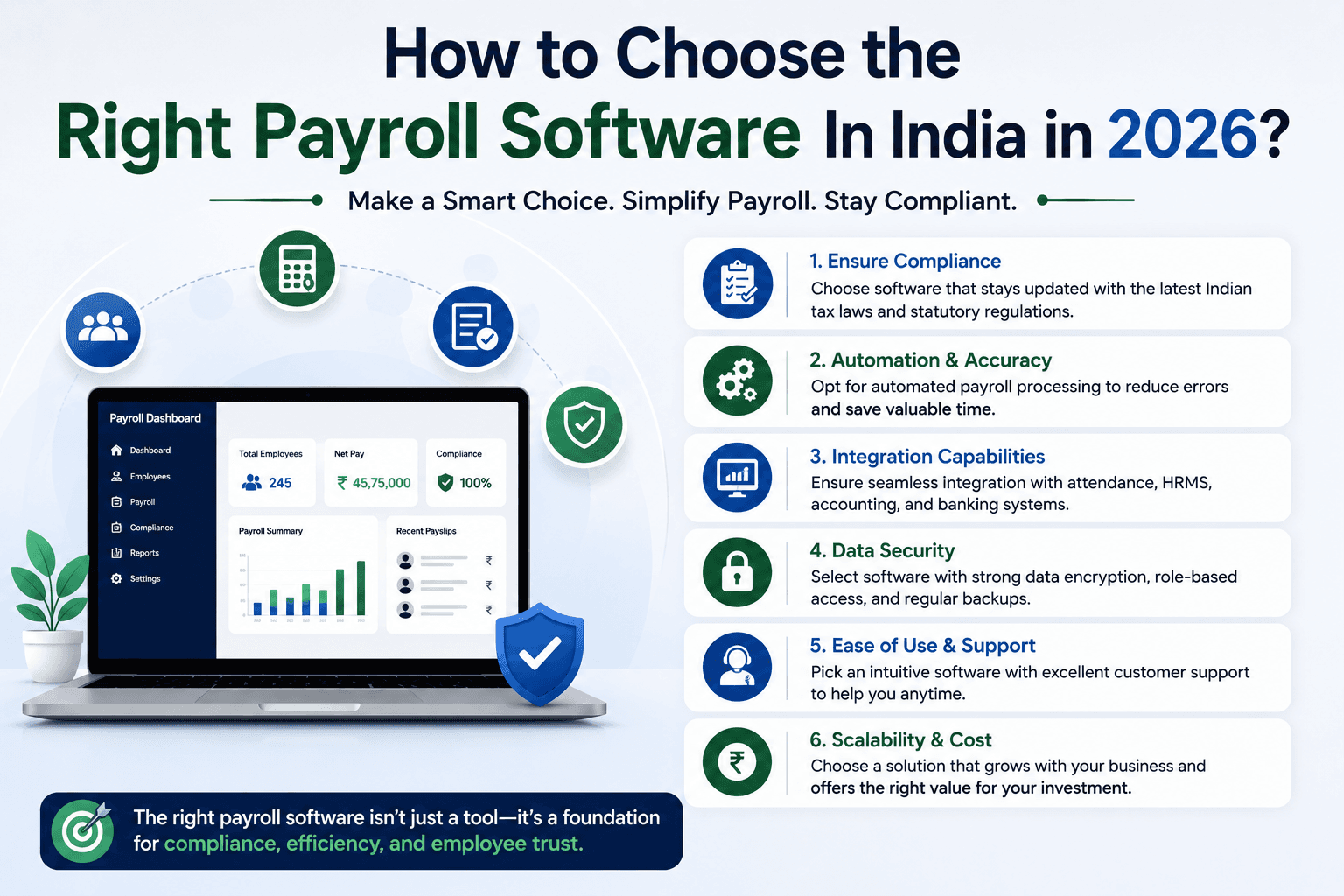
How to Choose the Right Payroll Software In India in 2026?
Facing issues in salary calculation? Choose the right automated payroll software. Learn the 7 questions to ask before buying in 2026, including hidden compliance costs and implementation timelines.
5 min read
Compliance
Mastering Payroll Processing in India
The essential steps for accurate payroll processing in India. Learn how to manage statutory compliance, tax deductions, and timelines to pay staff...
8 min read
Payroll
Beyond the Resignation: FFS Fullform
FFS Fullform: How to calculate Full and Final Settlement for Indian employees accurately. Discover the key components, statutory requirements...
15 min read