
HR Strategy
How to Implement HRMS Software in Indian Businesses in 2026?
Failing to implement HRMS? Find out how long HRMS implementation takes to automate payroll, compliance & improve employee experience. Book a demo with Human Maximizer.

Richa Thakur
Content Writer · 5 min read · · Updated
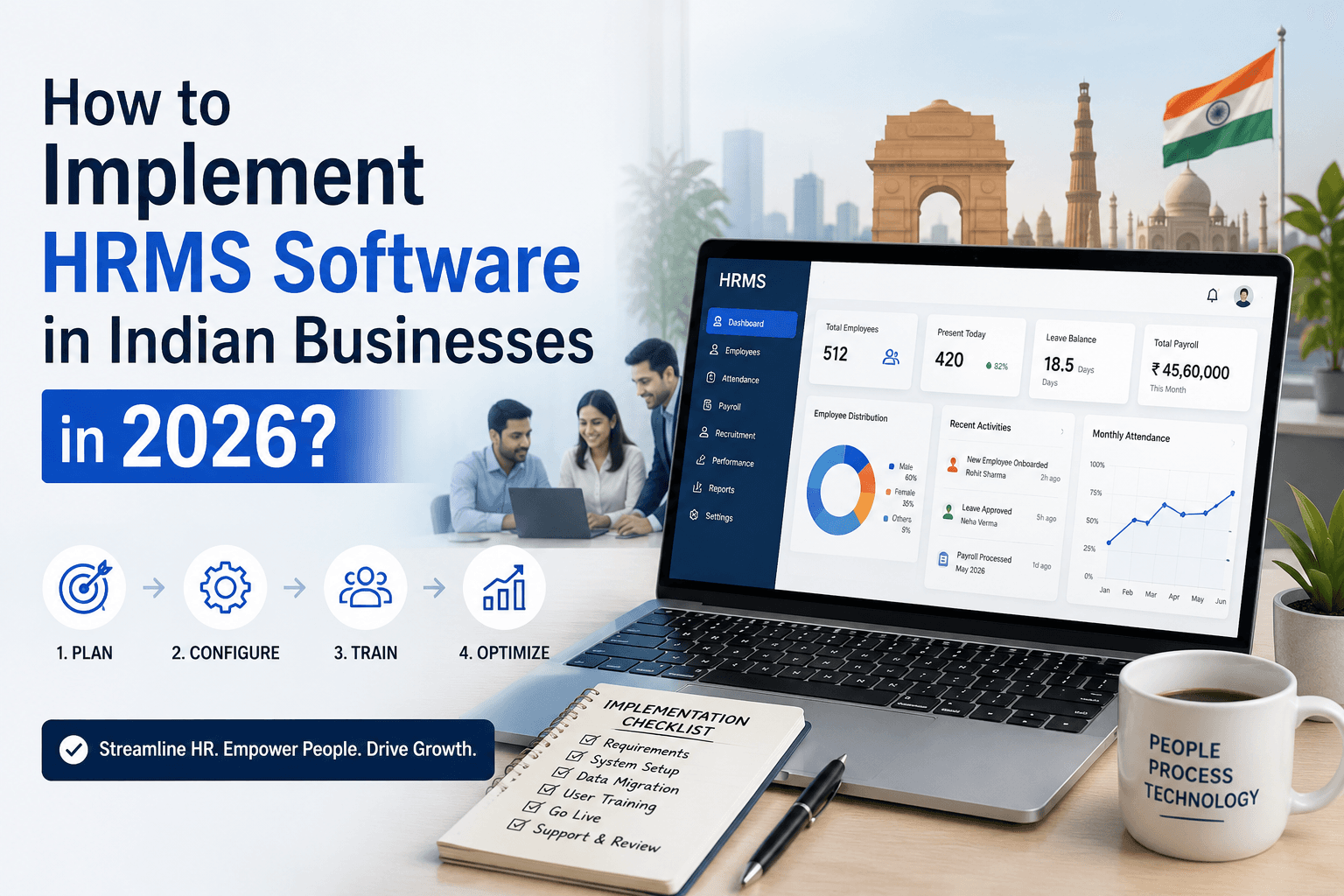
In the current landscape, larger enterprises are heavily relying on HRMS software to streamline core HR operations, enhancing compliance and employee experience. But according to Gartner, 56% of HR leaders acknowledge their current technology does not meet their present or future business needs.
A Software Finder 2025 HR Tech Market Report stated that, even with the HRMS software, organisations went through the implementation twice and switched vendors primarily due to scalability issues.
Migrating to a new HRMS software is a strategic process that can boost efficiency, reduce costs and integrate seamlessly with multiple platforms to support business operations.
In this guide, we’ll cover the key strategies for HRMS implementation, how long HRMS implementation takes, the phases of implementation, common pitfalls, ways to avoid delays, how compliance with Indian labour laws affects the implementation timeline, and what to look for in a partner when choosing software.
How long does it take to implement HRMS in India?
The actual timeline for implementing HRMS software in India usually depends on several factors that vary from company to company, business size and data complexity. However, we can estimate that the complete process can last between 3 weeks and 12 months based on the requirements and operations. Read the points mentioned below to understand the timeline for each business size:
- Startups comprising 50-200 employees usually go live in 3-6 weeks.
- SMEs might take 6–10 weeks to complete the implementation process.
- Larger enterprises may require 6-12 months or more due to employee headcount, data management and proper setup at a large scale.
Another key factor that can decide the implementation timeline is the existing infrastructure, vendor support, and internal resources and customisation needs.
What are the phases of HRMS implementation?
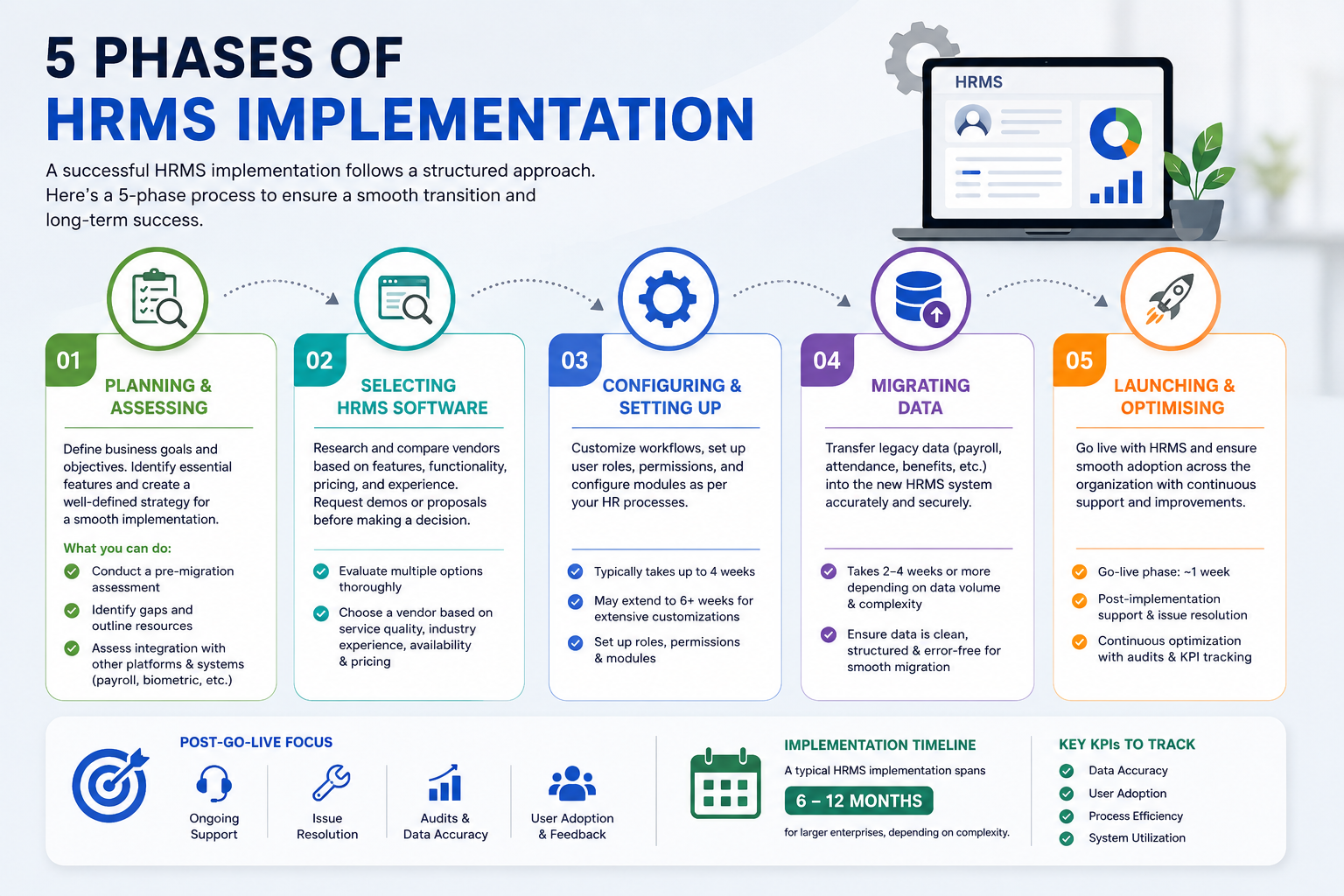
The process of HRMS implementation generally follows a series of conventional phases categorising multiple tasks and a timeline. By understanding these phases, you can ensure a smooth execution from implementation to post-implementation support. Let’s know about each phase in deep detail:
Phase 1: Planning & Assessing
This is the initial phase, which involves defining business goals and objectives. HR and leaders can determine the features and functionalities that are essential before adopting a new HR system. If you create a well-defined strategy and assessment from the beginning, the entire implementation process will progress smoothly.
What can you do in this phase?
- Conduct a pre-migration assessment to understand current systems
- Identify gaps and outline resources
- Access integration with other platforms and systems, like payroll, biometric
Phase 2: Selecting HRMS Software
After mapping out the business goals and requirements, the next crucial step is selecting the right HRMS vendor. During this phase, HR teams often research available options, compare prices, features, functionalities, and request demos or proposals from a vendor.
Mostly, organisations take a longer time to evaluate multiple options. You must select the vendor based on their service quality, experience in your specific industry, availability and pricing factors.
Phase 3: Configuring & Setting Up
This phase can expand up to 4 weeks, depending on the company’s customisation needs. It comprises customising workflows, setting up user roles, permissions and configuring modules based on your HR specific processes.
In certain cases, if your organisation needs further customisation, it could take 6 weeks or longer.
Phase 4: Migrating Data
It is one of the most critical steps in the HRMS implementation process because it involves transferring legacy data into the new HRMS system. Depending on the volume of data, such as payroll history, attendance and benefit records, and complexity, the process can go beyond 2-4 weeks.
For structured and organised data, the migration process will be smoother and faster, while data errors or inconsistencies may need a clean and organised format before transferring into a new system.
Phase 5: Launching & Optimising
This is the final phase of the HRMS implementation process, when the software is officially launched within the organisation. The go-live phase typically takes about one week, followed by ongoing optimisation and support. During the timeline, the vendor delivers ongoing support to address issues and inconsistencies to ensure the smooth functioning in the future.
The post-implementation period allows the users to troubleshoot existing problems and adjust to the new system. Post-go-live support includes audits and HRMS KPI tracking. HRMS migration KPIs include data accuracy and user adoption. A usual HRMS migration checklist spans 6-12 months for larger enterprises, depending on the complexity.
How to avoid HRMS implementation delays?
Every HRMS implementation carries inherent technical, operational and human risks. When these issues are left unmanaged, it can delay the implementation process. You can identify early warning signs and set up a robust HRMS software within an organisation without delays.
-
Outline Goals: Clearly define your business requirements that you expect from HRMS software to make faster decisions.
-
Create a Project Team: Assign a team of professionals to oversee the complete implementation process to move things forward. Internal participation can speed up the process.
-
Partner Closely: Initiate strong communication and collaborate with your vendor to receive regular updates and schedule sessions.
-
Adopt Change: Make sure your HR and employees are prepared beforehand. Facilitate training sessions and assign a dedicated individual throughout the implementation process.
What are the Common Pitfalls of HRMS Implementation & How to fix them?
In India, without an HRMS go-live checklist and migration data, some of the common issues, like data inconsistencies, unrealistic timelines, and resistance to change, can derail the complete implementation process.
To fix these common pitfalls and foster a successful transition process, follow the points mentioned below:
-
Data Security: To prevent data loss and breaches, conduct a comprehensive test of the software.
-
Build a Training Session: Instead of providing a single PDF, provide recorded, guided videos.
-
API Integration: Ensure that HR software integrates seamlessly with other business systems.
-
Legal Penalties: Choose a software that complies with Indian labour laws in all jurisdictions.
How Indian Labour Law Compliance Affects Your HRMS?
One of the vital aspects in HRMS management is handling compliance. Indian businesses operate under 44 central labour laws and over 100 state-specific regulations. If you miss a deadline or make a calculation error, your organisation may face legal penalties.
Indian labour law is too complex and has different applicability thresholds, contribution rates, filing deadlines and penalty composition. Several laws, including the EPF Act 1952, ESI Act 1948, Payment of Wages Act 1936, Minimum Wages Act 1948, and the incoming Labour Codes 2020, introduce compliance requirements.
But with automation and payroll management, HRMS tools eliminate manual errors and calculate statutory deductions based on the current rates. The platform automatically calculates employee wages, contribution ceilings and exemption rules without manual intervention.
The software should offer configurable compliance rules, automatically update software, and define company-related policies within statutory boundaries. With the expansion of business and the increased employee headcount, the software must support workforce growth across multiple locations with integrated capabilities.
How Organisations Benefit After Implementing HRMS Software?
Before the technological exposure and advancement, organisations were relying on spreadsheets and manual calculations for processing HR administrative tasks. But with the HRMS implementation, organisations can experience immediate and measurable improvements in core HR operations. Let’s understand the prior and subsequent differences of HRMS within the organisation.
Before Implementing HRMS
- Payroll processing usually takes 2-3 full working days, and still has errors in wage calculation.
- Attendance data is stored in a separate system, which leads to manual data entry errors.
- Managers and employees handle leave approvals and requests through WhatsApp or email.
- Employees approach HR leaders for payslip, leave balances and holidays.
- Reports and reviews are compiled to receive outcomes.
After Implementing HRMS
- HRMS automates payroll processing in a few hours without any manual errors.
- Seamless integration of HRMS software with attendance and leave management.
- A centralised platform for requesting, approving and reviewing leave balances.
- Employees can view and update their personal and bank details via self-service portals.
- Automatically calculate PF, ESI, TDS and PT with audit-ready records.
- Showcase real-time insights and metrics in a single dashboard.
What to Look for in an HRMS Implementation Partner in India?
With diverse available options, choosing the right software can be a confusing task for organisations and the HR department. Before investing in any software, look for features and functionalities that align with your business requirements and goals. Here are the required features to look for in HRMS software:
Automated Payroll Processing
- Look for software that automates wage calculation, deductions, and tax filings effortlessly.
- It should integrate PF, ESI, and TDS compliance and generate payslips.
- Accessible to the ESS portal to monitor data and reduce administrative pressure on HR.
Attendance & Leave Management
- Choose the system which supports biometric and geo-fencing features, including face recognition and fingerprint scanners.
- The system should support multi-location operations for remote, hybrid, and onsite workforces.
- Leave management should automatically approve, track and integrate with the payroll system.
- Schedule shifts and manage rosters. Schedule shifts and manage roster to handle hybrid workforce attendance.
Handle Employee Lifecycle
- The software should be capable of handling the employee lifecycle from recruiting to retiring.
- It should comprise essential tools for recruitment, performance management, and training modules.
- Track productivity, performance, retention and attrition rates.
Data Security & Compliance
- Handling compliance is complex in India; therefore, ensure that the software manages labour law compliance.
- It should support data protection laws in India under the DPDP Act.
- Several features, like biometric data and template protection, are essential for authentication purposes.
- Sensitive data should be secure and end-to-end encrypted, and offer scalability and customisation without switching systems.
Seamless Integration
- A smart HRMS tool integrates with multiple tools, such as accounting software or CRM.
- Payroll and attendance integration is vital for maintaining biometric attendance devices.
Real-time Reports
- To make an informed decision, the software must deliver HR metrics, real-time analysis and insights.
- Apart from reports, HRMS should help in forecasting attrition, turnover and retention rate.
User Friendly & Mobile Accessibility
- Look for a user-friendly and navigational interface for the user’s convenience.
- The HRMS platform must be accessible on mobile phones for field and remote workers.
Final Thoughts
By implementing the HRMS software, organisations are not only reducing administrative pressure on the HR department but also handling compliance errors to avoid legal penalties and inaccurate payroll processing.
If you’re considering it as a financial investment, assess the operational workflow and jot down the outcomes. After implementing HRMS software, provide training sessions, properly guide individuals and provide access to self-service portals from the beginning.
Are you ready to explore how HRMS software functions for your business? Choose Human Maximizer and integrate with your existing platforms to see how payroll, attendance, leave, and employee management streamline HR operations across Indian businesses.
Frequently Asked Questions
What data is needed before HRMS goes live?
Before implementing the HRMS tool, organisations must provide complete workforce information, including payroll, attendance, leave and employee personal and bank details from the legacy systems and spreadsheets into a structured format.
How to run payroll in parallel during the HRMS switch?
To run payroll in parallel during the HRMS switch, you have to operate your legacy system with the new system simultaneously for at least one to three pay cycles to ensure accuracy before complete data migration.
What is the biggest cause of HRMS implementation delays?
The biggest cause of delaying HRMS software is poor planning, lack of user adoption, integration issues, data inaccuracy and change management.
Can HRMS be implemented without an IT team?
Yes, organisations can implement an HRMS without a dedicated team of IT professionals, especially when opting for the cloud-based (SaaS) software.
Estimating Your Implementation Timeline Through Data Volume
While general estimates provide a baseline, your specific timeline is dictated by the volume of records requiring migration and the complexity of your statutory configurations. To model your own timeline, consider the data migration phase. If you have 500 employee records and assume a manual verification rate of roughly 5 minutes per record to ensure accuracy in payroll components—such as verifying that basic pay meets the 50% threshold of total remuneration as per the Code on Wages—you are looking at 2,500 minutes of work. Divided by a standard 8-hour workday, this equates to approximately 5.2 days of dedicated data cleansing and entry.
If your team processes this at a rate of 50 records per day, the migration phase alone will span 10 working days. You should add a 20% buffer for resolving discrepancies in statutory data, such as mapping ESI eligibility for employees earning below the ₹21,000 gross wage threshold (ESIC). If your organization has complex multi-state operations, you must also account for the time required to configure state-specific Professional Tax slabs, which are capped at ₹2,500 per year under the Constitution. By substituting your actual headcount and current data cleanliness levels into this model, you can derive a realistic project schedule. If your calculated timeline exceeds your internal deadline, prioritize migrating active payroll data first and defer historical records to a post-launch phase to maintain momentum.
Frequently Asked Questions
Does the statutory requirement to pay PF by the 15th of the following month impact my HRMS implementation deadline?
Yes, your implementation must be completed at least one full payroll cycle before your first statutory filing deadline. Since the EPFO requires ECR filing and PF payment by the 15th of the following month, you should aim to have your payroll module fully tested and live by the 1st of the month to ensure you have sufficient time to generate reports and verify calculations.
About the Author & Reviewer
Insha Hamid — Head of HR in Research & Content, Human Maximizer
Insha Hamid heads HR research and content for Human Maximizer at Razor Infotech, covering people operations and Indian workplace compliance — translating regulatory change and workplace research into guidance HR teams can act on.
Connect on LinkedIn
Reviewed & approved by Sameer Hameed — Founder & Chairman, Razor Infotech
Sameer Hameed is the Founder & Chairman of Razor Infotech, where he is guiding the creation of Human Maximizer. An entrepreneur across technology, real estate, mining and travel, he builds organisations on clarity, trust and responsible growth — on the belief that businesses grow only when the people behind them grow.
Connect on LinkedIn
Human Maximizer is built by Razor Infotech in New Delhi, India (founded 2019). About Human Maximizer.
For the full breakdown, see HRMS implementation timeline india: Avoid the 6-Month Trap.
For the full breakdown, see Smooth HRMS Migration Process: Indian HR Playbook.
Keep reading
HR Strategy
Hrms implementation timeline india: Avoid the 6-Month Trap
Stop overestimating your rollout speed. Discover a realistic 12-week HRMS implementation timeline designed for Indian HR teams to ensure system...
13 min read
HR Strategy
Smooth HRMS Migration Process: Indian HR Playbook
Execute an HRMS migration process. Learn how to transition your Indian workforce, secure data, and maintain productivity during the switch.
9 min read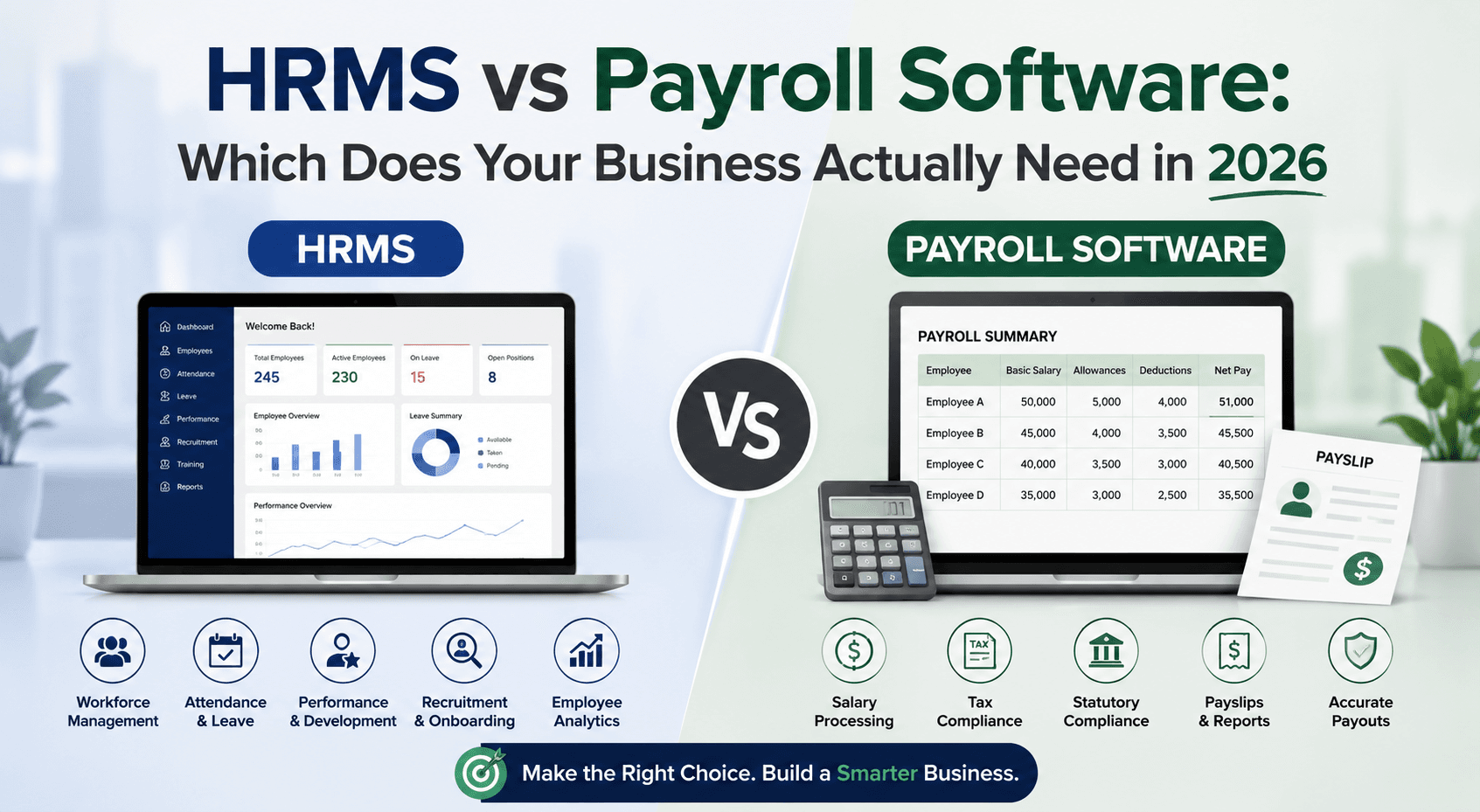
HR Strategy
HRMS vs Payroll Software: Which Does Your Business Actually Need in 2026
Are you confused about choosing HRMS vs payroll software in India for your business? Compare the main features and invest wisely in tools to get high ROI.
5 min read