
Compliance
New Labour Codes 2026: A Complete Guide for Indian HR Leaders
India's 4 new Labour Codes take effect in 2026 — what every HR leader must know about wages, social security, and compliance readiness.

Priyanshu Yadav
HR Research & Content, Human Maximizer · 12 min read · · Updated

In Rajkot’s industrial manufacturing hubs, a pattern is becoming familiar. A forging unit restructured its payroll allowances on spreadsheets to keep basic salaries low and preserve cash flow. When they audited the numbers against the impending statutory rules, they discovered their entire compensation architecture would fail a basic audit. The old formula is no longer a shield. It fails completely.
Our team at Human Maximizer observed this exact pattern when talking to engineering and manufacturing firms across Gujarat. Many organizations have optimized their payroll for years by inflating allowances to reduce statutory liabilities. With the rollout of the new labour codes 2026 India, that strategy is no longer viable. The cost of non-compliance is steep. The timelines for adjustment are shrinking.
The following is a composite drawn from patterns we repeatedly see across Indian SMEs — not a single named client.
The Structural Consolidation of Indian Labour Laws
The consolidation of 29 central labor statutes into four unified codes represents the most sweeping legislative update in decades. Cyril Amarchand Mangaldas’s analysis highlights how employers across India must prepare for a structural transition that touches every facet of employment, from hiring to retirement.
These reforms are grouped into four distinct areas:
- The Code on Wages, 2019: This code establishes a unified definition of wages and introduces strict rules on how salaries must be structured. It impacts both organized and unorganized sectors, ensuring standard minimum wages and gender-neutral pay.
- The Industrial Relations Code, 2020: This update redefines how disputes are resolved and how worker re-skilling funds are managed. It offers more flexibility to employers while establishing clearer guidelines for employee representation.
- The Code on Social Security, 2020: This code extends statutory benefits like provident fund and gratuity to gig workers and fixed-term employees.
- The Occupational Safety, Health and Working Conditions Code, 2020: This code regulates working hours and safety standards across different industries, especially in factories and mines.
This legislative shift is designed to simplify labour law compliance India, but the immediate impact on HR operations is complex. The transition requires a deep audit of current employment contracts and payroll templates. It cannot be ignored.
The 50% Basic Pay Rule: Restructuring Salaries
The core of the wage code 2026 is the 50% basic pay rule. Under this regulation, an employee's basic salary, along with dearness and retaining allowances, must account for at least 50% of their total cost-to-company (CTC). If the sum of all other allowances (such as HRA and special allowances) exceeds 50% of the CTC, the excess amount is automatically reclassified as part of the basic wage.
This reclassification has immediate financial implications. It changes everything. Because provident fund (PF) and gratuity contributions are calculated as a percentage of the basic salary, any artificial deflation of basic pay will be corrected by law. According to the official text of the Code on Wages, 2019, available on India Code, the definition of 'wages' has been standardized to prevent companies from artificially lowering the basic pay component.
Let us look at how this changes a typical compensation structure:
- Old Structure: A company pays an employee a CTC of ₹50,000 per month. To minimize PF liabilities, they set the basic salary at ₹15,000 (30% of CTC) and allocate the remaining ₹35,000 to various allowances. PF is calculated only on the ₹15,000 base.
- Compliant Structure: Under the new rules, the basic salary must be at least ₹25,000 (50% of CTC). The total allowances cannot exceed ₹25,000.
Because the basic salary increases by ₹10,000, both the employer and employee provident fund contributions rise accordingly. Gratuity liabilities also climb. For businesses with hundreds of employees, this adjustment represents a major increase in statutory overheads. HR teams must run comprehensive impact assessments to understand how these changes affect cash flow and take-home pay. They must act now.
Contractual Workforce Shifts and the 48-Hour Exit Rule
Beyond salary restructuring, the new codes introduce strict regulations on how businesses manage temporary and contract staff. Lockton’s insights show that the new regulations restrict contract labour to non-core activities, forcing employers to rethink their workforce mix and vendor contracts.
Another critical change is the timeline for full and final (F&F) settlements. Under Section 17(2) of the Code on Wages, 2019, when an employee resigns or is terminated, the company must settle all their dues within 48 hours of their last working day. This statutory timeline is explicitly detailed in the central rules published on the Ministry of Labour and Employment portal.
Most Indian businesses currently take 30 to 45 days to process F&F settlements. That must change. Immediately. Chasing department heads for clearance and calculating pending leaves manually makes meeting a 48-hour deadline impossible. To stay compliant, HR teams must adopt statutory compliance automation to handle exit clearances and payroll calculations instantly.
Want a system that handles salary structure changes and statutory compliance automation automatically? Let's talk.
The Compliance Transition Protocol
To prepare for the new codes, HR leaders cannot rely on gradual adjustments. We recommend a structured transition protocol that addresses the legal and financial aspects of the business.
To help visualize this transition, we have mapped out the essential steps in the following checklist:
| Transition Phase | Key Requirement | Action Item | Priority |
|---|---|---|---|
| Phase 1: CTC Audit | 50% Basic Pay Rule | Identify all employees with basic pay under 50% of CTC and recalculate PF/gratuity liabilities. | High |
| Phase 2: Policy Update | Working Hours & Overtime | Standardize daily/weekly shift limits and update overtime calculation formulas. | High |
| Phase 3: Exit Redesign | 48-Hour F&F Settlement | Automate departmental clearances, asset recovery, and leave balance calculations. | Critical |
| Phase 4: Contract Review | Core Activity Restrictions | Audit vendor agreements and transition core contract roles to fixed-term or direct employment. | Medium |
Phase 1: Compensation Audit and CTC Realignment
Begin by auditing every active salary structure in your organization. Identify employees whose basic salary is currently below the 50% threshold. Calculate the exact increase in PF and gratuity liabilities that will occur once the wage code 2026 takes effect. This data must be shared with the finance leadership to adjust annual budgets.
Phase 2: Roster and Overtime Policy Revision
The new codes establish clear limits on daily and weekly working hours, along with strict guidelines for overtime calculation. HR must update company policies to reflect these limits. If your business operates in shifts, your roster management systems must prevent scheduling that violates statutory rest periods.
Phase 3: Exit Clearance Process Optimization
The 48-hour settlement rule requires a complete redesign of the resignation and offboarding workflow. Departmental clearances and leave balance calculations must happen in parallel rather than sequentially. A single delay in an email approval can push the settlement past the statutory window, leaving the company open to legal disputes under the industrial relations code.
Using HRMS for Labour Law to Automate Compliance
Managing this transition on spreadsheets or disconnected software tools is a recipe for compliance failure. A unified HRMS for labour law like Human Maximizer helps businesses automate these complex calculations.
Consider how Human Maximizer handles a typical compliance exception when a salary structure is revised:
Instead of relying on manual calculations, a payroll administrator updates an employee's CTC template. The system's Payroll module automatically evaluates the proposed components. If the basic wage falls below 50% of the total CTC, the system blocks the revision and flags a non-compliance warning. It shows exactly how the allowances must be reallocated to meet statutory requirements.
Once approved, the updated structure syncs directly with Leave Management and the Resignation & F&F module. If that employee resigns, the system tracks their notice period, calculates their earned leave balance from the leave bank in real-time, and generates an automated F&F draft. This ensures the entire settlement is ready for approval and payout well within the 48-hour statutory limit.
When our team at Razor Infotech built Human Maximizer, we spoke with HR leaders, managing directors and founders across Indian companies to map real operational bottlenecks. A common finding is that manual data transfer between point tools was the primary cause of payroll errors. By integrating core HR and payroll into a single system, businesses can run their monthly cycles with confidence.
When Statutory Compliance Automation Has Limits
While automated systems simplify daily operations, certain scenarios require human intervention and professional judgment.
- Complex Union-Negotiated Wage Settlements: If your factory operates under specific long-term settlements with labor unions that feature historical, court-approved allowance structures, automated software templates may not cover all custom nuances. HR leaders must manually map these agreements to the system's custom formula engines instead of relying on default configurations.
- Disputed Exit Scenarios: When an employee's exit involves disciplinary actions or unresolved legal disputes, automated settlement triggers must be paused. HR managers must manually review the case details and consult internal legal counsel before initiating the 48-hour payout clock.
- State-Specific Rules and Interpretations: Because labour is a concurrent subject in India, different states may notify slightly varying rules for gratuity calculations or shift timings. For complex multi-state operations, HR teams should not rely solely on system defaults; always consult with a labor law expert or a qualified Chartered Accountant to verify state-specific compliance.
Frequently Asked Questions
Disclaimer: Because labor is a concurrent subject under the Constitution of India, state-specific rules (such as those notified by Maharashtra, Karnataka, or Gujarat) may override or modify central defaults. Always verify local state gazette notifications before finalizing policies.
How does the 50% basic pay rule affect my company's gratuity liabilities?
Because gratuity is calculated based on the employee's basic salary and dearness allowance, the mandatory increase of basic pay to 50% of CTC will directly increase your long-term gratuity liability. HR teams must work with actuaries to recalculate these liabilities and fund them appropriately.
What happens if our state (e.g., Karnataka) has not yet finalized its rules for the 50% basic pay rule?
While the central government has notified the final rules, implementation timelines can vary by state. If a state has not finalized its rules, employers should prepare their payroll systems to align with the central draft rules to avoid sudden compliance gaps when the state codes are officially enforced.
Can we still hire contract workers for core business operations under the new codes?
No, the new codes strictly limit the use of contract labor in core activities of an establishment. For core operations, businesses must transition to direct hiring, fixed-term employment, or outsourced professional services.
What happens if an employee fails to complete their exit clearance within 48 hours?
The law mandates that all final payments must be settled within 48 hours of the last working day. To avoid compliance violations, companies must structure their clearance workflows so that departmental approvals and asset handovers are completed before the employee's final day.
How do state-specific Labour Welfare Fund (LWF) rules interact with the new central codes?
State-specific LWF rules operate independently of the central codes but must be integrated into your overall payroll calculations. Since LWF contribution rates and deduction cycles vary significantly across states, your HR compliance software must support state-by-state customization.
Preparing Your Organization for the Transition
Returning to the industrial manufacturing hubs of Rajkot, the forging unit that audited its payroll realized that waiting for enforcement was a high-risk strategy. By restructuring their CTC templates and automating their exit clearances early, they managed to transition their workforce without a single day of operational disruption.
India’s new Labour Codes are the most transformative change to the country’s employment landscape in seven decades. The shift is more than a technical update. It is an opportunity to build a compliant and efficient organization. By moving away from manual workarounds and adopting HR compliance software, businesses can ensure that when the rules change, their systems are already prepared.
Ready to stop worrying about manual payroll calculations and compliance risks? Book a quick call.
About the Author & Reviewers
Priyanshu Yadav — HR Research & Content, Human Maximizer
Priyanshu Yadav writes on HR, people operations and HR technology for Human Maximizer, turning workplace research and Indian compliance updates into clear, practical guidance for growing teams.
Connect on LinkedIn
Reviewed & approved by Sameer Hameed — Founder & Chairman, Razor Infotech
Sameer Hameed is the Founder & Chairman of Razor Infotech, where he is guiding the creation of Human Maximizer. An entrepreneur across technology, real estate, mining and travel, he builds organisations on clarity, trust and responsible growth — on the belief that businesses grow only when the people behind them grow.
Connect on LinkedIn
Reviewed & approved by Nishant Tandon — Co-founder & Lead Partner, Razor Infotech
Nishant Tandon is Co-founder and Lead Partner at Razor Infotech, with over a decade in IT, customer support and business operations, helping SMEs achieve cost efficiency, stronger customer experience and scalable, sustainable growth.
Connect on LinkedIn
Human Maximizer is built by Razor Infotech in New Delhi, India (founded 2019). About Human Maximizer.
Keep reading

Compliance
The HR Tax: Calculating the Real-World Cost of Disconnected Data in Your Payroll Cycle
Disconnected HR data quietly inflates every payroll cycle. How to work out your real payroll processing cost and the compliance risk inside it.
14 min read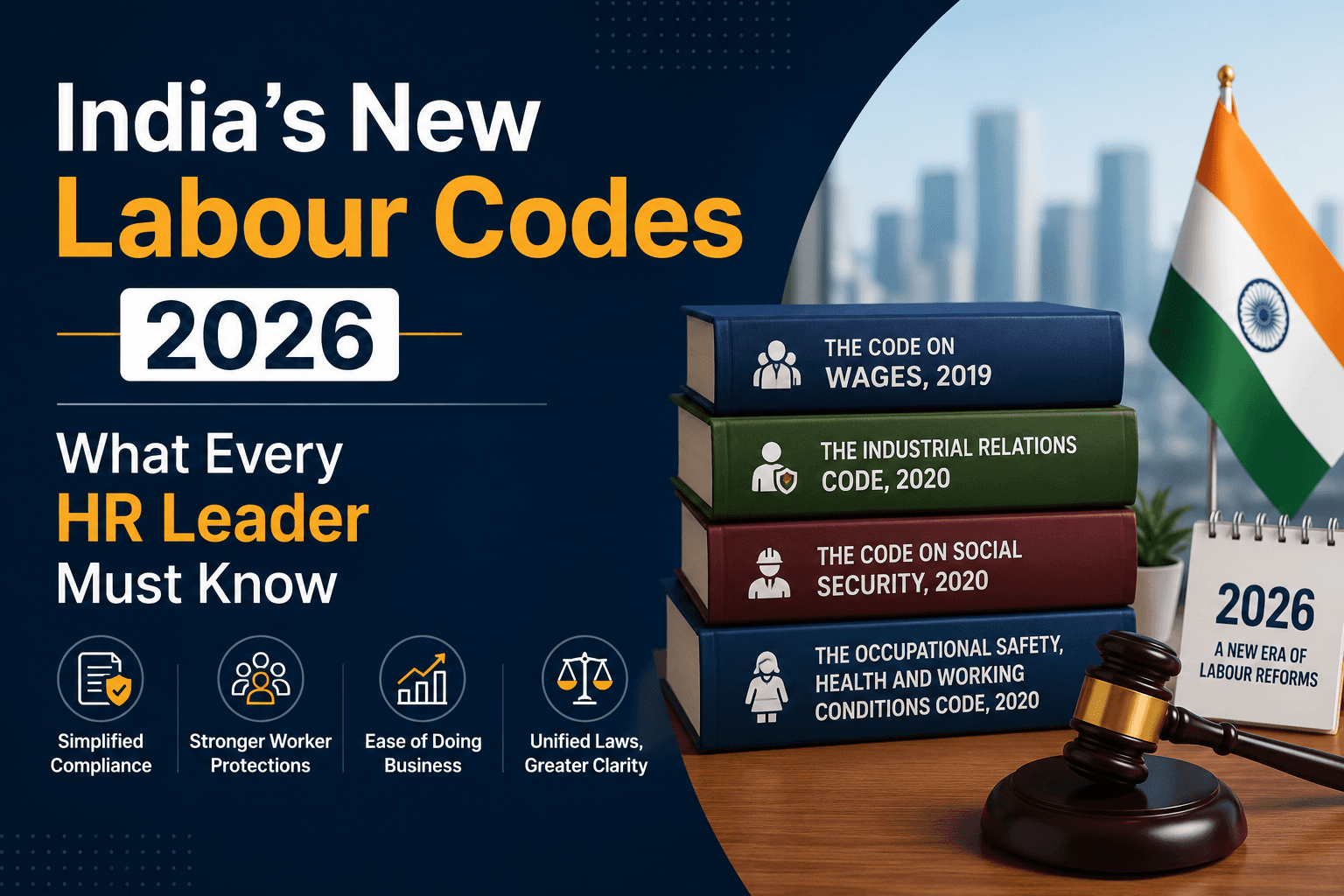
Compliance
India's New Labour Codes 2026: What Every HR Leader Must Know
India's Labour Codes 2026 have changed payroll, CTC, PF, gratuity, and exit rules for every employer. Get the complete HR compliance guide and checklist to stay ahead of the new labour laws.
5 min read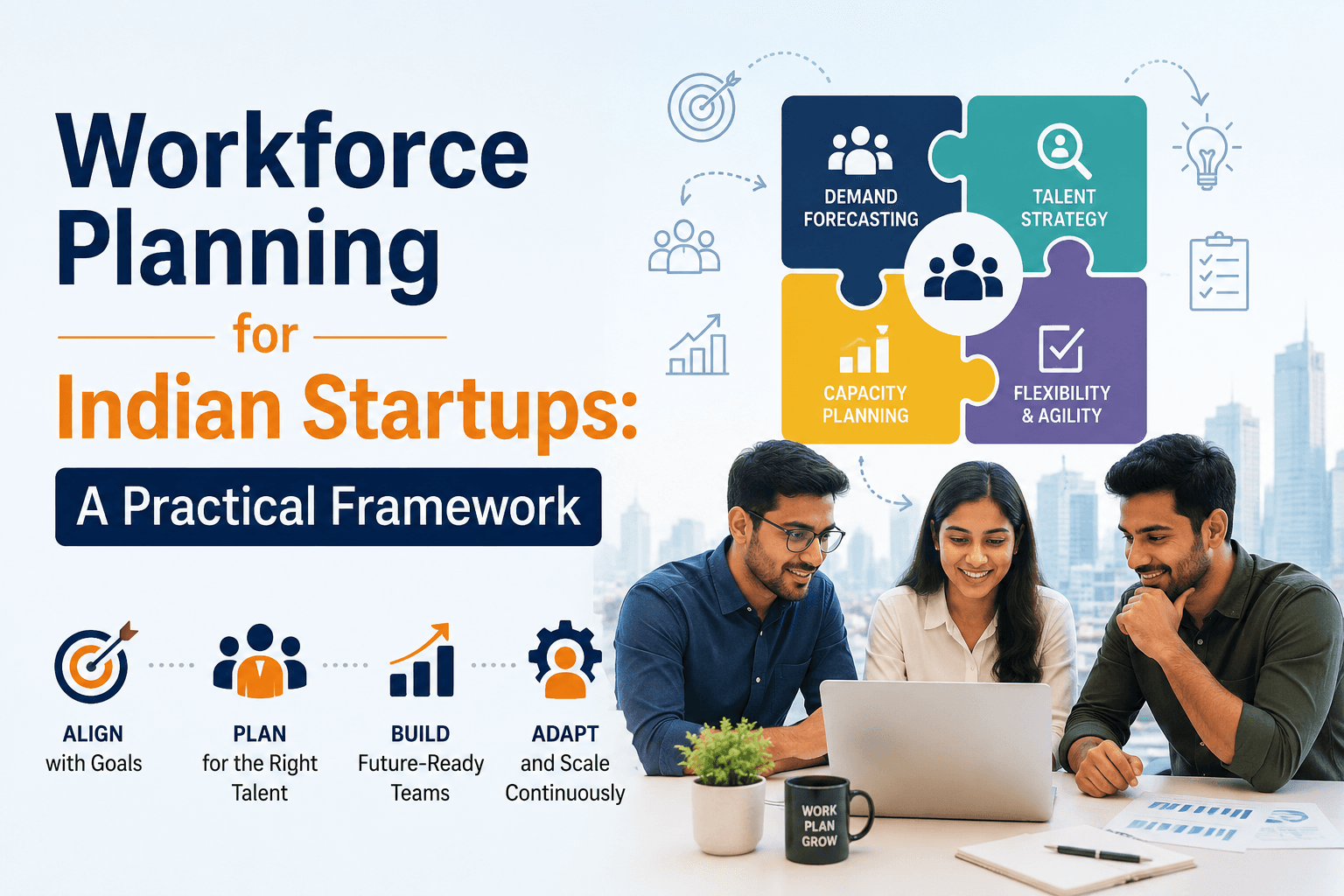
Compliance
Workforce Planning for Indian Startups: A Practical Framework
Stop hiring employees on guesswork. Read the practical guide for workforce planning for startups, covering forecasting, costs, compliance, and the right time to hire next.
5 min read