
HR Strategy
Skills-Based Hiring in India: A 2026 Guide for SMEs
Degrees are a weak signal in a market full of credential inflation. A skills-based hiring framework for Indian SMEs, including DPDP compliance.

MD Moinuddin
HR Content & Research, Human Maximizer · 11 min read · · Updated

A 45-person logistics startup in Pune recently spent three months searching for a lead database administrator, rejecting dozens of applicants because they lacked an MCA degree. Out of options, they dropped the credential filter, ran a practical SQL optimization test, and hired a self-taught professional who had spent five years managing databases for local retail chains. Within two weeks, this new hire resolved a database latency issue that had plagued their tracking system for months. The lesson is clear. Pedigree does not write clean code.
The following is a composite drawn from patterns we repeatedly see across Indian SMEs — not a single named client.
Adopting skills-based hiring in India is no longer an experimental trend for multinational corporations. It is a survival mechanism for SMEs and startups navigating a tight labor market. When 40% of companies are already actively dropping degree requirements, firms that cling to traditional credentials are inadvertently shrinking their own talent pool. At Human Maximizer, teams consistently find this play out when helping growing businesses transition from rigid qualification filters to practical capability assessments.
The Reality of Credential Inflation
For years, the Indian recruitment landscape equated a specific university degree with a guarantee of competence. However, the rise of specialized online certifications and vocational training has challenged this premise. As noted in the India Skills Report 2026, employability for vocational and technical education, such as ITI (45.95%) and Polytechnic (32.92%) programs, has seen significant improvement due to targeted skilling initiatives.
The gap between what a degree signifies and what a role requires is widening. A candidate with a relevant portfolio or verified certification often demonstrates higher readiness than a graduate with a degree unrelated to current technical demands. This is not about abandoning standards. It is about refining them. A robust talent acquisition strategy in 2026 prioritizes the ability to execute tasks over the prestige of an institution. This marks the transition from traditional job-based vs skills-based hiring, where the focus shifts from past credentials to immediate capability.
Why Speed-to-Hire Matters for SMEs
For a startup or SME, every day a role remains open is a direct hit to output. The most compelling argument for competency-based recruitment is the efficiency it introduces to the hiring funnel. Companies using skills-based hiring platforms have reduced their time-to-hire by an average of 25%, with some reporting even higher gains. Additionally, 82% of companies have seen their time-to-hire drop after making the shift.
By using skill assessment tools early in the process, you filter candidates based on what they can actually do rather than the pedigree on their resume. This approach reduces the number of "false starts"—hires who look good on paper but fail to meet practical expectations. Talk to enough HR teams and one thing repeats: the cost of a broken process shows up in rework long before it shows up in a report. This is especially true for hiring for startups in India, where limited runway means every hiring mistake is magnified.
The Human Maximizer Hiring Framework
To help organizations transition systematically, we developed The Human Maximizer Hiring Framework. This proprietary methodology replaces subjective resume screening with objective, execution-focused checkpoints. Instead of relying on a candidate's alma mater, this framework structures evaluation around direct evidence of capability.
The framework operates across three distinct phases: 1. Competency Mapping: Define the exact execution requirements for the first 90 days of the role. 2. Practical Assessment: Deploy lightweight, role-specific tasks that mirror actual daily responsibilities. 3. Standardized Calibration: Evaluate performance using structured scorecards to eliminate interviewer bias.
Below is a copy-pasteable Competency Matrix Template that Indian SMEs can use to map roles before opening a vacancy:
| Role | Core Competency | Practical Assessment Method | Success Criteria |
|---|---|---|---|
| Frontend Engineer | Component Architecture | 45-minute take-home UI build | Clean state management, responsive CSS, no broken layouts |
| Sales Executive | Objection Handling | 15-minute live roleplay call | Active listening, structured pricing pitch, clear next steps |
| Operations Associate | Data Reconciliation | 30-minute Excel/Sheets test | Accurate pivot tables, zero formula errors, clean formatting |
Compliance, DPDP, and Regional Labor Laws
Implementing a skills-first approach in India requires careful alignment with both national data privacy laws and state-specific labor regulations.
Under the Digital Personal Data Protection (DPDP) Act 2023 (available at meity.gov.in), any candidate data collected during skill assessments must comply with strict consent and purpose-limitation rules. When using third-party assessment tools or custom platforms, ensure you obtain explicit consent for processing test results, store the data securely, and delete it once the hiring decision is finalized unless the candidate consents to future talent-pool tracking.
State-specific Shop and Establishment Acts (such as those in Karnataka, Maharashtra, or Delhi) govern employment terms and documentation for commercial establishments. While these acts do not mandate specific university degrees, they do require employers to maintain meticulous records of employment terms, wage registers, and identity verification. When hiring non-degree candidates, HR teams must ensure that alternative verification documents—such as past employment certificates, tax records, or verified portfolio links—are systematically archived to satisfy state labor inspector audits.
For manufacturing and technical sectors, the National Apprenticeship Promotion Scheme (NAPS) provides a structured, government-backed bridge for skills-based hiring in India. By engaging apprentices under NAPS, SMEs can train and evaluate candidates on practical shop-floor skills before transitioning them to full-time roles, reducing recruitment risk while ensuring compliance with the Apprentices Act 1961.
Want a system that handles standardized interview scorecards and compliance documentation automatically? Let's talk.
Standardizing the Interview Process
While a conceptual framework provides the blueprint, executing it consistently requires the right digital infrastructure. This is where the transition from theory to software occurs. We designed our Recruitment & Onboarding module to act as the digital engine for this framework. Using dedicated HRMS software for hiring allows teams to automate these manual steps and eliminate human bias.
Consider what happens when a manual hiring process meets human bias. An interviewer, impressed by a candidate's shared alma mater, attempts to bypass the standard evaluation and fast-track them. In a legacy setup, this bypass goes unnoticed until the candidate underperforms on the job.
With Human Maximizer, the system prevents this exception. When the interviewer opens the candidate's profile, the system blocks progression to the offer stage unless the standardized scorecard in our Recruitment & Onboarding module is fully completed. If the interviewer attempts to submit a blank or highly subjective scorecard, the system flags the missing competency ratings and alerts the HR manager. This ensures that every hiring decision is backed by objective skill data, maintaining the integrity of your talent acquisition strategy.
By integrating this data with Core HR and Attendance Management, we help growing businesses maintain a unified employee record from the initial interview scorecard to daily operations. When building the product, our team spoke with HR leaders, managing directors and founders across Indian companies to map real pain points and workflows, a study detailed in our Hiring Research Report.
When Skills-Based Hiring Has Limits
While the shift toward skills-focused evaluations offers significant advantages, it is not a universal solution for every situation:
- For highly specialized technical roles requiring professional licensing, such as structural engineers under the Factories Act 1948 (available at indiacode.nic.in), a skills-only assessment cannot override the legal requirement for formal qualifications. → In these cases, verify the statutory credentials first before conducting practical skill tests.
- When evaluating candidates for senior leadership roles, automated skill assessments cannot capture the nuances of strategic vision and long-term cultural alignment. → Use structured behavioral interviews and deep reference checks instead of standardized technical tests.
- In situations involving complex labor compliance or disputes regarding mandatory qualifications for hazardous factory roles, automated hiring filters cannot replace legal expertise. → Consult a qualified labor law expert or legal CA/consultant to ensure your hiring criteria comply with local state amendments of the Factories Act.
Pro-Tip: Within Human Maximizer's Recruitment & Onboarding module, you can flag specific roles as 'Statutory Credential Mandatory'. For these flagged positions, the system automatically bypasses the skills-only workflow and requires HR to upload and verify the candidate's formal degree or license before an offer letter can be generated.
To help your team choose the right evaluation method, here is a quick reference mapping common roles to their optimal assessment formats:
| Role Type | Recommended Assessment Method | Primary Focus |
|---|---|---|
| Entry-to-Mid Technical | Hands-on execution tasks | Practical output and code quality |
| Customer-Facing | Live roleplay and scenario tests | Communication and problem-solving speed |
| Leadership & Strategy | Structured behavioral interviews | Long-term alignment and strategic vision |
Balancing these practical limitations with a structured evaluation process allows SMEs to build highly capable teams without compromising on compliance or leadership quality.
Frequently Asked Questions
How does skills-based hiring affect compliance with Indian labor laws? Skills-based hiring is fully compliant with Indian labor laws, provided that your selection criteria do not discriminate against protected classes. However, for specific safety-critical or hazardous roles regulated under the Factories Act 1948, you must ensure candidates possess the legally mandated educational qualifications alongside their practical skills.
Can startups implement skills-based hiring without expensive assessment tools? Yes, startups can implement this approach by using lightweight, practical tasks such as a 45-minute take-home project or a live problem-solving session during the interview. The key is to standardize the evaluation criteria across all candidates rather than relying on expensive third-party testing platforms.
How do we transition from resume-based filtering to skills-based filtering? Start by rewriting your job descriptions to focus on required competencies rather than degree requirements. Next, introduce a short, practical skill assessment early in the recruitment funnel, and train your hiring managers to use standardized scorecards to evaluate candidates objectively.
The Cost of Staying Still
If you are still filtering for degrees, you are likely missing high-performing candidates who have the exact skills you need but lack the specific credentials your old process demands. The goal is to broaden your criteria to include verified capabilities.
Our platform is designed to support this transition. You can explore our transparent pricing plans from Ignite to Apex on our pricing page.
Ready to transition? Access our interactive Skills-Based Hiring Checklist built directly into our onboarding module, or book a 15-minute Human Maximizer demo to see how our platform can help you standardize your hiring process.
Returning to our Pune logistics startup, the lesson is clear. You can continue to filter for pedigree and watch your critical roles remain vacant, or you can focus on what candidates can actually build. When you prioritize verified capability over institutional prestige, you ensure that the database administrators and engineers you hire are delivering measurable business outcomes and shipping high-quality code.
About the Author & Reviewers
Chandan Watts — Technical Product Manager, Human Maximizer (Razor Infotech)
Chandan Watts is Technical Product Manager at Razor Infotech, building the Human Maximizer HR platform. After years leading customer-experience and team operations at JindalX and Radical Minds, he focuses on how teams actually work day to day — and how small workflow gaps quietly slow an entire team down.
Connect on LinkedIn
Reviewed & approved by Sameer Hameed — Founder & Chairman, Razor Infotech
Sameer Hameed is the Founder & Chairman of Razor Infotech, where he is guiding the creation of Human Maximizer. An entrepreneur across technology, real estate, mining and travel, he builds organisations on clarity, trust and responsible growth — on the belief that businesses grow only when the people behind them grow.
Connect on LinkedIn
Reviewed & approved by Nishant Tandon — Co-founder & Lead Partner, Razor Infotech
Nishant Tandon is Co-founder and Lead Partner at Razor Infotech, with over a decade in IT, customer support and business operations, helping SMEs achieve cost efficiency, stronger customer experience and scalable, sustainable growth.
Connect on LinkedIn
Human Maximizer is built by Razor Infotech in New Delhi, India (founded 2019). About Human Maximizer.
Keep reading

HR Strategy
How to Adopt Skills-Based Hiring in India (2026)
Transition to skills-based hiring in India. Learn how to design skill assessments, reduce bias, and hire top talent with Human Maximizer.
12 min read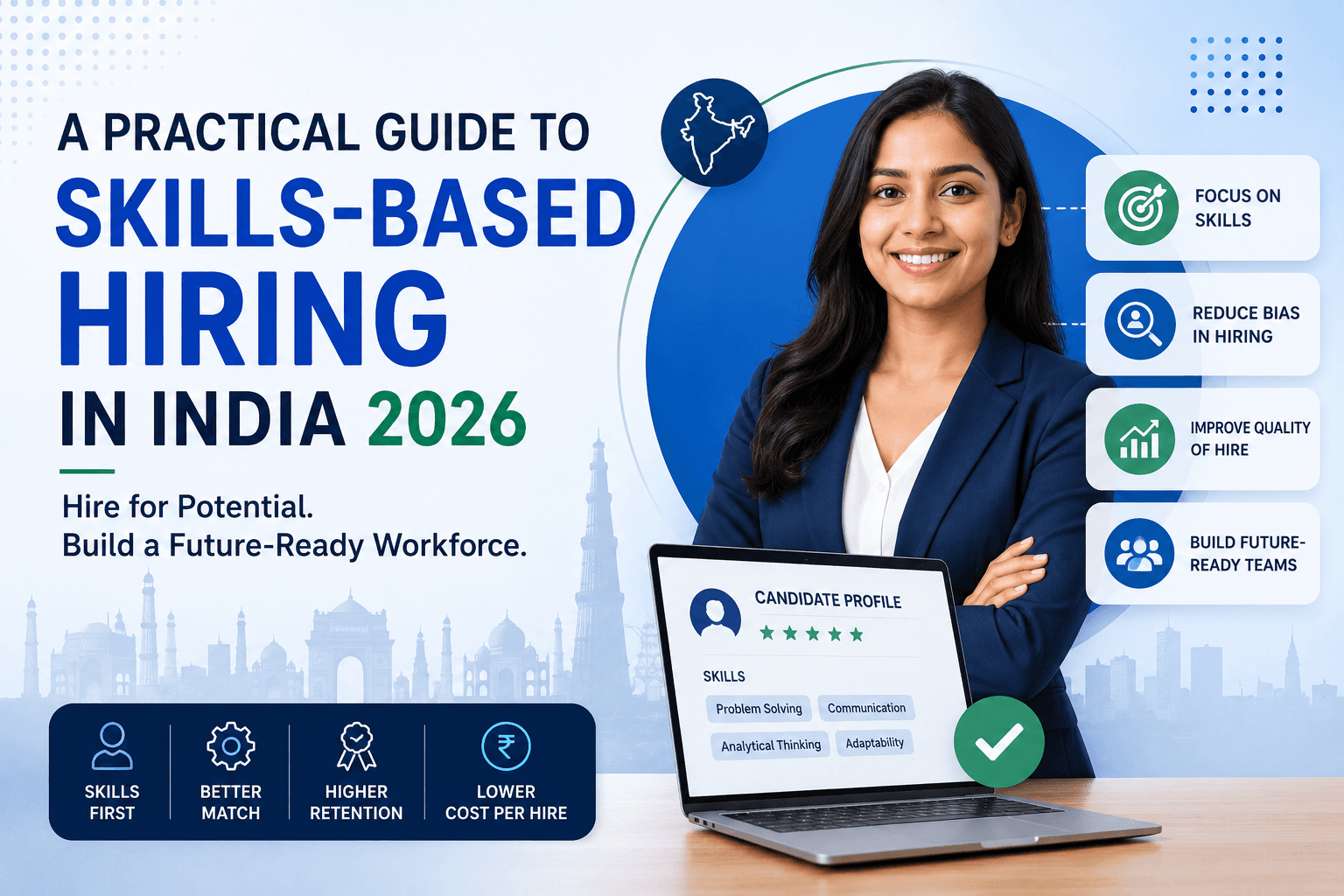
Employee Engagement
A Practical Guide to Skills-Based Hiring in India 2026
How to hire on demonstrated skill instead of degree and pedigree — scorecards, structured tasks, and interview changes that hold up in India.
5 min read
HR Strategy
Beyond Attendance: Measuring the 'Human Throughput' of your remote workforce
A green status dot measures presence, not output. How to measure the real throughput of a remote team using communication friction and rework.
11 min read